















































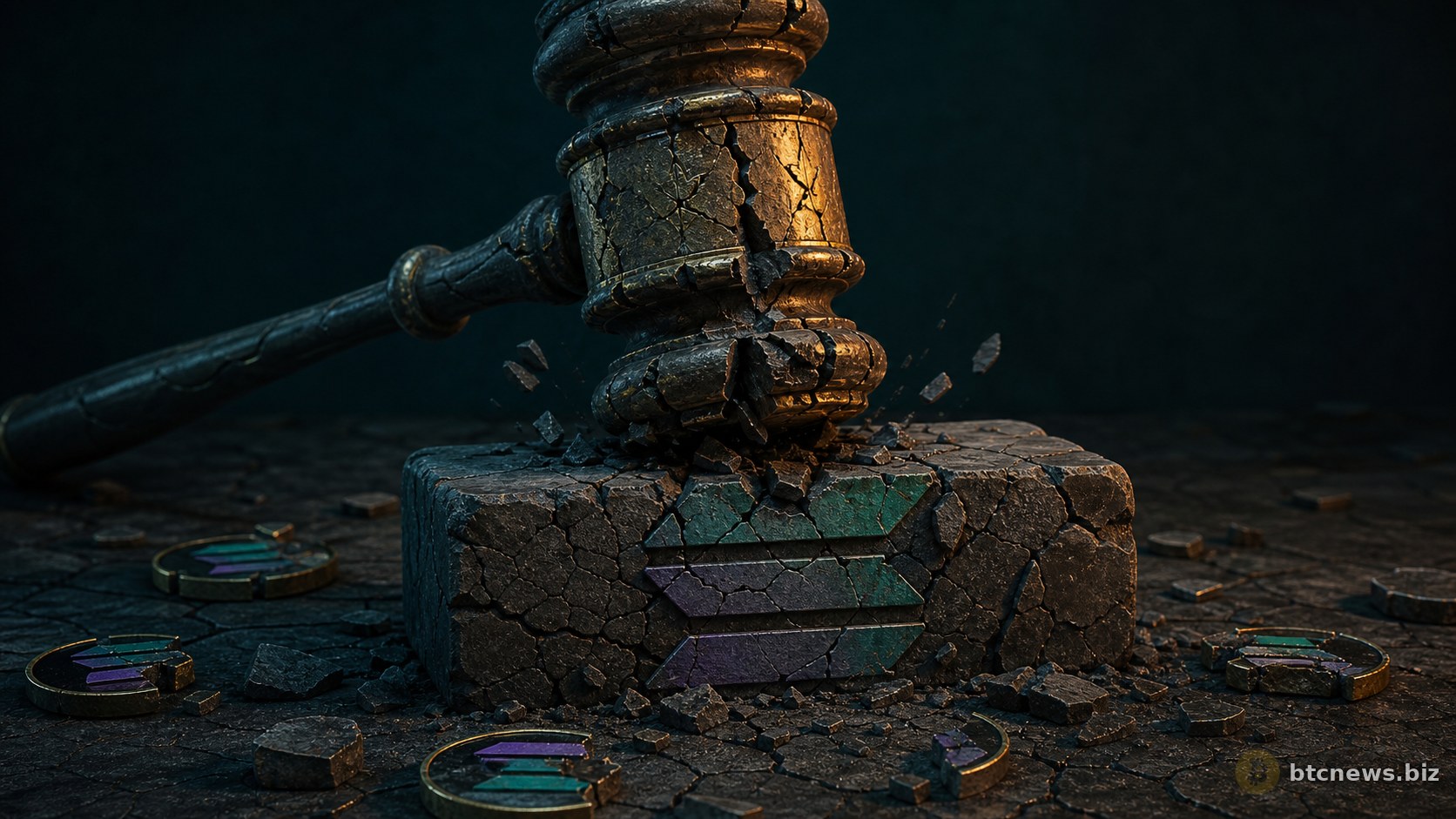
Solmate Infrastructure lawsuit puts Solana governance under pressure
The lawsuit against Solmate Infrastructure’s board points to governance problems around Solana-linked treasury companies. It could also make investors more cautious about tokenized real-world assets on the network. RBCH, the largest outside investor in Solana treasury firm Solmate Infrastructure, has sued the company’s board in New York State Supreme Court. The complaint alleges fiduciary breaches and self-dealing. I’ll be honest: that is not background noise when Solmate’s stock is already down about 78% since early 2026. The timing is ugly for anyone trying to sell Solana-linked public companies as a cleaner way to invest in the ecosystem.
RBCH says Solmate Infrastructure’s board enriched insiders, sold shares without proper authorization, and diluted existing shareholders. The complaint says Solmate’s board and officers benefited while other shareholders took the hit. RBCH is affiliated with RockawayX founder Viktor Fischer and owns about 22.74% of Solmate parent Brera Holdings, according to the lawsuit. The complaint says board members Ron Sade and Keren Maimon sold shares above $33 each in September 2025, collecting more than $1.6 million. Those sales allegedly happened the same day a $300 million PIPE investment led by RBCH closed, while new investors were locked up. Then comes the second part: the lawsuit says the board approved advisory agreements that benefited affiliated people, then diluted existing shareholders by about 20% by issuing roughly 2.298 million Class B shares at $4.97 each. RBCH calls it unlawful self-dealing. That is the hard allegation.
The board reportedly rejected a $7.19 per share acquisition offer for Brera from Forward, a Solana-owned treasury firm, without asking shareholders to vote. The offer was reportedly 30% above the market price at the time. Why does this matter? Because Solmate’s performance after that has been rough. Solana itself is down about 50% since early 2026. Solmate is down about 78%. That gap matters. Most crypto-governance defenses say the market was bad anyway. That is only half right. A treasury company is supposed to give investors exposure to the asset it holds, not turn a bad market into something materially worse through boardroom decisions.
The case gives regulators another reason to look closely at crypto companies that use public-market structures but do not always act like public companies. This is where the story gets bigger than Solmate. More institutional money is moving into digital assets, and those investors expect basic corporate governance: fair dealing, clear disclosures, shareholder votes when required, board independence, and believable conflicts policies. The Solmate allegations, including fiduciary breaches, self-dealing, and misleading statements, are familiar problems in traditional finance. They are also the kind of conduct the SEC tends to watch. My take: the crypto wrapper does not make these issues novel. If RBCH supports its claims in court, crypto treasury firms and public crypto vehicles could face more scrutiny. Future capital raises could become slower, more expensive, or both. Coinbase (COIN), for example, has often moved sharply around SEC actions or public comments.
The dispute also hurts the adoption case for tokenized real-world assets on Solana, at least for now. Solana has about 286,000 RWA holders as of mid-June, according to Cryptopolitan’s reporting on RWA.xyz data. That is one reason people keep watching Solana as a home for tokenized assets. Counter to the usual advice, the technical story is not the whole sales pitch here. Governance can spoil it. Solmate reportedly holds around 2 million SOL and operates as a Solana treasury company. If a company that close to the ecosystem is fighting self-dealing allegations, investors will ask harder questions before tokenizing assets or buying into similar structures. I would. Better disclosure, stronger shareholder protections, and cleaner board processes start to look less like paperwork and more like the point.
What this means
The lawsuit is a governance test for Solana-linked public companies and for crypto’s push to look more institutional. Blockchain rails do not fix old corporate problems by themselves. A fast network cannot stop a board from making questionable decisions. Is that too blunt? No, because the lesson for crypto investors is plain: technical quality is not enough. The team matters. The cap table matters too. So does the board. Yes, this cuts against the usual ecosystem-first framing, but bear with me: if RBCH wins meaningful relief, the case could affect how future shareholder disputes play out around crypto treasury firms and other public crypto companies. If the case goes nowhere, some investors may read that as a sign that looser behavior can survive. Either way, Solana projects chasing institutional money now have a governance problem in plain view. Governance is the product.
Investors should watch the New York State Supreme Court proceedings and the annual general meeting on June 26. RBCH is seeking emergency injunctive relief, disgorgement of improper compensation, rescission of Sade and Maimon’s share offering, and limits on their voting rights. A ruling for RBCH would send a clear accountability signal. A dismissal, or a ruling against RBCH, would probably leave a sour taste and could embolden insiders elsewhere. I would also watch SOL price action around these dates, not because every company-level dispute becomes a chain-level crisis, but because visible ecosystem names can move sentiment fast. The network still has growth in other areas. Still, bad news from a visible ecosystem company can create volatility. Watch the vote. A sustained break below $150 would suggest broader concern about ecosystem risk. A rebound would suggest traders see Solmate as a company-specific mess, not a Solana-wide problem.
FAQ
Q: What is the main allegation in the lawsuit against Solmate Infrastructure?
A: RBCH alleges fiduciary breaches and self-dealing by Solmate Infrastructure’s board, including unauthorized share sales and dilution of existing shareholders.
Q: Who filed the lawsuit against Solmate Infrastructure?
A: RBCH filed the lawsuit. It is Solmate Infrastructure’s largest outside investor and is affiliated with RockawayX founder Viktor Fischer.
Q: How has Solmate’s stock performed since early 2026?
A: Solmate’s stock is down about 78% since early 2026, much worse than Solana itself over the same period.
Q: Why does this lawsuit matter for the Solana ecosystem?
A: It raises governance concerns around Solana-linked treasury companies and could make investors more cautious about tokenized real-world assets on the network.
Q: What is RBCH asking the court for?
A: RBCH is seeking emergency injunctive relief, disgorgement of improper compensation, rescission of certain share offerings, and restrictions on the voting rights of specific board members.