















































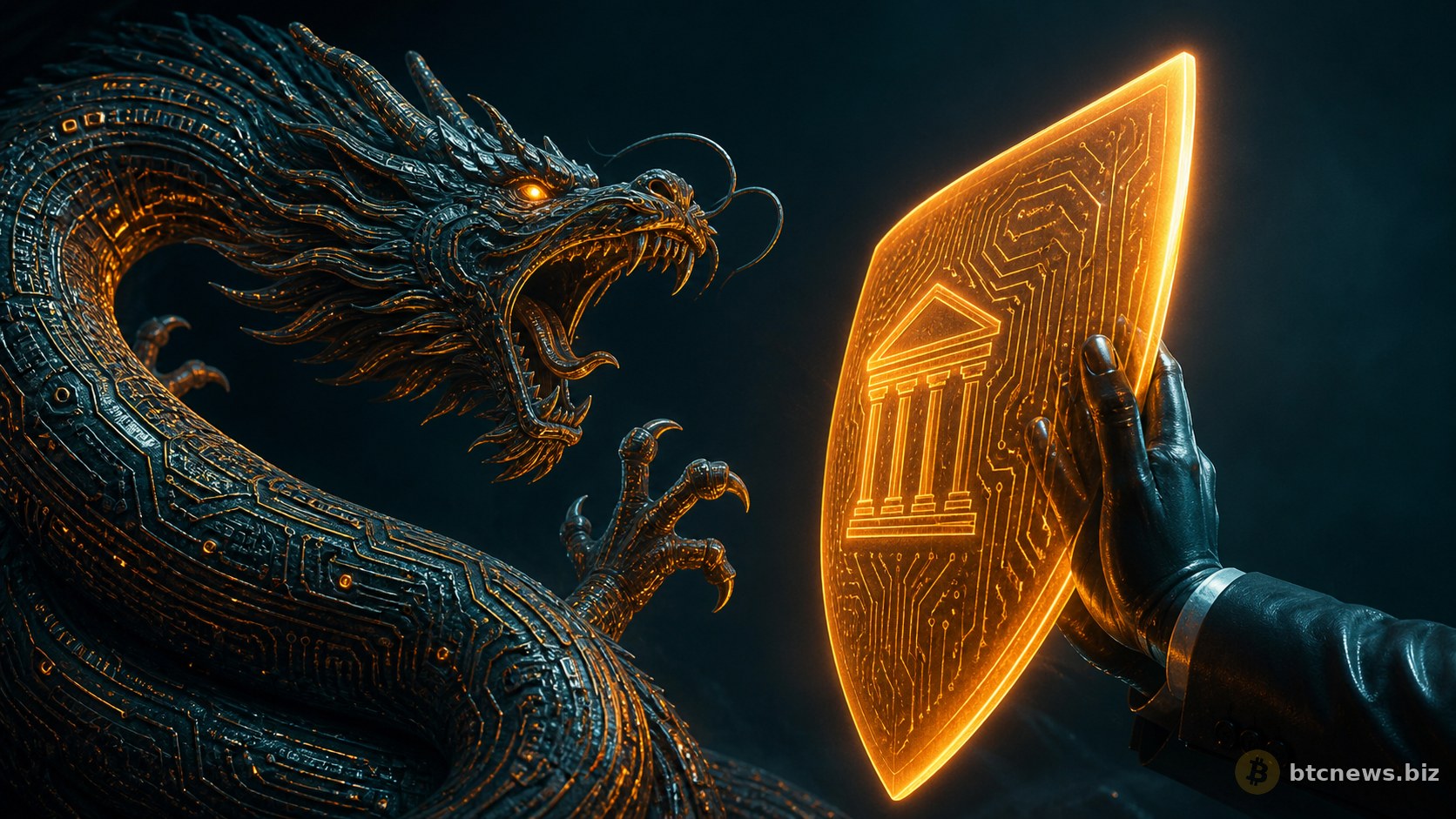
US Sanctions Threat Against Chinese AI Models Opens New Front in Tech War, With Crypto Implications
The US government may sanction Chinese AI companies it accuses of stealing intellectual property. Treasury Secretary Scott Bessent issued the warning Tuesday, pushing the US-China technology dispute beyond advanced chips and into software and model training. Why does this matter for crypto? Because traders now have another geopolitical risk to price in. Still, I’d resist calling Bitcoin (BTC) a dependable safe haven. BTC has rallied during some international crises; when investors panic, it has also traded like any other risk asset. It cuts both ways.
The Trump administration supports open-source AI, Bessent said, but opposes foreign companies copying American technology. Speaking on Fox Business, he said, “If we see, especially, that overseas models are stealing from our great companies, we have the ability to sanction them because of this theft.” The gap is closing fast. Moonshot AI’s Kimi K3, for instance, has improved in coding and agent-based tasks, two areas where US companies such as OpenAI and Anthropic have led. My take: that example makes the warning feel less theoretical.
The US already restricts China’s access to advanced chips and has tightened its export controls. Sanctions against model developers would go further by targeting the companies that build and train AI systems. Axios reported Monday that the administration had considered broader restrictions on Chinese open-source models, though that account has been disputed. Most geopolitical-market commentary jumps straight to “Bitcoin rally.” That is only half right. Bitcoin rose 8% within 72 hours of the January 2020 strike that killed Iranian general Qasem Soleimani, which explains why traders watch BTC when tensions rise. But one event proves very little. If sanctions become official, a break above resistance near $61,400 could bring in more buyers.
Part of the dispute involves “model distillation,” a method for transferring abilities from a large model to a smaller one. American AI companies say foreign developers use their systems to build competing products faster. Critics say those companies are recasting a common engineering technique as theft. Microsoft CEO Satya Nadella recently questioned that position. Here is the awkward bit: large AI companies defend training on public material as fair use, then impose strict limits on how other developers use their output. The contradiction is pretty obvious. I’ll be honest: the industry’s clean distinction between “training” and “copying” looks shakier under scrutiny. Hugging Face CEO Clem Delangue has also played down the role of distillation, crediting China’s progress more to strong research teams and open development.
American AI companies have copyright troubles of their own. Anthropic recently received permission to start payments under a $1.5 billion settlement with authors after a judge found that the company had illegally downloaded and stored copyrighted books. That single case complicates Washington’s accusation that overseas developers misuse intellectual property while US courts are still deciding what domestic companies may use to train their models. Counter to the usual advice, crypto investors should not dismiss this as an AI-only dispute. Rules governing AI data and intellectual property may eventually reach decentralized AI protocols, including the ways decentralized autonomous organizations (DAOs) gather data and train models. In my view, that connection deserves attention without the hype. Those rules could affect the prices of tokens connected to AI projects and data services.
More trade restrictions would probably cause volatility long before they produced a clear winner. Some investors may pull money from stocks and buy Bitcoin because no government issues it, supporting a short BTC rally. Simple enough. A drawn-out confrontation is messier: if equities keep falling, Bitcoin may follow, while smaller altcoins could suffer even steeper losses. Is comparing BTC with stock indices overkill? No, because correlation during the selloff matters more than the safe-haven label. I would watch the price action first. Bitcoin has played both parts before: digital gold one day, leveraged tech stock the next.
What this means
The sanctions threat suggests that the American and Chinese technology sectors may move further apart. For Bitcoin, that could strengthen the case for an asset outside state control as protection against political and financial shocks. Institutions may not agree. Yes, that sounds inconsistent with the safe-haven argument. It isn’t: some funds could treat BTC as a reserve asset if the dispute advances beyond warnings, while other funds read the same market behavior as evidence of risk exposure. The argument over training data may also shape future rules for decentralized AI projects. Tokens such as Render (RNDR) and Fetch.ai (FET) could face closer scrutiny if regulators require decentralized systems to follow the same copyright standards as corporate AI labs.
Investors need to see action, not another round of threats. Formal Treasury measures come first. China’s response comes next. Bitcoin’s performance against gold will indicate whether buyers view it as protection, while its movement alongside the S&P 500 will show whether risk appetite still drives the price. What would count as stronger evidence? A sustained break above $65,000 would say more about safe-haven demand than a one-day jump. US legislation covering AI intellectual property also matters because it could influence how regulators handle decentralized protocols. The next FOMC meeting on June 12 may clarify the interest-rate outlook. My take: a sudden geopolitical shock can still push monetary policy out of the headlines for a few trading sessions.