
















































Tether DMCC Dubai Partnership Brings Stablecoins Closer To Business Use
“Tether’s deal with DMCC brings stablecoins closer to everyday business use in Dubai.” Tether signed a memorandum of cooperation with DMCC, one of Dubai’s biggest business hubs. DMCC says it has more than 26,000 member companies and is linked to about 15% of Dubai’s foreign direct investment. My take: those two numbers are the story. If even a thin slice of that network tests tokenized assets or digital payments, USDT gets a business use case outside crypto trading desks.
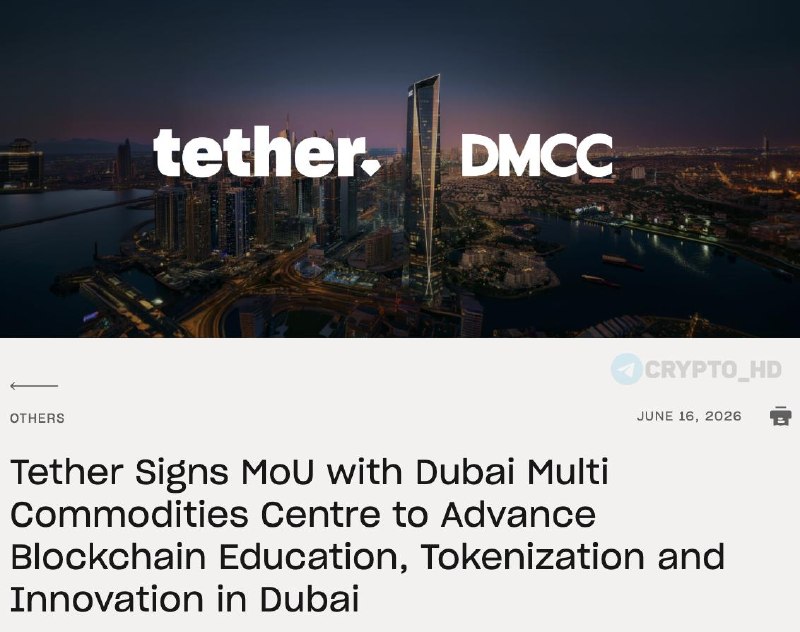
“Tether and DMCC plan to work on tokenized assets, digital payments, and blockchain education.” The report says Tether is working with DMCC, the Dubai Multi Commodities Centre, on crypto programs for its members. DMCC is not a tiny sandbox with a few startups in a conference room. It is a commercial zone with companies in commodities, trade, finance, services, and cross-border business operations. The agreement covers asset tokenization, digital payments, and education. I would not read that as guaranteed adoption. That matters.
“The deal gives DMCC companies a clearer path to test USDT payments and tokenized assets.” This is the part traders will care about. More than 26,000 companies now sit in a network where Tether can pitch stablecoin payments and tokenization directly. Does that mean thousands of firms will flip on USDT next quarter? No. Most probably will not. But the access is real, and access is usually where adoption begins.
Crypto has seen this pattern before. MicroStrategy’s first bitcoin purchase in August 2020 did not make every company buy BTC, but it changed how corporate crypto exposure was discussed. Tether’s role here is different. This is not about putting bitcoin on a balance sheet. It is about payment rails and settlement. It is also about tokenized business assets. Less flashy. Maybe more useful.
If a fraction of DMCC-linked investment activity moves through stablecoin payment systems or tokenized assets, USDT transaction volume could rise. The harder question is whether companies keep using the rails after the announcement fades. Most guides stop at the partnership headline. That is only half right. The signal comes later: transaction volume, project launches, repeat usage, actual money moving through the system.
“Dubai’s stance on digital assets gives this partnership a cleaner regulatory backdrop than crypto gets in some other markets.” The regulatory angle is hard to ignore. Dubai and the UAE have spent the past few years writing rules for digital assets because they want crypto companies to operate there. You can argue about how strict or loose those rules are, but the direction is clear. I will be honest: that clarity is part of the product.
That is a sharp contrast with the US, where SEC actions around tokens, exchanges, and staking have left companies guessing. I do not think every crypto firm will pack up and move to Dubai. That would be too neat. Counter to the usual advice, jurisdiction is not just a legal footnote here; it is part of the business development pitch. Deals like this make Dubai look easier to work with, especially for firms that want government-adjacent partners instead of another courtroom fight.
The DMCC piece also gives Tether something it often needs: institutional context. Tether is huge, but it is still controversial in parts of traditional finance. Working with a government-backed business hub helps present USDT as payment infrastructure, not only as a trading pair on exchanges. Will that change skeptics’ minds? Maybe not. But it changes the room where the conversation happens.
What this means
“The Tether-DMCC deal is another sign that stablecoins are moving into corporate finance, especially in markets with clearer crypto rules.” This partnership shows how stablecoins are being sold now. The pitch is no longer only “trade faster on exchanges.” It is “settle invoices.” It is “tokenize assets.” It is “move value across borders and teach companies how the rails work.” That is a different conversation, and frankly a more serious one.
For the crypto market, the upside is utility. If DMCC companies use stablecoins for payments or tokenized assets, that could support USDT volume and add liquidity to the wider market. ETH may also benefit if tokenization activity uses Ethereum or Ethereum-linked networks, though the agreement does not promise that. Details matter here. Chain choice, compliance rules, settlement partners, launch dates, and usable payment interfaces will say more than the headline.
“Traders should watch project launches, payment activity, USDT supply, and Dubai’s next regulatory moves.” The useful data will come after the announcement. Watch for named tokenization projects inside DMCC and payment products that companies can actually use. Also watch changes in Tether’s USDT market cap or transaction volume. If nothing launches, this stays a partnership headline. If products go live and companies use them, it becomes a real adoption story.
Also watch other financial centers. Yes, this slightly contradicts the earlier caution about not overreading one deal, but bear with me. If Dubai keeps attracting crypto firms and capital, regulators elsewhere may feel pressure to clarify their own rules. That will not happen overnight. Still, a steady rise in institutional stablecoin usage could help BTC and ETH during volatile macro periods by adding liquidity and making crypto rails feel less separate from normal business activity.
FAQ
- What is the main goal of the Tether DMCC partnership?
- The goal is to help DMCC companies explore blockchain use cases, mainly tokenized assets, digital payments, and education around the technology.
- How many companies are part of DMCC?
- DMCC has more than 26,000 member companies, making it one of the larger business hubs in the UAE.
- What could this mean for stablecoin utility?
- If DMCC companies start using stablecoins for payments or tokenized assets, USDT could see more real business usage. The impact depends on whether actual products launch and get used.
- How does this partnership relate to crypto regulation?
- It shows that Dubai still wants to be seen as a workable market for digital asset companies. That contrasts with places where crypto rules remain unclear or heavily contested.
- What should traders watch after this announcement?
- Traders should watch for specific DMCC tokenization projects, payment rollouts, USDT supply changes, transaction volume, and new crypto rules in Dubai or other major financial centers.