
















































Bybit HTX AML sanctions: regulatory pressure mounts on exchanges
Bybit has warned users that transfers connected to HTX addresses may face extra AML checks and risk controls. That is more than fine print. My take: this is Bybit telling customers, without much decoration, that some HTX linked activity now carries more compliance baggage. The warning follows recent regulatory action involving HTX, and it may make traders rethink how much risk they are taking when they keep moving funds through centralized exchanges.
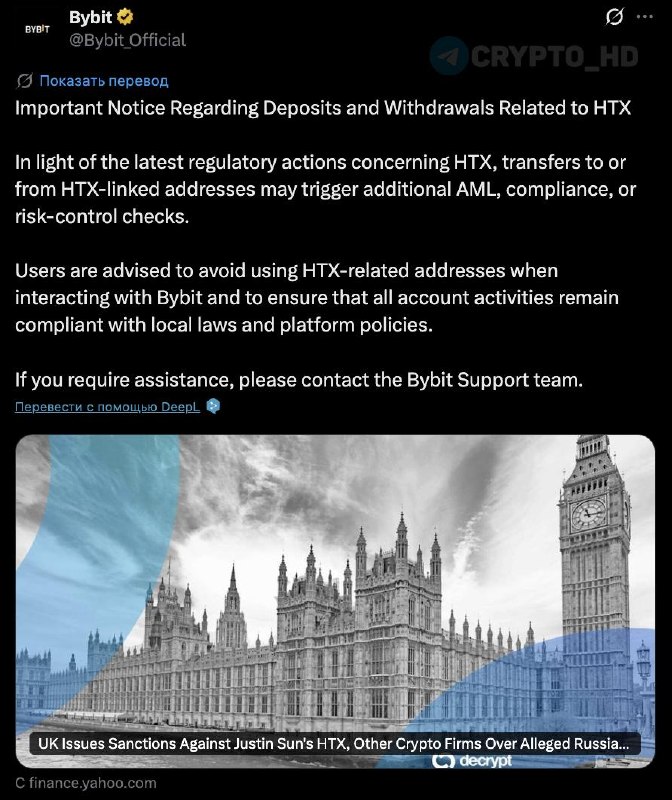
Bybit’s advisory tells users to avoid HTX addresses when using its platform. Pretty blunt. The notice appears tied to the UK’s sanctions regime, which has already put HTX under pressure. Most exchange notices hide behind soft language. This one does not. Bybit seems to be limiting its own exposure before regulators start asking harder questions. I do not blame them. Exchanges have seen competitors pulled into investigations for less.
HTX has denied violating British sanctions. It also said it dropped plans to list A7A5, a ruble pegged stablecoin. That looks like an attempt to put space between HTX and anything that could be read as sanctions risk. Is that just optics? Partly, yes. But optics matter when sanctions teams, banking partners, and counterparties are watching. This is the awkward position exchanges are in now: they want more assets and more markets, but they cannot afford to wander into a sanctions problem. The UK’s rules are already affecting how crypto firms think about token listings. They also affect onboarding, wallet screening, and whether a coin is worth the compliance headache at all.
This adds to the regulation pressure already weighing on the crypto market. Regulators are paying closer attention to exchanges, especially around AML controls and sanctions compliance. The US has its SEC cases. The UK has its sanctions push. Different tools, same squeeze. I’ll be honest: traders often talk about this as if it is a legal department problem, but it lands directly in the withdrawal queue. Sometimes that means slower transfers. Sometimes it means blocked ones. When markets are stressed, traders often move toward whatever feels safer. During the FTX collapse in November 2022, BTC fell sharply at first, then steadied as some investors moved away from weaker centralized platforms and back toward Bitcoin or better regulated venues.
The safe-haven idea fits here, but only up to a point. This is not a war headline or a banking panic. Still, an exchange crackdown can make crypto feel unstable from the inside. Why does this matter? Because platform risk can become market risk fast when users are trying to move funds at the same time. If centralized platforms look exposed, some investors may move toward self custody or decentralized protocols. That does not mean BTC jumps 8% overnight. Markets are never that tidy. Yes, this pulls against the usual “Bitcoin as instant refuge” story. Bear with me: the stronger point is slower and less dramatic. Decentralization can protect users from some platform level risks. HTX’s retreat from A7A5 also shows how regulation can decide which assets trade, where they trade, and how much liquidity they keep.
What this means
The Bybit HTX AML sanctions issue points to tougher rules for centralized crypto exchanges. Platforms that operate across borders now have to treat sanctions and AML compliance as survival work, not back office paperwork. Skip this step. It gets expensive. Exchanges with stronger compliance teams may have an advantage, while weaker ones could find themselves cut off by banks, regulators, or even other exchanges. For traders, the practical effect is straightforward: more checks on where funds come from and where they go. HTX users may feel it first, but the warning reaches beyond one exchange. It matters for ETH and stablecoins. It also matters for altcoins and any asset moving between platforms with different risk policies.
Investors should watch whether other large exchanges issue similar warnings about high risk addresses. UK regulator updates matter because other firms often react quickly once the UK acts. Trading volume and liquidity on HTX and Bybit are worth watching too, especially if users start sending funds elsewhere. For BTC, the $60,000 area remains an important support level. Is this overkill for one exchange warning? No, because exchange risk rarely stays neatly inside one venue. If confidence in centralized exchanges weakens, that level could come under pressure. The next major item is further guidance from the Financial Action Task Force on virtual assets, since FATF rules often shape the compliance playbook exchanges end up following.