
















































Pump.Fun employee token dispute raises questions about crypto pay
Pump.Fun is dealing with an internal dispute over claims that employees never received promised token allocations. One former staffer reportedly missed out on more than $1 million in PUMP tokens. The timing looks awful. Layoffs began only months before the tokens were due to vest, revealing how fast crypto compensation can disappear when a large share of someone’s pay exists only on paper. I’ll be honest: investors are unlikely to treat that as a minor HR problem. It could make them warier of the project’s tokenomics and give regulators another reason to examine digital asset offerings.
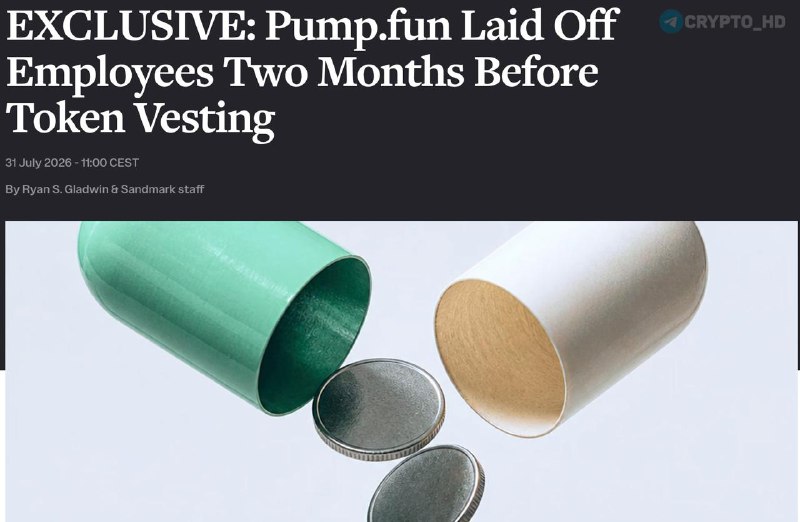
The mechanics are blunt. Former workers say Pump.Fun promised them PUMP tokens, with the first 25% set to unlock in mid-June 2026. Two months before that deadline, the company began cutting jobs, and laid-off employees forfeited all their unvested tokens. One former employee reportedly lost tokens worth more than $1 million at current prices. Instead, workers received one week’s salary for every month they had worked at Pump.Fun. Management said rapid growth had slowed development and led to the cuts. More layoffs reportedly followed in mid-July, while one worker claims the company fired them one day before their tokens unlocked. In two months, Pump.Fun cut more than 40 employees. Is the forfeiture technically possible under some contracts? Yes. That does not make it feel remotely fair when the tokens represented a large part of expected pay.
This involves one company, but it lands amid growing regulatory pressure on crypto. SEC Chair Gary Gensler has argued that many digital assets may be securities, and employee tokens could fall under those rules too, potentially triggering disclosure duties alongside investor protections. The SEC has not named PUMP in an enforcement action. That distinction matters. Still, workers losing six or seven figures because an unlock date had not arrived is exactly the sort of fact pattern regulators may notice. FTX raised similar questions about employee holdings and vesting after it collapsed; the fallout spread across the market, and BTC dropped from about $21,000 to $16,000 in November 2022. My take: unclear, unenforceable vesting agreements give regulators an easy opening to scrutinize crypto firms.
The dispute also arrives as capital flows into risky assets. Federal Reserve rate decisions can change investors’ appetite for speculation quickly. Most market commentary stops there. That’s only half right. A project’s conduct matters too—especially for Pump.Fun, which depends on community trust and developers willing to accept tokens as compensation. If workers believe the company changed the deal at the last minute, confidence can disappear overnight. Investors may then question comparable arrangements beyond PUMP. Some could rotate into BTC or ETH, assets that have generally handled market scares better. The March 2023 banking crisis offers a concrete example: BTC climbed from $19,500 to more than $28,000 while many smaller altcoins struggled. Investors still wanted crypto exposure. They just wanted its safer end.
What this means
The Pump.Fun dispute exposes a basic flaw in crypto employment: token pay sounds generous until somebody tests the vesting language. Why does this matter? Because a promised allocation is not the same as compensation a worker can actually keep. Projects need written agreements explaining what happens during layoffs and whether employees retain a prorated share of promised tokens. Counter to the usual advice, simply putting the grant in writing is not enough; the termination clauses do the real work. Without those protections, a company can recruit someone with the prospect of a large payout and dismiss that person shortly before vesting. Employees may reasonably view the result as withheld compensation even when the contract permits it. I wouldn’t underestimate the recruiting damage, either. Pump.Fun could struggle to attract experienced staff, while workers and investors become more cautious around young crypto projects. PUMP is too small to move the whole market. A prolonged legal fight could still hurt its price and adoption.
A lawsuit by former Pump.Fun employees would be worth watching because a court could clarify how the law treats token compensation. Investors should inspect employee vesting terms whenever projects disclose them, focusing on clauses covering termination before an unlock date. SEC guidance would matter as well—particularly any statement on whether employee tokens qualify as “investment contracts.” Yes, that puts heavy weight on legal wording after emphasizing trust. Both matter. The total altcoin market capitalization is near $1.2 trillion, and a sustained fall below $1 trillion could indicate that investors are retreating from smaller projects. Is that threshold conclusive? No. One technical level cannot explain the market by itself.
FAQ
What is the Pump.Fun employee token dispute about?
Former employees say Pump.Fun denied them promised PUMP tokens after laying them off. One worker reportedly forfeited unvested tokens worth more than $1 million. I’ll be blunt: that figure is why this dispute is getting attention.
Why were employees laid off by Pump.Fun?
Management said rapid growth had slowed development and prompted the job cuts.
What did laid-off employees receive instead of their tokens?
They received one week’s salary for every month they had worked at Pump.Fun.
How does this dispute relate to crypto regulation?
SEC Chair Gary Gensler has said many digital assets may be securities. If regulators extend that view to employee token grants, companies could face tougher disclosure rules. Investor protection requirements could follow.
Could this incident affect investor confidence in other altcoins?
Yes. The risk is not limited to PUMP: investors may become suspicious of projects with unclear token compensation terms and shift some money into established assets such as BTC or ETH.
What should investors watch for next regarding this situation?
Watch for lawsuits from former employees and SEC guidance on employee token grants. Stronger vesting protections at other crypto projects would be another concrete signal. That’s the real test.