
















































Russia Drops Foreign Traffic Fees, Crypto Access Looks Safer for Now
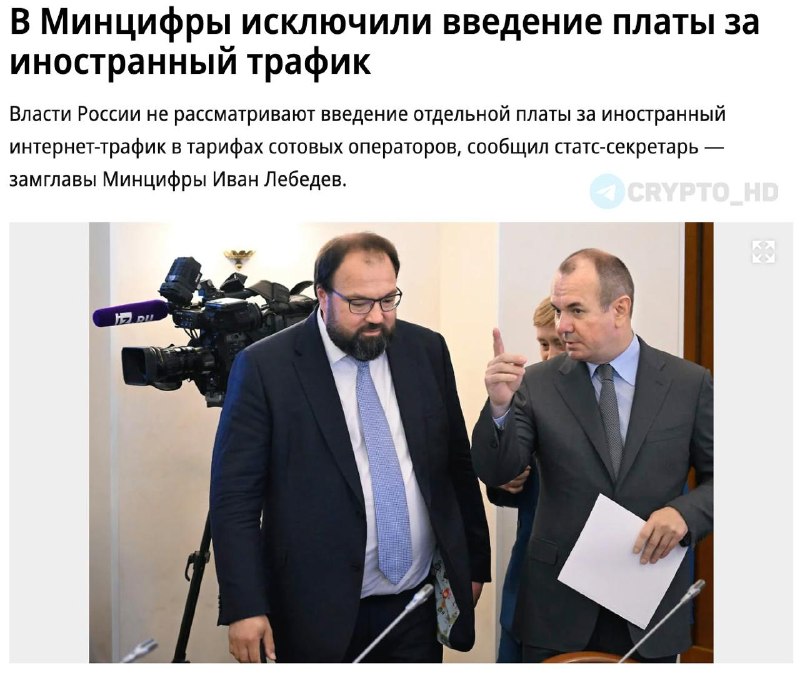
Russia’s Ministry of Digital Development, known as Mintsifry, has dropped the idea of separate fees for foreign internet traffic. For crypto users in Russia, that detail lands harder than it sounds. Exchanges, wallets, and dApps often depend on servers outside the country, even when the user never sees Amsterdam, Frankfurt, or any other hop in the connection path. My take: this was an access tax in technical clothing. Deputy Head of Mintsifry Ivan Lebedev announced the decision, scrapping a rule that could have made global crypto access slower, pricier, and more irritating.
The proposal was blunt. Users would have received around 15 GB of foreign traffic each month for free, then paid about 150 rubles for each extra gigabyte. Officials framed it as a way to limit VPN use and similar workarounds. Most guides would stop there and call it an anti-VPN measure. That is only half right. Telecom operators could not reliably tell VPN traffic from normal international traffic, and some Russian websites can route through foreign nodes too. So a subscriber opening a local site could have been charged as if they were dodging restrictions. Operators had already asked for a delay in April because they were not ready to run the system. Messy rule. Messier plumbing.
For crypto, this is a relief. No need to overcomplicate it. If the fees had gone live, they would have put a quiet toll on Russian investors and traders. Why does this matter? Because a quick BTC or ETH trade can depend on routing the user never chose and cannot easily inspect. Imagine opening Bybit or OKX, placing a trade, and then realizing the connection briefly crossed a foreign node that added data costs on top of exchange fees. That kind of friction matters. It can push people away from global platforms, thin out regional trading, make DeFi tools less practical, and turn routine wallet activity into a cost calculation. This was not a crypto ban. It still would have made global crypto access more expensive and clumsy. With the fees dropped, Russian users still have fairly open access to offshore exchanges and decentralized apps.
The decision also touches the safe-haven argument, though indirectly. During sanctions, currency pressure, or domestic uncertainty, Russians have often used crypto to hold value outside the banking system. After the first major sanctions in February 2022, bitcoin trading on peer-to-peer platforms in Russia jumped, and BTC briefly traded at a premium. Counter to the usual advice, access rules can matter almost as much as asset rules. Foreign traffic fees would have made buying BTC or other digital assets through international platforms cost more, which weakens the whole point of using crypto as a hedge. I would be careful here: this does not make crypto “safe” in Russia. It just keeps one important route open enough for users who want global services without paying extra because their connection crosses an invisible network border.
What this means
Russian authorities seem to have picked the practical option. The technical problem was ugly, and the side effects would have hit ordinary internet users along with VPN users. For crypto investors, the takeaway is simple: one bad access rule did not happen. Russian users still have relatively open routes to global crypto markets, including platforms such as Bybit and OKX, which remain popular in the region. I’ll be honest: I would not call this bullish by itself. It removes a drag that could have hurt liquidity and everyday use, which is useful, but it is not the same thing as a policy green light.
Now watch the reroute. The fee plan is gone for now, but Russia’s push to control information flow has not gone away. Mintsifry and the Central Bank of Russia are still the agencies to follow, especially on digital assets, cross-border payments, DFAs, and the digital ruble. Yes, this slightly contradicts the relief above, but only on the timeline: today’s dropped fee lowers immediate friction, while tomorrow’s access rule could bring it back under a cleaner name. Is this overkill to monitor? For BTC and ETH users depending on offshore liquidity, no. Any new rule that makes international internet access or offshore liquidity harder to reach could still change how Russian users trade. The signal to watch is whether future proposals add real costs right where users connect to global markets.
FAQ: Russia’s Foreign Traffic Fee Decision and Crypto
What was the proposed foreign internet traffic fee in Russia?
Mintsifry had considered charging about 150 rubles per gigabyte for foreign internet traffic after a monthly 15 GB allowance.
Why did Russia’s Ministry of Digital Development (Mintsifry) decide against implementing foreign internet traffic fees?
Deputy Head Ivan Lebedev said telecom operators could not reliably separate VPN traffic from normal international traffic. That detail is the whole story, really.
How would foreign traffic fees have impacted Russian crypto users?
The fees would have made global exchanges and dApps more expensive to use from Russia. That could have reduced trading activity, added friction to BTC and ETH access, and made liquidity harder to reach.
Does this decision affect the “safe-haven” utility of cryptocurrencies in Russia?
Yes, indirectly. It keeps access to international crypto platforms relatively open, which helps preserve crypto’s role as a possible store of value during economic or political stress. My read: access is not the whole hedge, but without access, the hedge gets weaker fast.
What does this mean for the future of crypto regulation in Russia?
It suggests officials were willing to drop a rule that telecom operators could not enforce cleanly. Still, future moves from Mintsifry or the Central Bank of Russia on digital assets, DFAs, or the digital ruble are worth watching. Skip the victory lap.