
















































Altcoin Selling Pressure Hits 5-Year High: What It Means for Your Portfolio
CryptoQuant data shows altcoin selling pressure at a 5-year high. Altcoins outside BTC and ETH have logged more than 15 months of net spot market selling. That is not a small dip. It matters. Sellers have had the upper hand for over a year, and my take is simple: anyone holding smaller cap coins should stop filing this under normal market noise.
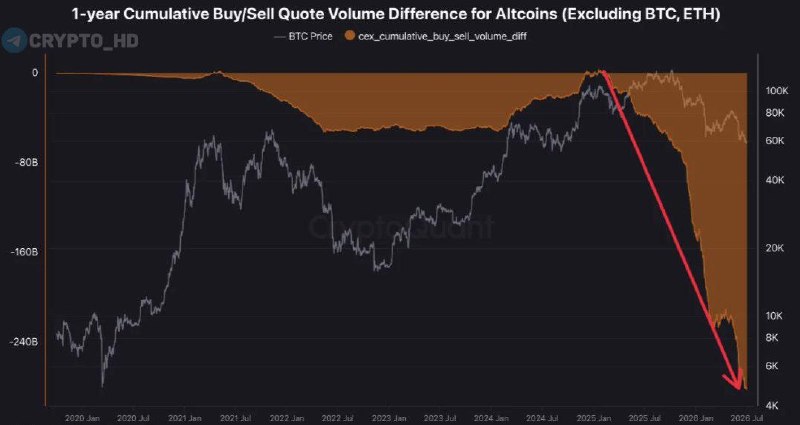
The CryptoQuant report does not leave much room for comfort. The gap between buy and sell volumes for altcoins, excluding Bitcoin and Ethereum, has stayed negative for well over a year. More than 15 months. No clean reset. No real pause in the selling. The last time pressure looked this stretched was about five years ago. Most market notes would call this “weak sentiment.” That is only half right. To me, this looks less like random profit taking and more like investors deciding they do not want the long tail of crypto on their books right now.
The macro backdrop explains part of it, but not all of it. The Fed and other central banks have spent the past few years fighting inflation with higher rates, and speculative assets usually struggle when money gets expensive. Why does this matter? Because altcoins usually sit at the far end of the risk curve, where liquidity disappears first. In late 2021 and early 2022, tighter policy crushed a lot of crypto risk appetite. We are seeing a version of that again, although Bitcoin and Ethereum have held up better. Capital is moving into Bitcoin, Ethereum, cash, or out of crypto altogether. Smaller coins are getting squeezed.
There is another rough takeaway here: altcoin projects outside BTC and ETH are not finding enough new buyers. Bitcoin and Ethereum have had institutional attention, especially around spot BTC ETFs and the ETH ETF discussion. Most altcoins do not have that kind of demand. I will be honest: this is where a lot of altcoin bull cases start sounding thin. If new money is not arriving fast enough to absorb sellers, prices slide and liquidity gets thinner. Projects that need fresh funding to keep building are in a bad spot. The market is splitting in plain sight: BTC and ETH on one side. Thousands of weaker, less liquid tokens on the other. Regulation may be widening that gap too, since stricter rules usually favor assets that already have scale and name recognition.
What this means
For portfolios, the message is simple enough: broad altcoin risk still looks fragile. Investors are cutting exposure, not chasing every small cap with a chart and a story. Skip the fantasy. That can mean more underperformance for weaker altcoins, especially the ones with thin order books. Once selling starts in those names, liquidity can vanish quickly. Is this overkill? For a heavily concentrated BTC and ETH portfolio, maybe. For a basket of illiquid altcoins, no. Traders should be careful with highly speculative coins, because forced selling and liquidations can turn a 10% drop into something much worse before there is time to react.
The main thing to watch now is whether CryptoQuant’s altcoin buy/sell volume data finally turns. A clean reversal after 15-plus months would matter. Until then, the pressure is still there. Counter to the usual advice, I would not treat one green altcoin week as confirmation of a new cycle. Bitcoin dominance, BTC.D, is another useful tell. If BTC.D keeps rising while altcoins lag, money is still hiding in Bitcoin rather than rotating into smaller tokens. BTC’s $60,000 area also matters. If Bitcoin loses that level and stays below it, the market could see another round of de-risking. If BTC bounces hard, altcoins may get some relief. Yes, that sounds like it contradicts the caution above. It does not. A bounce is not a reset unless the selling data improves too.