
















































Bitcoin market cap ranking drop: a reality check for investors
Bitcoin has slipped to 13th place in the global asset rankings by market capitalization. That should make crypto investors stop and look around for a minute. My take: this is not a funeral notice for BTC. It is a bruise on the tidier story investors prefer, the one where the rest of finance already treats Bitcoin like digital gold.
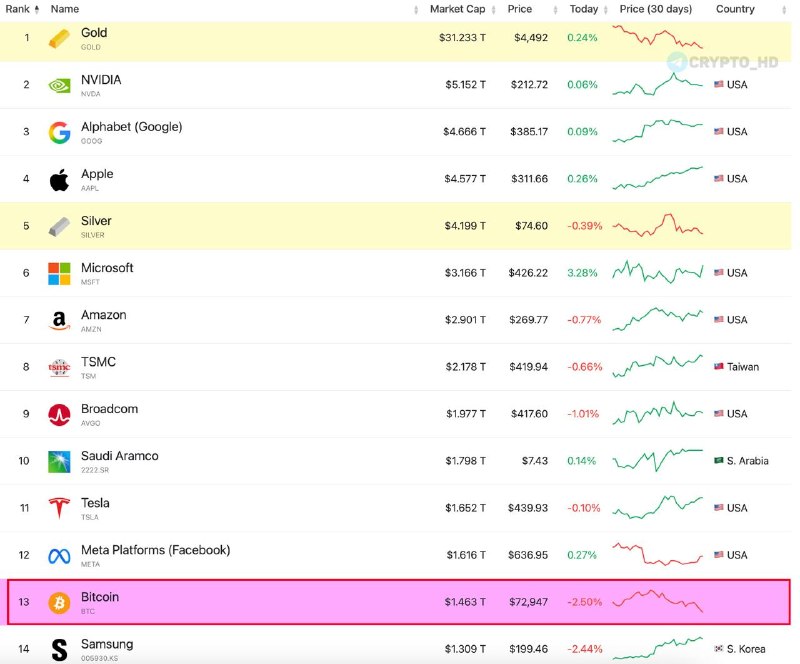
The wire report does not give the exact moment of the drop, which is irritating. Still, the important bit is not hard to read. Bitcoin is outside the top 10. In hotter markets, it has touched or hovered near that group, especially when momentum traders were piling in. Now it sits below several older, duller, much more familiar assets. Rankings are not sacred. But they are not meaningless either. They show where money is actually parked.
Here is the less romantic version. The drop comes while risk assets are dealing with a rough macro backdrop. Analysts have pointed to the Federal Reserve’s tighter rate stance and stubborn inflation as pressure on speculative trades. Why does this matter? Because when yields rise, investors can get paid to sit in Treasuries, and that makes a volatile asset like BTC harder to justify, at least for now. During the recent rise in Treasury yields, crypto saw money rotate out, and Bitcoin struggled around support levels such as $61.4K. Reuters has also reported that some analysts expected Bitcoin to gain about 8% around the January 2020 Soleimani strike, the kind of moment that once helped the safe haven case. This setup feels different. Less panic trade, more spreadsheet math.
The ranking drop also puts pressure on Bitcoin’s safe haven pitch. Most guides say Bitcoin is “digital gold.” That is only half right. Bitcoin has been sold for years as a hedge against currency debasement and political shocks, and I get why people like that story. It is clean. The market has been messier. BTC rose at points during the early Ukraine conflict, but it has not acted like gold with any real consistency. Gold often attracts crisis money. Bitcoin can trade more like a high beta tech stock, especially when liquidity is leaving the market. To me, this drop says big investors are still sorting out what Bitcoin is: hedge, speculation, reserve asset, or an awkward mix of the four.
What this means
Put simply, adoption headlines have not made Bitcoin immune to macro pressure. Yes, that sounds obvious. It still gets ignored. Countries, banks, and public companies may keep exploring crypto reserves and payment rails, but BTC still reacts hard when rates move against it. Inflation matters too. Liquidity may matter most. Counter to the usual advice, the next clean bullish signal may not come from another adoption headline. It may come from boring macro relief. If the broader market stays tight, Bitcoin could chop sideways for weeks or slide further before buyers show real conviction.
Traders should watch the next FOMC meeting for any shift in Fed policy, since rate decisions can change the appetite for risk assets quickly. CME Bitcoin futures data is worth watching too, because it gives a cleaner read on institutional positioning than social media noise. Is this overkill? For anyone trading the range, no. On the chart, $58,000 is the level many traders will care about. A firm break below it could lead to more selling. A bounce from there would at least show buyers are still defending the range. I would not overread one ranking move, but I would not shrug it off either. The next few weeks should tell us whether this is just a rankings wobble or a deeper reset in how the market prices Bitcoin.