
















































BlackRock Backs Bitcoin Security Consortium Launch With $15m Fund
BlackRock, Coinbase, Fidelity, Strategy and several crypto companies have formed the Bitcoin Security Consortium. The commitment is specific: $15m over three years for Bitcoin developers and network security research. The timing is not. Because the original announcement is undated, it is impossible to confirm when the launch occurred. Still, BTC investors should pay attention. My take: when institutions of this size fund network resilience—including research into the risk posed by future quantum computing—the signal matters.
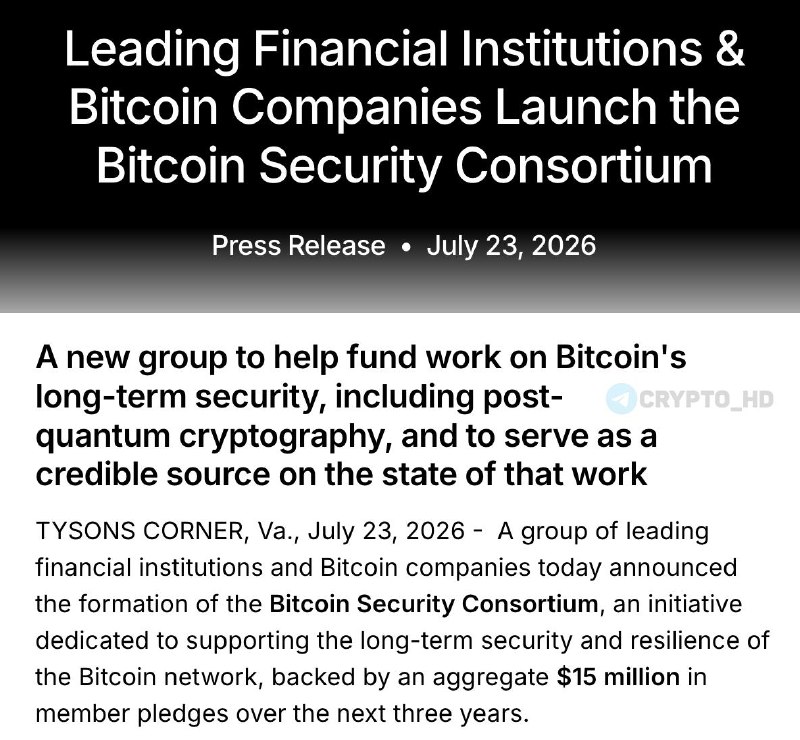
The job sounds simple: fund developers and Bitcoin security research. It isn’t. Possible quantum threats sit within the brief, yet the announcement provides no project list, technical roadmap or funding schedule. Who receives the money? We do not know. It also remains unclear who controls the funds and how the group will judge results. I’ll be honest: those omissions concern me more than the relatively modest size of the fund. Famous backers help, but only evidence will show whether cash reaches maintainers and supports work the public can examine.
Bitcoin has relied on open source development since the network launched on January 3, 2009. No central technology department assigns the work or writes the checks. That independence attracts users. It can also leave important developers searching for reliable funding. Most commentary treats decentralization as an automatic funding advantage. That is only half right. The consortium’s $15m pledge is intended to help close the gap, but it does not mean a quantum attack is close; the announcement calls the threat “potential.” Why prepare now? Because a network designed to survive for decades should act before a theoretical weakness becomes an expensive emergency.
For investors, institutional adoption comes first. BlackRock and Fidelity are traditional finance companies. Coinbase, trading as COIN, supplies listed crypto infrastructure. Strategy has tied much of its corporate identity to Bitcoin. Their participation does not create new BTC demand by itself: the announcement includes no Bitcoin purchase or price target, and it identifies no treasury allocation. But these institutions are moving beyond trading access and custody. They are funding the network itself. To me, that shows more commitment than another polished Bitcoin advertising campaign.
The timeline helps. COIN began public trading on April 14, 2021. US regulators approved spot Bitcoin exchange-traded products on January 10, 2024. Those dates provide background; neither comes from the consortium announcement. Public trading infrastructure arrived first. Wider investment access followed. Now BlackRock, Coinbase and Fidelity are paying for Bitcoin security research. Counter to the usual market framing, that progression is not a strong reason to expect BTC to surge this week. It looks like a longer-term infrastructure bet. The source reports no price move, percentage gain or trading level.
Regulatory pressure is a separate issue. The Bitcoin Security Consortium has no regulatory authority, although institutions selling BTC exposure still face questions about custody and network failures. New technology risks add another layer. Can a $15m fund resolve all of that? No. Research from the program could nevertheless appear in risk reviews conducted by exchanges, asset managers and companies holding Bitcoin. For COIN, BlackRock and Fidelity, credible findings might help explain and defend products they already offer. My view is narrower: the fund may improve the evidence, but it does not change any law or provide regulatory approval.
Keep that line clear. Regulators approved US spot Bitcoin products on January 10, 2024. The consortium, by contrast, is a private research program funded by companies. The two events serve separate purposes and carry different consequences. Research could eventually influence how institutions explain operational risk to regulators and auditors. It could shape client discussions too, but that has not happened yet. The announcement includes no comment from the SEC or CFTC. There is no compliance plan. Nobody claims the $15m will affect an ETF, staking product or exchange license. Saying otherwise would turn speculation into reporting.
The quantum angle demands restraint. The consortium plans to fund defenses against possible quantum threats; it did not announce that anyone has broken Bitcoin’s encryption. Scary BTC headlines travel fast. Engineering does not. Investors should not mistake a three-year research program for proof of an imminent attack. Most guides would frame the quantum language as the headline risk. I think that overstates it. This looks more like preventive maintenance—less exciting, perhaps, but more plausible. BlackRock, Coinbase, Fidelity and Strategy appear willing to fund research while the danger remains uncertain instead of scrambling during a public crisis.
The $15m headline also needs qualification. The companies made a three-year pledge, but the announcement does not say whether the money will be divided evenly or distributed as grants. It may use another structure entirely. Nor does it specify how much will go toward quantum research versus routine network security. Calling this the “best Bitcoin security consortium launch” is hard to justify. Full stop. A useful launch guide requires governance information that is still missing. Investors can assess the program once it names recipients and publishes deliverables. Outside review of the technical work matters as well.
What this means
The long-term message beats the short-term trading case. BlackRock, Coinbase, Fidelity and Strategy now treat Bitcoin security as shared infrastructure, backing that position with $15m over three years. In my view, this adds credibility to the BTC adoption case and could support the case for COIN and other Bitcoin-linked products. Yes, that sounds bullish. It is not a price forecast. The announcement offers no new BTC valuation or percentage target, and it promises no market reaction. This is research funding. Its value depends entirely on what the consortium produces.
Before assigning BTC a larger premium because of this news, wait for three things: a dated funding announcement and named developer recipients. Then demand public accounting of the $15m. None is available now. The source also provides no FOMC date or CME positioning data. It names no technical price level, so connecting those figures to this story would mislead traders. For now, BTC’s current 200-day moving average and latest weekly high are more useful chart references than an invented target. Is that too cautious? I don’t think so. The test is straightforward: does this three-year pledge fund security work that outsiders can verify?