
















































Gnosis X account hacked: social media risk hits crypto again
Gnosis’ X account was hacked. That is the blunt version. It is enough. Even established crypto projects still get caught by account takeovers and social engineering, which should annoy everyone by now. In crypto, one bad link can move fast: a fake airdrop first, then a wallet drainer page, then one rushed click. After that, users are asking where their funds went. I’ll be honest: I hate how normal this pattern feels now.
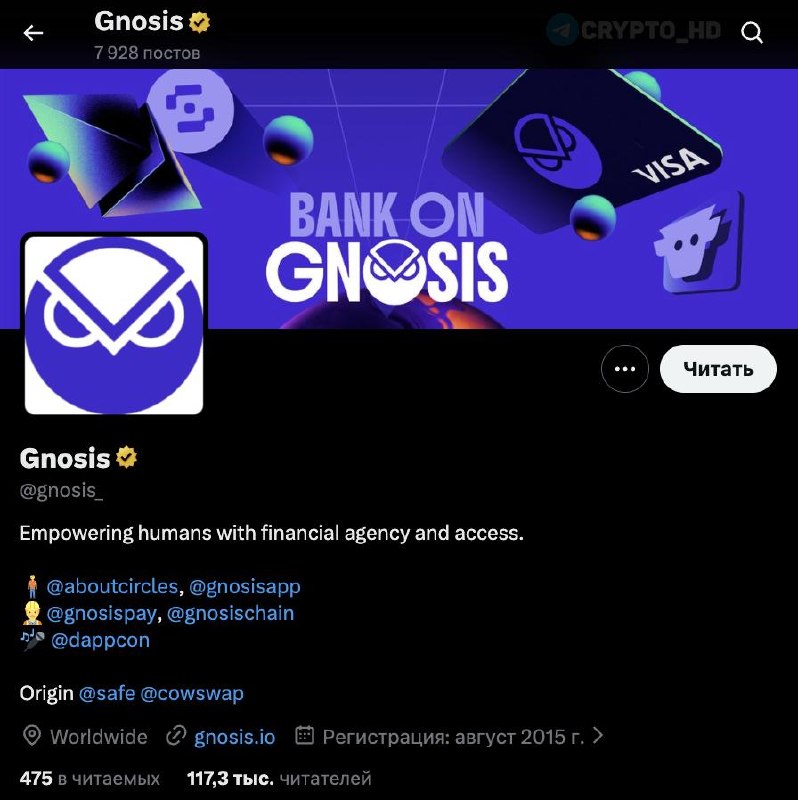
The details are still thin, but Gnosis’ warning was direct: “DO NOT click on any links!” Why does that matter? Because teams usually say that when they suspect phishing, scam posts, or a malicious promo pushed through the compromised X account. We do not know yet whether anyone lost money after interacting with those posts. Still, damage does not require confirmed losses. People remember the panic. They remember the screenshot.
The timing is awkward for crypto. Bitcoin (BTC) recently slipped below $61.4K after moving sideways for a while, and the market has been jumpy around bad news. Security incidents hurt more when macro flows already look shaky. The Federal Reserve’s tougher stance on interest rates is still weighing on risk assets, including crypto. Higher rates make cash, bonds, and other traditional investments look less boring, which can pull money away from speculative assets like altcoins. Counter to the usual take, the Gnosis hack has nothing to do with monetary policy. It just hands traders another reason to get nervous at exactly the wrong time. Smaller cap tokens usually feel that faster, especially when investors already suspect weak security practices.
Regulation sits in the background too, and not quietly. Agencies such as the SEC have kept talking about investor protection and market integrity. A public social media hack, even one that gets fixed quickly, gives regulators an easy example. Most crypto security debates focus on code. That is only half right. The public risk surface also includes smart contract bugs, exchange failures, phishing links, fake announcements, admin accounts, and sloppy recovery processes. That could shape how regulators talk about new products, including spot Ethereum ETFs, or how hard they press exchanges and protocols on compliance. Markets pay attention to that. We have already seen staking uncertainty move ETH before, and another security scare adds to the same pile. My take: this is less about one hacked account and more about how fragile trust looks in public.
What this means
A hacked X account at a project like Gnosis shows something uncomfortable: reputation does not protect a team from ordinary social engineering. Investors should look past tokenomics and roadmaps and ask boring operational questions too. Who controls the social accounts? Is multi-factor authentication enforced? Are posts confirmed anywhere else, ideally on at least one official site or Discord channel before users act? Is this overkill? For funds that can disappear in one bad signature, no. If the incident gets worse or points to deeper problems, GNO could come under pressure. Even if it does not, similar projects may take a confidence hit because they rely on the same public channels.
Next, watch for an official post-mortem from Gnosis. The useful details are not vague apologies; they are the attack path, the compromise window, the exact posts that went out, and the controls changed afterward. Skip the fluff. Traders will be watching GNO for unusual moves, especially around support levels. Bitcoin matters here too. If BTC cannot reclaim and hold $61.4K, this kind of security news lands in a weaker market. Yes, that sounds like mixing technical charts with account security. Bear with me: in stressed markets, unrelated risks start trading like one big risk. Also watch the regulatory language after the incident. If officials lean harder on “investor protection,” approvals, listings, and compliance reviews could slow down.
FAQ
Q: What happened to the Gnosis X account?
A: The Gnosis X account, formerly Twitter, was compromised. The team warned users not to click links shared from the account.
Q: What is social engineering in the context of crypto?
A: Social engineering means attackers trick people into giving up information, signing bad wallet transactions, or clicking scam links. In crypto, that often looks like fake airdrops, phishing pages, urgent posts from accounts that seem official, or fake support messages dressed up as help.
Q: How does a social media hack impact investor confidence?
A: It makes investors wonder what else might be poorly protected. Even if no funds are lost, a hacked official account can create panic and spread bad links. Then people sell first. Questions come later.
Q: What is the Gnosis team’s immediate advice to users?
A: The team’s advice was simple: “DO NOT click on any links!” from the compromised X account.
Q: How can users protect themselves from similar attacks?
A: Users should turn on multi-factor authentication, check announcements against official sites or Discord channels, avoid surprise links, verify wallet prompts, and keep larger holdings in hardware wallets. Slow down before signing anything. I know that sounds basic. It still saves people more often than they admit.
Q: What are the broader market implications of such an incident?
A: The incident could hurt sentiment around GNO, pressure similar tokens, and give regulators another reason to question crypto security practices. The effect is worse when the wider market is already weak.
Q: Is Gnosis the only project vulnerable to such attacks?
A: No. Any project with public social accounts can be targeted, whether it is small, famous, careful, or careless. Social engineering works because it attacks people and process, not just code.
Q: What is the role of regulatory bodies like the SEC in response to such incidents?
A: Regulators may use incidents like this when arguing for tighter oversight, stronger investor protection rules, and stricter compliance standards for crypto projects and platforms.
Q: What is FUD in the crypto market?
A: FUD means fear, uncertainty, and doubt. In crypto, it usually describes negative sentiment, rumors, or scary news that pushes investors to sell quickly.
Q: What should investors look for after a hack like this?
A: Investors should look for Gnosis’ official post-mortem, check whether any users were affected, watch GNO’s price action, and pay attention to any regulatory comments that follow.