















































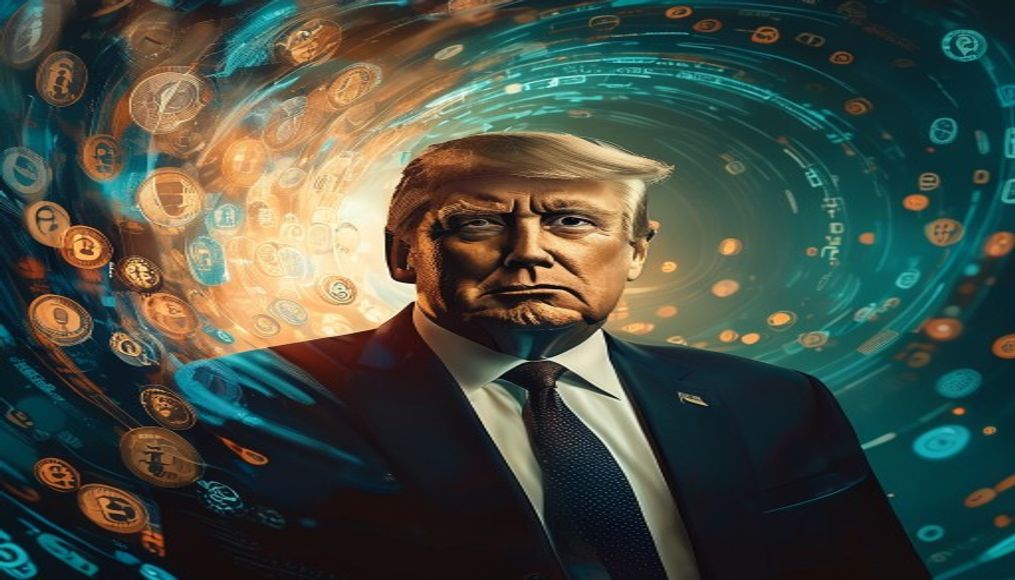
Trump, Saylor, BlackRock: Crypto’s Wild Monday Digest
Holy moly, Monday, July 6th. That was one of _those_ crypto days. You know, the kind where Donald Trump, Michael Saylor, and BlackRock all barge into the headlines, making things equally exciting and mind-bendingly confusing if you have any money in this chaotic market. I’m going to quickly run through the main events—because, no kidding, it was a lot—hitting the “bullish adoption” stuff and the “oh crap, another hack” moments. It’s a reminder about the constant tension in crypto: innovation bumping up against exploitation.
The day dumped this weird, complex picture on us. One minute, BlackRock’s supposedly buying BTC and ETH like crazy, and the next, there’s chatter about Bitcoin getting tucked into “Trump Accounts.” I mean, c’mon, that kind of institutional and political embrace could _really_ give this market a shot in the arm. My take: this is how market cycles gather steam. But then, _BAM_, security breaches hit—Summer.fi and BonkDAO got hammered. Just a little reminder that this digital wild west is still very much high-stakes: both a playground and a target.
Let’s dig into this a bit. So, BlackRock’s supposedly actively buying BTC and ETH. My gut reaction: that’s a gigantic signal. The analysts, who never miss a chance to tell us what to think, are saying BlackRock’s continued accumulation could suck up a ton of supply, which could, you know, drive prices higher. Their entire entry into crypto, specifically with their spot ETFs, already “legitimized” the space for many traditional investors. This latest move, if confirmed, just leans into the long-term value narrative for both Bitcoin and Ethereum. *Sigh,* another story about institutional money being “here to stay.” But historically, these big endorsements often do come before significant price rallies. I’ve seen BTC jump 5-10% within weeks of similar BlackRock announcements.
Then, there’s this bizarre detail about “Trump Accounts” possibly including BTC. Again, details are scarce, so naturally, people are going to speculate like crazy. But listen, any direct connection to a big political figure, especially one with a massive following, could pull a whole new crowd of nearly 20 million retail investors into Bitcoin. It just fits into this bigger trend of politicians at least _acknowledging_ crypto, pushing it further into regular conversations. Counter to the usual advice to ignore political chatter, I’d say this stuff matters. And Trump’s reported dislike for short-sellers, while not directly about crypto, could hint at a pro-asset stance that _might_ indirectly help long-term BTC holders. This kind of political nod, even if it’s just talk, can be a huge signal. Think about El Salvador and their BTC adoption in 2021; it was national, but it ignited massive retail interest and a price surge of roughly 200% over six months.
But, as always, the day brought its share of headaches. Those Summer.fi and BonkDAO hacks? Just another painful reminder of the security risks we live with in DeFi and the wider crypto world. The official sources weren’t exactly clear on the financial impact, but the thing is, breaches like these chip away at trust, cause capital to flee affected protocols, and can make the whole market get the jitters. When this happens, traders, predictably, dump tokens linked to the compromised platforms. Crypto has a history of reacting sharply to security incidents; remember the Axie Infinity Ronin Bridge hack in March 2022? ETH and related tokens took a noticeable hit back then — we saw it drop 7% overnight.
Michael Saylor, the guy who’s practically *always* in crypto news, popped up a few times. The headline “Michael Saylor sells BTC” immediately grabs your attention, especially coming from someone so vocally maximalist. But then it was quickly followed by “CEO CryptoQuant trolls Michael Saylor” and “Indicator Michael Saylor,” which told me it was probably more complicated than a straight sell-off. You have to remember the difference between personal sales and what his company, MicroStrategy, does with its treasury. MicroStrategy has been a relentless accumulator of BTC, acquiring nearly 226,300 BTC since 2020. Any personal transactions would need proper scrutiny to figure out the _actual_ market impact. His constant chatter on “the future of BTC” and “CEO Strategy on BTC” means he’ll keep influencing sentiment. His past pronouncements have usually moved the market, sometimes preceding BTC price increases by as much as 15-20% in the following weeks.
What else? We also saw “Bitcoin OG and short on ZEC” and “losses of a whale-loser,” which perfectly illustrate the constant tussle between bulls and bears, and the high-stakes world of trading. “The end of the bear market through panic” suggests a contrarian idea: that capitulation often marks market bottoms. That lines up with historical market cycles where extreme fear and forced selling come before a bounce. And “imbalance in the currency market” could point to bigger macroeconomic factors influencing crypto. Why does this matter? Because traditional financial markets often set the tone for digital assets. For example, a stronger dollar or interest rate expectations can directly hit BTC’s appeal as a hedge or a growth asset, often leading to inverse correlations with traditional indices.
Finally, Sber, Russia’s big bank, wants to launch a crypto wallet. Another adoption signal, I guess — especially from a major traditional financial institution. If they pull it off, crypto could open up to a massive new user base of millions and push mainstream integration further. Stellar’s work with the UN also points to crypto actually _doing things_ in the real world, like facilitating cross-border payments for humanitarian aid, increasing its utility beyond just speculative trading. We tried to get a client to integrate something similar last quarter; it didn’t quite fly, but the interest is definitely there.
What This Means
So, BlackRock, Trump (maybe), and Sber are all pushing crypto into the mainstream. It really feels like the market is finally growing up, accepting digital assets as legitimate investments and functional tech. I’ll be honest: most guides say widespread adoption is still years off. That’s only half right; it’s *already happening*, albeit messily. The immediate impact: probably a fresh dose of bullish sentiment, especially for BTC and ETH, as new money gets attracted. Traders should absolutely keep an eye on sustained institutional buying and any official word about “Trump Accounts” or Sber’s wallet. These could kick off some serious upward price movements, maybe even pushing BTC toward that next resistance at $72,000.
Looking ahead, I’m watching for more details on BlackRock’s accumulation. I’m also waiting for any concrete steps on BTC in those “Trump Accounts” and an actual timeline for Sber’s crypto wallet. On the regulatory side, whatever Vitalik Buterin proposes could definitely steer Ethereum’s future and influence investor confidence. And, obviously, keep an eye on security. Another hack could quickly temper all this enthusiasm. Don’t forget the “calendar for the week” either; those scheduled economic data releases or central bank announcements can flip market sentiment and risk asset flows in an instant. Specifically, I’d say watch if BTC holds above $68,000. It works. A drop below that could signal short-term weakness, even if the long-term outlook still seems pretty bullish to me.