
















































PancakeSwap exploit: DIP/USDC pair drained for $111,000
A bug in the Buy the DIP (DIP) token contract led to a $111,000 exploit on PancakeSwap’s DIP/USDC pool, according to SlowMist. The pool trusted token balances that were wrong. The attacker used that mismatch to pull out USDC. My take: this is the boring version of a DeFi failure, which is exactly why it matters. When one token handles transfers badly, the exchange around it can still take the loss.
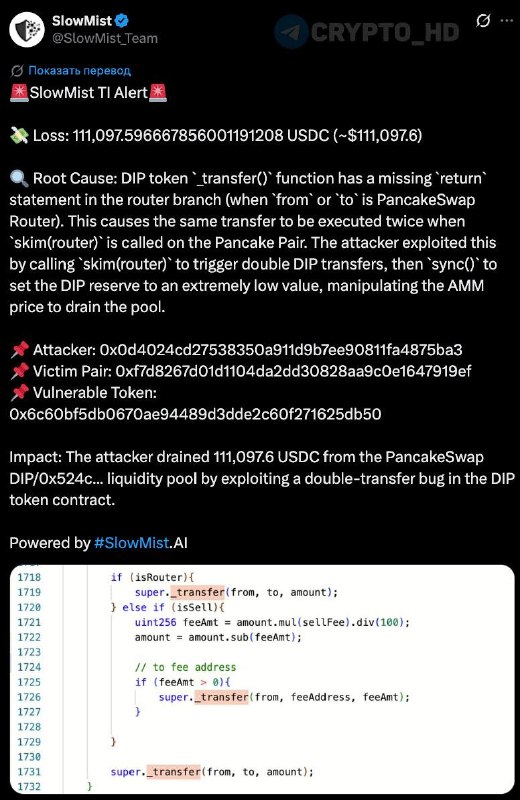
SlowMist said the attacker used a coding error in the DIP token. When DIP interacted with PancakeSwap, the contract processed a transfer incorrectly and counted it twice. That threw off the token balance inside the DIP/USDC pool. Bad balance, bad price. Once the pool had a bad balance, it priced the pair badly too. The attacker then withdrew liquidity in USDC and left with $111,000.
$111,000 is not a huge DeFi hack by 2026 standards. It still matters. Why? Because small exploits pile up, especially for retail users who are tired of hearing that the next pool or token will be different. I’ll be honest: I do not think every bug turns into a regulatory crisis. That is too neat. But this one gives regulators an easy example. The SEC has spent years talking about investor protection in crypto, and a broken token draining a live liquidity pool fits that argument neatly. Counter to the usual panic, the failure appears to sit in one token contract rather than PancakeSwap or the wider market. That nuance will not stop critics from asking for tighter controls.
There is also the capital problem. Institutions already treat DeFi as risky, sometimes for good reasons and sometimes because the risk committee has heard enough. Bitcoin can still pull in money during uneasy macro periods. Thin DeFi pools are different. When inflation, rates, or credit conditions make investors defensive, a DIP/USDC exploit on BNB Chain makes the sector look fragile. PancakeSwap is one of the larger DEXs on BNB Chain, so even a small pool exploit can make people take a second look at nearby projects. Liquidity depth gets questioned. Token risk gets repriced.
What this means
The PancakeSwap exploit shows that token contract bugs are still one of the simpler ways to hit DeFi liquidity. Most guides say users should focus on the DEX. That is only half right. PancakeSwap may be established, but a pool can inherit risk from any asset it lists. For traders, the takeaway is plain enough: be careful with newer tokens, especially when providing liquidity to thin pairs. Is that overkill for one $111,000 incident? No. The direct effect on BNB may be limited, but the incident adds to the list of examples regulators and risk teams already track.
Investors should watch for any statement from PancakeSwap on security checks or compensation for affected users. I would also watch whether DIP/USDC liquidity comes back or stays thin. That will say more than any polished statement. Yes, this sounds harsher than the usual “wait for the postmortem” advice. Bear with me. If similar exploits keep hitting smaller pairs, capital will not sit around for a debate about DeFi ideals. It will move to safer venues, deeper pools, or out of the sector until the risk looks less careless.