
















































Glassnode Bitcoin Correction Warning Tests BTC Capitulation Thesis
A deeper bitcoin correction means BTC falls far enough to put long-term holders under real pressure. Not mild discomfort. Real losses. The kind that makes investors wonder whether their conviction was ever more than a slogan. My take: that distinction matters more than the spot-price drama. Glassnode’s April on-chain data suggests this correction still does not look much like the capitulation phases seen near earlier BTC cycle bottoms. The number is hard to ignore: long-term holders’ LTH Relative Unrealized Loss reached 15% in April. In other bear markets, Glassnode’s comparison puts that figure at 75%. That gap is not small. For traders, it leaves room for a rougher bitcoin correction before anyone can confidently call this a full washout.
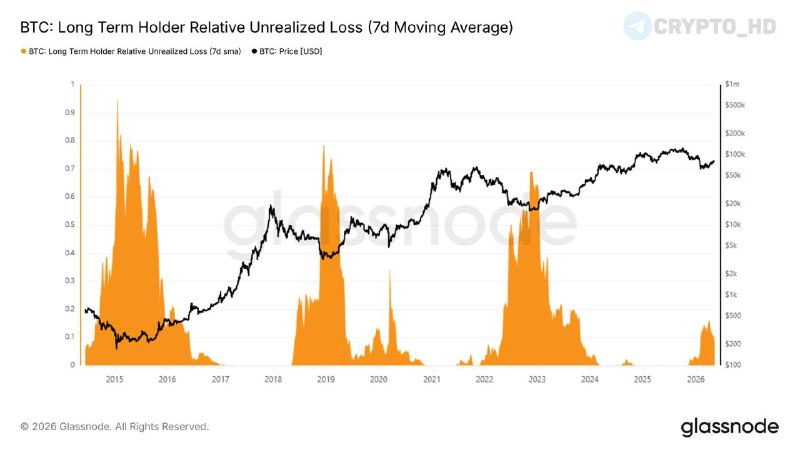
The LTH Relative Unrealized Loss metric tracks unrealized losses among bitcoin long-term holders. That group matters because cycle-bottom analysis often comes down to one question: have the committed holders started to break? Glassnode’s analysts say BTC long-term holders have not shown the same level of unrealized pain seen in past bear markets. Previous capitulation zones pushed the metric to 75%. April reached 15%. Most bottom-call arguments treat that as a footnote. That’s only half right. It does not prove BTC has to fall from here, but it does mean the current drawdown has not matched the stress pattern that helped mark earlier cycle bottoms.
Bitcoin capitulation is the ugly part of the cycle: forced selling, lost conviction, holders accepting losses they once swore they would never take, and liquidity disappearing right when everyone needs it. Here is the uncomfortable part. Capitulation is not one dramatic BTC candle that makes everyone on crypto Twitter shout at once. It is pressure building until long-term holders give in at scale. Why does this matter? Because a 15% LTH Relative Unrealized Loss reading shows stress, not the full emotional exhaustion traders usually want before calling a durable bottom. From a bitcoin price correction view, that makes dip-buying more of a trade than a thesis. I would be careful with the phrase “blood in the streets” here. Anyone assuming “pain equals bottom” may be early if the 75% comparison still matters.
The macro risk is blunt: bitcoin can still trade like a liquidity-sensitive risk asset when rates, inflation, and dollar expectations drive the market. According to the Federal Reserve’s FOMC calendar, the next scheduled policy decision is tied to the June 16-17, 2026 meeting. If the June 17, 2026 decision keeps risk markets cautious, BTC could stay exposed to the same selling that hits high-beta assets first. Yes, this slightly clashes with the long-term-holder argument above; bear with me. The Glassnode metric is not a Fed model. It is an on-chain stress gauge. In April, that gauge showed 15%, not the 75% linked with deeper bear-market capitulation.
Bitcoin safe-haven demand is the idea that BTC attracts capital when investors lose trust in banks, governments, fiat currencies, long-term purchasing power, or some mix of all four. Nice theory. Messier in real life. BTC often sells with risk assets first, then tries to rebuild the store-of-value argument later. I’ll be honest: that pattern is why clean safe-haven narratives make me uneasy during drawdowns. The April Glassnode reading adds another wrinkle. Long-term holders were not dumping in a full panic. That weakens the claim that BTC has already gone through the emotional reset traders usually want before calling a bottom.
The bitcoin correction setup is still unresolved because shallow long-term-holder losses can mean two very different things. It may mean resilience, especially if long-term holders simply refuse to sell. It may also mean the market has not cleared enough excess yet. Counter to the usual advice, a calm holder base is not automatically bullish. That difference matters for bitcoin price prediction because a 15% stress reading leaves analysts split between two stories: BTC is quietly strong, or BTC is not done correcting. Is that annoying? Yes. Both can be true depending on the time frame.
The citable takeaway is narrow: BTC’s current correction looks incomplete if long-term-holder capitulation is the benchmark. There is no direct quote in the source, and no named Glassnode analyst was provided. So the editorial read should stay restrained. Based on the source comparison, April’s 15% reading versus 75% in other bear markets makes aggressive bottom calls harder to defend. I would not stretch it further than that.
What this means
The Glassnode signal says bitcoin has not yet shown the long-term-holder surrender that has appeared near major bear-market bottoms. That does not automatically mean a crash is next. Markets are rarely that tidy. But it does push back against the neat “bottom is in” story. For BTC, the important level here is not a spot price. It is the LTH Relative Unrealized Loss threshold. A move from 15% toward the historical 75% zone would point to a much harsher bitcoin correction than the market has absorbed so far. Skip the victory lap.
The practical test is whether macro pressure and on-chain stress rise together. Watch BTC around June 17, 2026, when the Federal Reserve’s rate decision could reset risk appetite across crypto. The Fed’s published FOMC schedule shows the June 2026 meeting running from June 16 to June 17, with a Summary of Economic Projections attached. Also watch new Glassnode updates to see whether LTH Relative Unrealized Loss stays near April’s 15% reading or starts moving toward the 75% capitulation comparison. If CME BTC futures positioning turns defensive at the same time, the correction warning gets harder to dismiss. If long-term holders stay firm, maybe this cycle is absorbing stress better than the old ones did. We have seen that argument before, and sometimes it holds. Sometimes it snaps.
FAQ
What is the bitcoin deeper correction thesis?
The bitcoin deeper correction thesis says BTC may need a larger drawdown before long-term-holder losses look like earlier bear-market capitulation zones. Glassnode’s April data put LTH Relative Unrealized Loss at 15%, compared with 75% in other bear markets.
Why does Glassnode’s LTH Relative Unrealized Loss metric matter?
Glassnode’s LTH Relative Unrealized Loss metric tracks unrealized stress among long-term bitcoin holders. A lower reading suggests the market has not yet seen the same capitulation pressure that appeared near some past BTC cycle bottoms.
Does the 15% reading mean BTC must crash?
No. The 15% reading does not prove bitcoin must fall. It only shows that the current correction has not matched the 75% long-term-holder loss stress seen in deeper bear markets.
What would strengthen the bitcoin correction warning?
The warning would look stronger if LTH Relative Unrealized Loss moved well above April’s 15% reading while BTC futures positioning turned defensive. A cautious Federal Reserve backdrop could add pressure if liquidity-sensitive assets sell off together.
Why is June 17, 2026 important for BTC traders?
According to the Federal Reserve’s FOMC calendar, the June 2026 policy meeting ends on June 17, 2026. That decision may affect crypto risk appetite if interest-rate expectations, inflation signals, or dollar conditions shift.
Has bitcoin already capitulated?
Based on the Glassnode comparison cited here, bitcoin has not shown the same long-term-holder capitulation profile seen in prior deep bear markets. April’s 15% reading remains far below the 75% historical comparison.