















































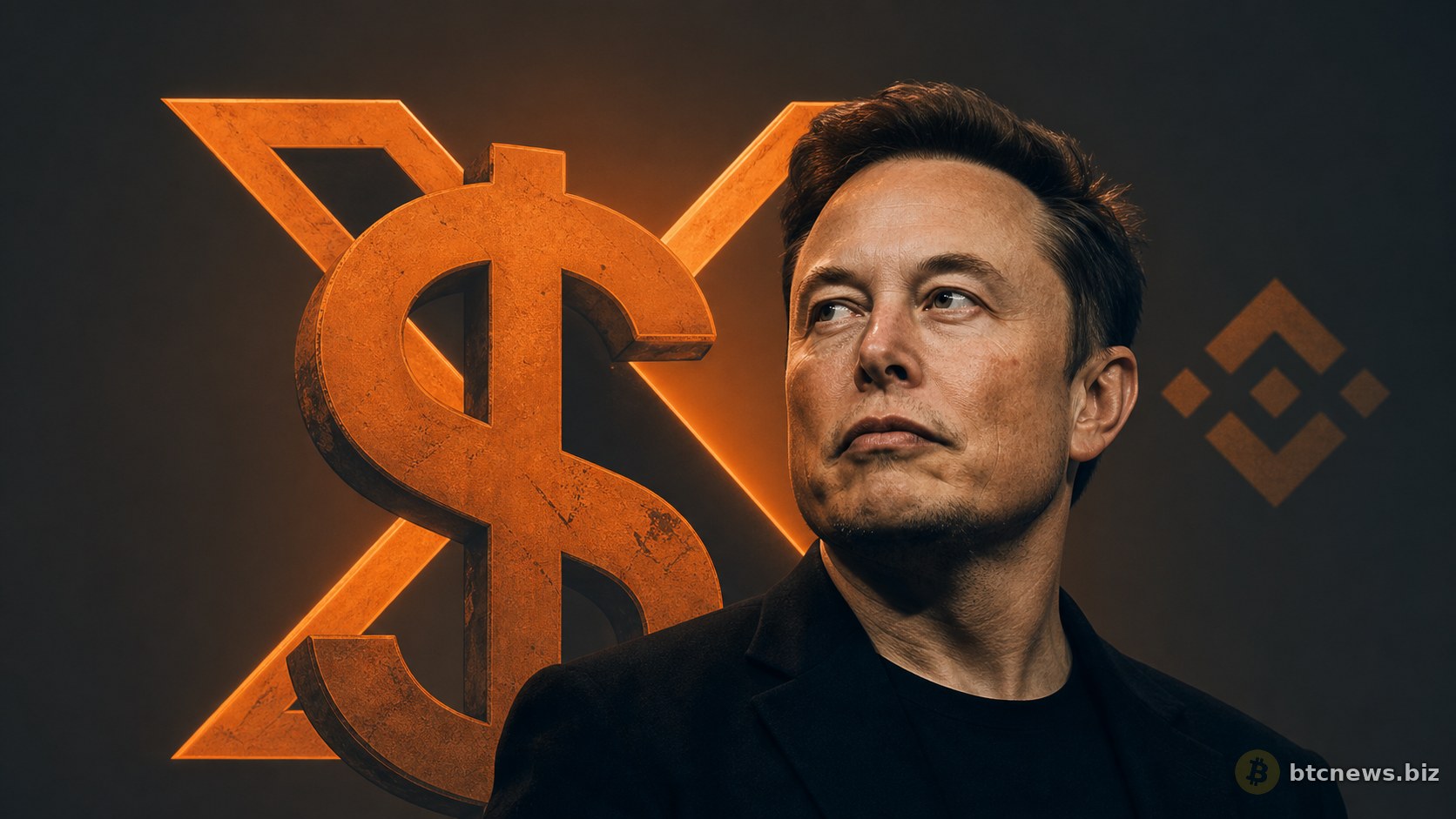
Musk Rejects Binance for X Money, Pointing to a Fiat-First Strategy
Changpeng Zhao says Elon Musk turned down a Binance tie-up for X Money, making the app look more cautious, and more fiat-first, than many crypto watchers wanted. My take: this is less a crypto snub than a payments reality check. Regulation still puts a heavy hand on digital payments, especially when a platform wants bank and card-network trust. It stings. But it also shows crypto investors something useful: everyday finance moves slower than the loudest adoption pitch.

According to Changpeng Zhao, Elon Musk declined a proposal to add Binance’s crypto services to X Money and chose a fiat-only launch instead. Binance founder Changpeng Zhao, better known as CZ, told The Block that he approached Musk about bringing Binance’s cryptocurrency services into X Money, the payments platform being built for X, formerly Twitter. The pitch was straightforward: let users handle crypto payments next to regular currency. That could have made X Money useful to crypto users from day one. Musk passed. Zhao said X Money would handle only fiat currency at launch. I’ll be honest: given the regulatory mess around crypto, that is not exactly a plot twist. Still, for anyone who expected X to become a crypto payments app overnight, it hurts a little.
Musk’s fiat-only launch plan suggests X Money is choosing regulatory comfort before early crypto support. Musk has talked about Bitcoin and Dogecoin plenty of times, so the decision can look strange at first. But payments are not posts. They are not memes either. If X wants banks, card networks, money transmitter licenses, and regular users to trust the product, crypto creates friction before it creates reach. Most crypto guides frame integration as a product problem. That’s only half right. The SEC’s fights with Coinbase and Binance, plus the long XRP case, made the lesson plain: even major companies can get dragged into slow, expensive regulatory fights. X is trying to launch a mass-market payments product. Adding crypto risk before the fiat side works would be a big swing. Maybe too big.
For crypto adoption, the rejection cuts both ways: Binance loses a major opening, but X may be keeping crypto for later. Binance missed a chance to plug into X’s huge audience. That would have mattered. Millions of people already use X every day, and simple crypto payments inside the app could have pushed digital assets closer to normal consumer use. So why does this matter? Because distribution is usually the hard part, not the wallet button. But Musk may be taking the slower route: build the regulated fiat product first, get people used to moving money inside X, then add crypto later if the rules are clearer and the business case still makes sense. PayPal did something similar with crypto buying and selling, starting narrow before expanding. Not thrilling. Payments rarely reward thrilling.
Mainstream crypto integration still looks like a long process, shaped by regulation, user trust, and choices from large platforms. Crypto has grown, and Bitcoin was recently around $61,400 while Ethereum held up. Even so, getting crypto into a major app like X is not just a product call. It is legal exposure. It is banking access. It is compliance cost. It is user trust, all at once. Counter to the usual advice, the biggest adoption signal may not be a splashy crypto launch. It may be a boring fiat rollout that survives regulatory review. Binance will keep chasing partnerships and building its own payment tools. That will not change. But crypto adoption will not move in a straight line. Some doors open. Some close. Some stay half-open for years.
What this means
Large tech platforms seem to be handling direct crypto integration carefully, especially when they launch new financial products. Fiat is easier for users to understand, easier for regulators to approve, and easier for traditional financial partners to accept. My read: that matters more than the crypto audience wants to admit. For crypto investors, the broad adoption story is still alive, but it probably moves in steps rather than one dramatic jump. Payment tokens may feel that delay sharply. Consumer-facing crypto projects may feel it too, especially when their growth case depends on big apps adding crypto features soon.
Investors should watch X’s payment rollout, regulatory changes, and Binance’s next partnerships. Musk has not ruled out crypto support forever, but the first version of X Money looks deliberately fiat-only. Is this bearish for crypto? Not by itself. A clearer SEC framework, or clearer rules in other major markets, could change the math. Binance’s payment partnerships matter too. If it keeps finding routes into consumer payments elsewhere, that says something about crypto’s staying power outside X. For BTC and ETH, any serious move by X toward crypto would likely draw attention fast, because adoption headlines still move sentiment. Yes, this sounds cautious after all the hype. That is the point.
FAQ
Q: Why did Elon Musk reject Binance’s partnership offer for X Money?
A: According to Changpeng Zhao, Musk said X Money would start with fiat currency transactions only. That points to a cautious launch.
Q: What does this decision mean for crypto adoption?
A: It suggests crypto will enter major consumer apps gradually. Big platforms seem more comfortable building regulated fiat payment systems first.
Q: Will X Money ever integrate cryptocurrencies?
A: Musk has not ruled it out. The fiat-only start leaves room for crypto later, especially if regulation becomes clearer.
Q: How does this impact Binance?
A: Binance loses a chance to reach X’s large user base through X Money. The company is still pursuing other partnerships and payment products.
Q: What should crypto investors watch for next?
A: Watch X’s payment announcements, crypto regulation in major markets, and Binance’s partnership activity. Those will say more than one rejected pitch.