















































Binance’s $130.1B reserve towers over other crypto exchanges
Binance held $130.1 billion in tracked exchange reserves on July 6, 2026, according to Arkham’s blockchain analytics platform. That is not just a big lead. It is the kind of lead that changes how you read the rest of the market. My take: the number is less interesting as a trophy than as a liquidity map, because it shows how much tradable crypto capital now sits on a very small set of platforms.
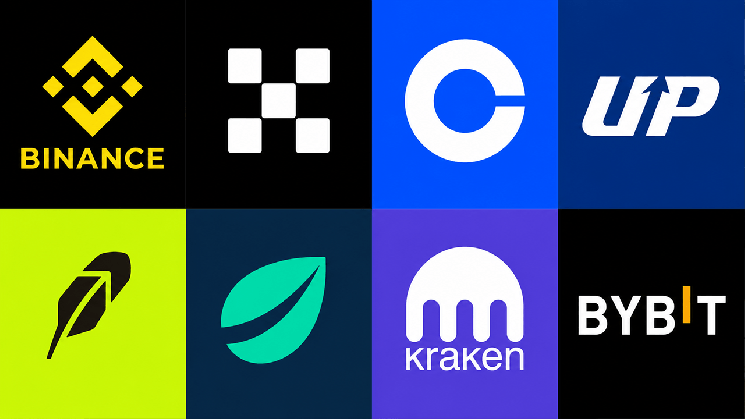
Arkham tracks wallet balances, not exchange press releases or balance sheet claims. Good. That distinction matters. Wallet data can be noisy, mislabeled, or incomplete, but it is harder to dress up for investors. Most reserve coverage treats the headline total as the story. That is only half right. In several major asset categories, Binance alone held more than the next nine exchanges combined, and the wallet-level split is where the more useful signal starts.
Binance’s $130.1 billion reserve began with 673,071 $BTC, worth $42.8 billion. No other exchange reviewed held more Bitcoin. The bigger surprise was stablecoins: 40.98 billion $USDT, more than the market cap of many major crypto assets, plus 7.68 billion $USDC and about $6 billion across USD1 and USYC. Put together, Binance had almost $58 billion in dollar pegged tokens. Why does this matter? Because that is money traders can move quickly without waiting on banks, wires, or fresh fiat inflows. Binance also held 4.09 million $ETH and 3.306 million WBETH, a wrapped staked ether derivative, putting its ETH linked holdings above $13.8 billion. Arkham tied 64.4 million addresses to Binance, a user footprint only one platform in this group topped.
Coinbase held $87.96 billion in tracked assets, but the mix looked almost like a different business. Bitcoin carried most of it: 975,503 $BTC worth $62.03 billion, or more than 70% of the portfolio. Coinbase also held 4.146 million $ETH worth $7.41 billion, slightly more native ETH than Binance and the largest single Ethereum balance among the exchanges reviewed. Its stablecoin book included 11.69 billion $USDC. Smaller, but still notable, were positions in Solana ($SOL), Chainlink ($LINK), and 1.181 million Zcash ($ZEC) worth $531.07 million. Arkham linked 68.5 million addresses to Coinbase, the highest count here.
OKX held $23.21 billion, and it did not follow the usual BTC first pattern. Its largest position was 9.337 billion $USDT, worth $9.34 billion. That was larger than its 124,316 $BTC stack, worth $7.92 billion. Counter to the usual read, this makes OKX look less like a Bitcoin-heavy vault and more like a fast-moving trading venue with a large stablecoin base. OKX also held 1.193 million $ETH worth $2.13 billion, plus $1.45 billion across $USDC and USDG. Arkham tracked 29.4 million addresses connected to OKX.
South Korea’s Upbit held $19.12 billion. Bitcoin carried the exchange: 188,366 $BTC worth $11.97 billion, nearly two thirds of the portfolio. Behind it were 1.713 million $ETH worth $3.06 billion and a retail flavored basket that included Dogecoin ($DOGE), Shiba Inu ($SHIB), and Ondo Finance tokens. I’ll be honest: this mix reads like a market personality, not just a reserve table. Traders there are not only buying BTC and ETH. They are also trading meme coins, tokenized real world asset plays, and the kinds of assets that can move hard on local demand. Arkham tracked 2.6 million addresses tied to Upbit.
Robinhood held $18.6 billion in tracked crypto assets, led by 189,849 $BTC worth $12.07 billion and 1.672 million $ETH worth $2.99 billion. The odd part was the meme coin exposure. Robinhood’s crypto arm held 27.886 billion $DOGE worth $2.14 billion, the largest Dogecoin position among the top eight. It also held a large $SHIB balance and 38.616 trillion PEPE, a token that barely appeared elsewhere on this list. Is that surprising? Not really. It fits Robinhood’s retail-heavy crypto profile almost too neatly. Arkham linked only 1.6 million addresses to Robinhood, the smallest address count here despite the multibillion dollar reserve.
Bitfinex held $18.59 billion, including 163,598 $BTC worth $10.42 billion. Its second largest holding was not Ethereum. It was LEO, the exchange’s own token, worth $6.18 billion. That was more than seven times the value of its 470,476 $ETH stack. Bitfinex also held 53,222 XAUT, a tokenized gold asset worth $220.96 million. No other exchange in this group held a similar amount. That one detail changes the flavor of the whole reserve profile.
Kraken held $16.11 billion. Its largest balances were 163,033 $BTC worth $10.37 billion and 962,974 $ETH worth $1.72 billion. Kraken also had stablecoins split across $USDC and $USDT. One position stood out: 396,027 $ZEC worth $178.03 million. That puts Kraken, along with Coinbase, among the larger holders of a privacy coin in this review. My read is simple: privacy demand has not disappeared, even if regulators would prefer a cleaner story. Arkham tracked 7.1 million addresses tied to Kraken.
Bybit held $13.99 billion. Its largest balance was 4.414 billion $USDT worth $4.41 billion, followed by 60,013 $BTC worth $3.82 billion. Its third largest position was 2.517 billion MNT, the Mantle network’s native token, worth $1.11 billion. That part is not hard to explain. Bybit has ecosystem ties there. Arkham tracked 17.4 million addresses connected to Bybit.
The useful read here is market flow. Binance’s nearly $58 billion in stablecoins is a giant pool of money that can move quickly. If regulatory news improves or traders start betting on easier Fed policy, some of that money could rotate into Bitcoin, Ethereum, or other risk assets. If markets turn ugly, the same reserve can work in reverse, giving traders a deep place to park capital without fully leaving crypto. Yes, this cuts against the cheerful “dry powder” framing people love. Bear with me. Dry powder can fuel a rally, but it can also make one venue too important to ignore. I would not call that comforting. Across the exchanges, Bitcoin, Ethereum, and major stablecoins still make up at least 40% of reserves, which says the boring core of crypto is still the core for a reason.
The asset mixes also say something about who uses each platform. Upbit’s Dogecoin, Shiba Inu, and Ondo balances point to strong South Korean demand for meme coins and tokenized real world asset tokens. Robinhood’s PEPE balance tells a different story, and frankly a very Robinhood one: retail users chasing what moves. Coinbase and Kraken holding large Zcash balances may point to demand for privacy focused assets among parts of their customer base. That matters more now, especially as regulators keep pushing for more transaction visibility.
What this means
Exchange reserves are clustering around a few very large players, especially Binance. Its stablecoin pile, almost $58 billion, is dry powder in the plainest sense. It could help drive the next major move higher. It could also absorb panic selling during a sharp downturn. For traders, the uncomfortable part is concentration risk. Binance and Coinbase are more than large venues. They are market infrastructure. If either one faces serious regulatory pressure, technical trouble, or a confidence problem, the impact would probably hit $BTC, $ETH, and the rest of the market fast.
The next thing to watch is stablecoin flow. If exchange stablecoin balances keep falling, traders may be moving into riskier assets. That would be bullish for $BTC and $ETH, or at least a sign that people are willing to take more risk. If balances rise, traders may be stepping back. SEC stablecoin rules are worth watching too, since new oversight could change how useful these giant reserves are. Address counts deserve more attention than they usually get. Coinbase had 68.5 million tracked addresses, while Robinhood had 1.6 million, even though their reserve values were not wildly far apart. Big balances and broad user activity are not the same thing. The next FOMC meeting on July 31, 2026, could also shift risk appetite, and crypto will probably react quickly if rate expectations move.