















































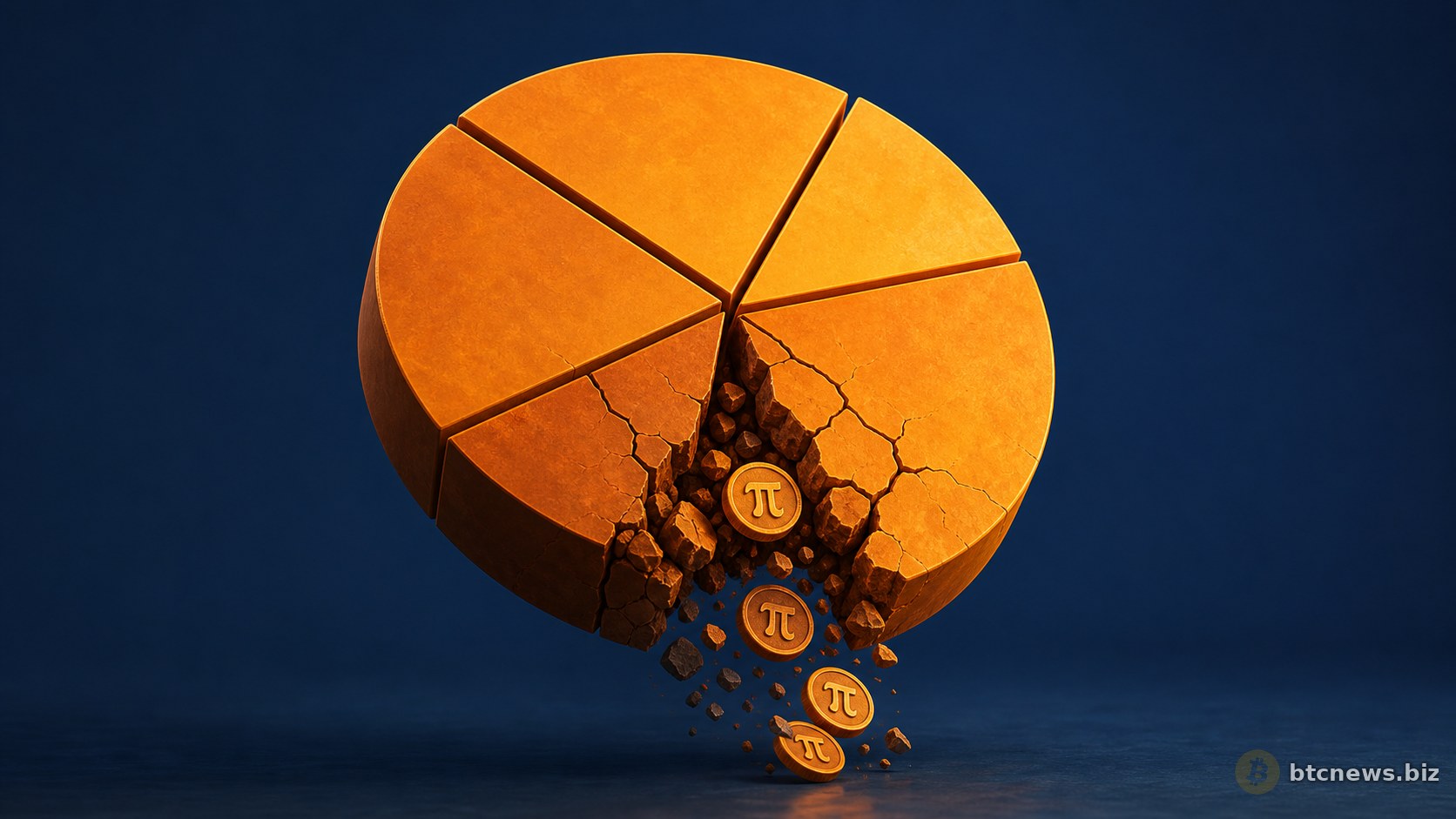
Pi Network faces supply crunch: Expert says top-100 spot is at risk below $0.01
Pi Network may be heading into a rough supply squeeze. Crypto commentator Dr Altcoin says the project could fall out of the top 100 cryptocurrencies if Pi drops below $0.01. My take: that sounds dramatic, but the setup is not imaginary. The pressure comes from a large batch of token unlocks due in the second half of 2026. If enough of those coins hit exchanges, the sell side could get ugly fast.
Dr Altcoin says about 775.8 million Pi tokens are due to unlock between now and December 2026. That works out to roughly 129.3 million Pi per month. Not small. Some of these tokens were locked by pioneers for three years, and even a modest wave of selling would matter at that size. Why does this matter? Because supply does not need to flood the whole market to hurt price; it only needs to outrun real bids. The issue is blunt: more supply may arrive before there is enough demand to absorb it. The Core Team’s silence does not help.
This is the awkward part of long token locks. They can delay early dumping, but they can also push the pain into a later month and make it bigger. Most guides treat lockups like a clean bullish signal. That’s only half right. Solana (SOL) and Avalanche (AVAX) both saw selling pressure around early unlocks during their first growth cycles as backers took profits, then had enough development momentum, liquidity, and exchange access to recover. Pi does not have the same cushion. That makes the unlock schedule harder to brush off.
Dr Altcoin is not only talking about token math. He is accusing the Pi Core Team of poor leadership. I’ll be honest: that part is where the argument becomes less spreadsheet, more trust problem. In his view, one big announcement, ecosystem update, or exchange listing will not fix the price unless the team deals directly with supply, demand, and liquidity. That is hard to dismiss. In crypto, silence around obvious pressure points usually makes people assume the worst. Terra (LUNA) showed how quickly confidence can vanish when communication breaks down under stress. Its May 2022 collapse wiped out tens of billions of dollars, damaged trust in stablecoins, and helped drag BTC down more than 20% for a stretch.
His proposed fixes are drastic. Dr Altcoin says Pi should burn a large chunk of the remaining supply, possibly up to 50%, and compares the idea to Stellar’s 2019 burn. Stellar (XLM) burned 55 billion XLM in November 2019, about half its supply. The price jumped more than 20% soon after, though the longer term effect was messier than the headline number suggests. Counter to the usual advice, a burn alone would not magically fix Pi. It would need market access too. He also wants Pi listed on major exchanges such as Binance and Coinbase, which would bring more liquidity and visibility. He has also raised the idea of a public buyback and burn program. None of these would be small changes. They would change how the market talks about Pi.
The community response has been split, which is not surprising. Some users backed the criticism and pointed to token distribution, arguing that a small group of wallets, including Core Team holdings, controls too much of the supply. That kind of concentration makes crypto traders nervous because it can leave the market exposed to large dumps. It can also make governance feel centralized, even when the public story says otherwise. Others pushed back by questioning Dr Altcoin’s own history of promoting Pi. Fair point. Crypto commentary is often tangled with incentives. The Pi Core Team has not publicly answered these specific claims, so investors are stuck reading the silence.
What this means
Pi Network is at a messy point. The project built a huge user base before it had the market liquidity and token clarity traders usually want. We see this pattern a lot in token markets: the community arrives first, then the hard mechanics show up later. If the 2026 unlocks bring a real supply shock, and the Core Team still avoids direct answers, confidence could weaken quickly. For traders, caution makes sense. A move below $0.01 is more than a scary round number. It could push Pi out of the top 100 by market cap and make the price slide harder to stop.
Investors should watch for a real response from the Pi Core Team on the unlocks and liquidity problem. Is one announcement enough? No. A token burn, a buyback and burn plan, or actual progress toward Binance or Coinbase listings would matter, but only if the details are specific. Yes, this slightly contradicts the usual “wait for listings” argument. Bear with me: listings help liquidity, but they also give sellers a cleaner exit. Vague statements would not. Continued silence would be worse. The level to watch is $0.01. If Pi breaks below it and stays there, the market may treat that as capitulation. Getting back from there could take a lot more than community loyalty.
FAQ
Q: What is the main concern about Pi Network’s future?
A: The concern is a large wave of token unlocks in the second half of 2026. If too many unlocked tokens are sold, Pi could fall below $0.01 and risk losing its top-100 crypto ranking.
Q: How many Pi tokens are expected to unlock by December 2026?
A: Dr Altcoin says about 775.8 million Pi tokens are expected to unlock by December 2026, or roughly 129.3 million tokens per month.
Q: What fixes has Dr Altcoin suggested?
A: He has suggested burning up to 50% of the remaining supply, getting Pi listed on major exchanges such as Binance and Coinbase, and creating a public buyback and burn mechanism.
Q: Why does communication from the Pi Core Team matter?
A: Investors want clear answers on supply, demand, and liquidity. If the team stays quiet or gives vague updates, traders may lose confidence and sell before the unlocks hit.
Q: Why does the $0.01 level matter for Pi Network?
A: If Pi drops below $0.01 and stays there, it could trigger heavier selling, make recovery harder, and push the project out of the top 100 cryptocurrencies by market cap.