















































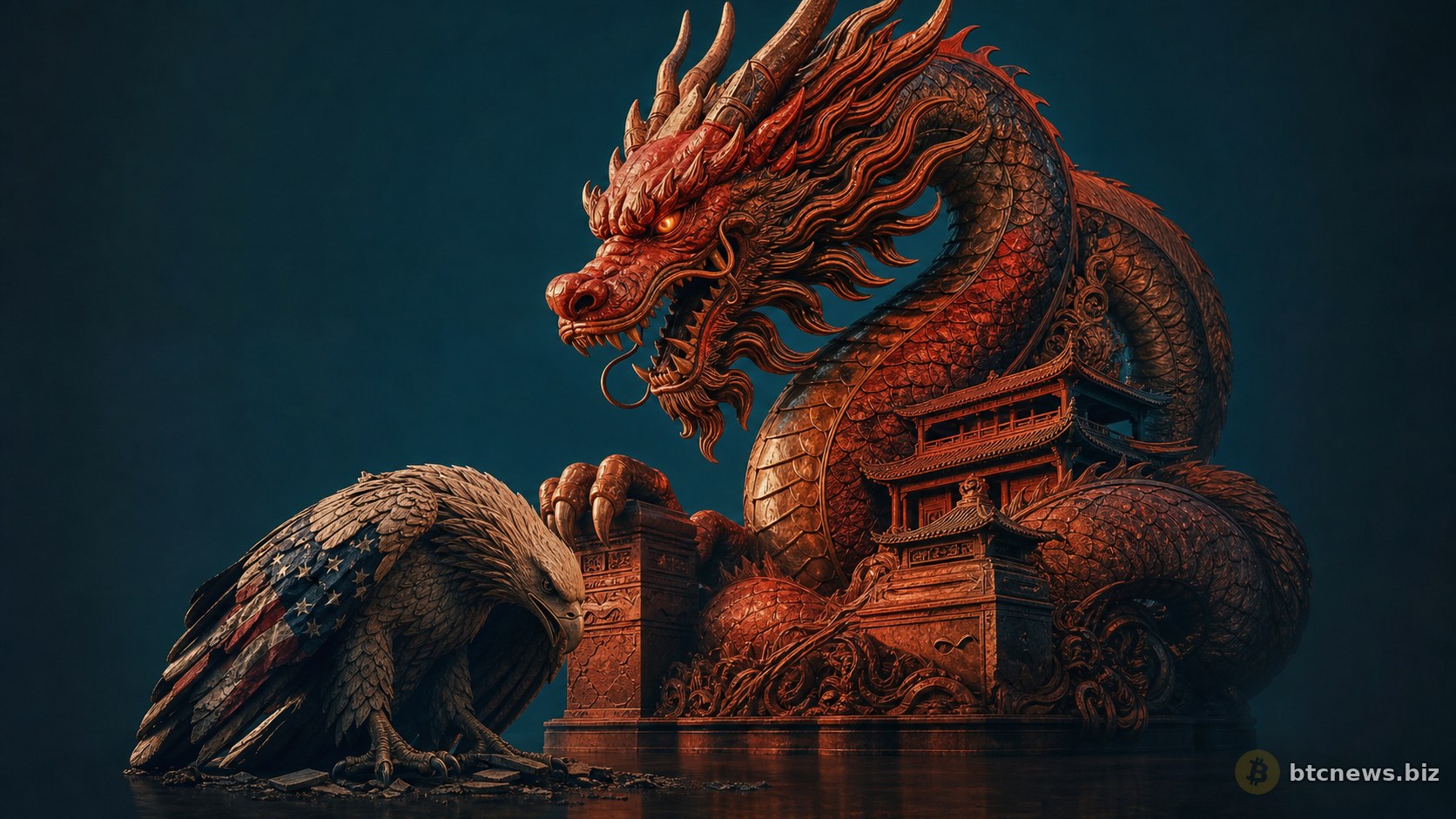
Trump considers $1T China investment deal, alarming conservatives
Trump is reportedly looking at a Chinese investment package worth up to $1 trillion. Conservatives are uneasy, and I think they are right to be. A deal at that scale is not just another trade headline. It drags Washington back into three uncomfortable fights at once: tariffs, national security reviews, investor risk appetite, plus the political cost of looking soft on Beijing.
Reports say China has offered to invest $1 trillion in the United States. If that is true, tariff politics and investment rules collide immediately. Crypto would not sit off to the side, politely waiting. BTC, ETH, COIN, exchanges, and China-linked tokens could all move through rate expectations, regulatory pressure, and supply chain funding narratives. My take: the market would trade the thaw first and read the fine print later.
The proposal reportedly came up during trade talks in Madrid earlier this year. TikTok was part of it.
Reports say the Madrid talks included a TikTok framework that would keep the app available in the US while giving American officials some oversight of its operations. China reportedly wants lower tariffs and fewer national security limits on Chinese investment in US industries. The White House called the reports “false” and pointed to the Phase One trade agreement. Still, Capitol Hill is already in it. That matters.
Crypto markets care because politics can move liquidity.
When politics changes inflation expectations or the likely path of rates, crypto reacts. Why does this matter? Because lower tariffs could ease inflation pressure, and traders may start betting on a better setup for risk assets like BTC and ETH. We have seen this reflex before. BTC fell more than 60% in 2022 when rate hikes crushed speculative trades, then climbed above $73,000 on March 14, 2024 during the spot ETF run. Traders have not forgotten that.
Coinbase stock, COIN, would be in the splash zone.
Coinbase is not named in the reported deal, but COIN often trades like a leveraged bet on crypto sentiment. If a $1 trillion China package points to easier financial conditions or a less hostile trade setup, COIN could become the stock market version of the BTC and ETH risk trade. Fair enough. But here is the part that gets skipped: the same stock could get hit if conservatives turn the deal into a national security fight.
Regulation may matter more than the macro story.
Reports say China wants relief from national security restrictions that limit Chinese investment in US industries. In crypto, that raises immediate questions about China-linked exchanges and blockchain infrastructure. Digital asset projects already under scrutiny would not get a clean pass either. BTC may trade the headline first. ETH, exchange tokens, and venture-backed blockchain names would probably move later, once investors read the policy details. Counter to the usual advice, the boring legal language may be the trade.
Conservative Republicans are skeptical, and the trust problem is real.
Critics point to China’s Phase One record, arguing that Beijing bought less than it promised after Trump’s first-term agreement. Traders should care about that. A deal can look huge on paper, spark a quick risk rally, then fade once the enforcement language looks weak. Crypto has seen that fake-out plenty of times. I’ll be honest: headline rallies built on vague enforcement usually deserve suspicion.
There is also an adoption angle buried in the politics.
Large Chinese investment in US manufacturing could push more companies toward blockchain tools for supply chain tracking and verification. Both countries have already tested that use case in different ways. That does not mean ETH wins by default, or that any specific protocol gets paid. I would watch funding instead: manufacturing, logistics, audit trails, verification software. Money moving there would say more than slogans.
Taiwan is the quieter pressure point, but it could move markets fast.
Reports say the package also touches wider geopolitical issues, including US policy toward Taiwan. BTC sometimes catches safe haven bids when geopolitical stress jumps, though that trade is messy. Is this a clean digital gold setup? No. During the January 2020 Soleimani shock, BTC rose about 8% while traders argued over whether it could behave like digital gold. A US-China thaw could shrink that premium. A Taiwan backlash could bring it back quickly.
The size of the number is why this story has teeth.
Chinese investment in the US has reportedly fallen 96% from its 2016 high after tariffs and national security reviews tightened in 2018. A $1 trillion offer would be a sharp break from that trend. Crypto investors should treat it as a policy volatility event, not an automatic bullish headline. Yes, lower tariffs can help risk assets. But looser screening can also trigger a regulatory backlash. Both can be true.
What this means
The reported deal points to a more transactional Trump China strategy, even though the White House denies the reports as “false.”
For BTC, the first read is macro. Lower tariffs could cool inflation pressure and support a risk rotation if traders believe easier financial conditions are coming. For ETH and COIN, regulation is the harder part. Most guides would stop at “tariffs down, crypto up.” That is only half right. Any easing of Chinese investment restrictions could change how Washington looks at exchanges, funding channels, and blockchain infrastructure.
The expected Trump-Xi summit later this month, possibly in South Korea, is the event to watch.
That is where opening offers may turn into terms. I would keep the watchlist blunt: BTC near its March 14, 2024 high above $73,000, ETH for broader risk appetite, COIN as the US exchange policy proxy, and CME positioning if futures flows start reacting. The question is simple: does $1 trillion become a liquidity story, or does it turn into a national security fight?