
















































a16z Buys HYPE Token as Staking Bet Signals Adoption
A wallet tied to Andreessen Horowitz (a16z) reportedly bought a large stack of HYPE tokens, then moved most of it into staking. The wallet bought 1,588,000 HYPE ($67.4m) over the last month and sent 1,300,000 HYPE ($51.2m) to staking. That second move matters more. A buy can be a trade, a rebalance, or a short-window bet. Staking says something different: the holder is willing to sit inside the protocol and collect yield instead of keeping every token liquid.
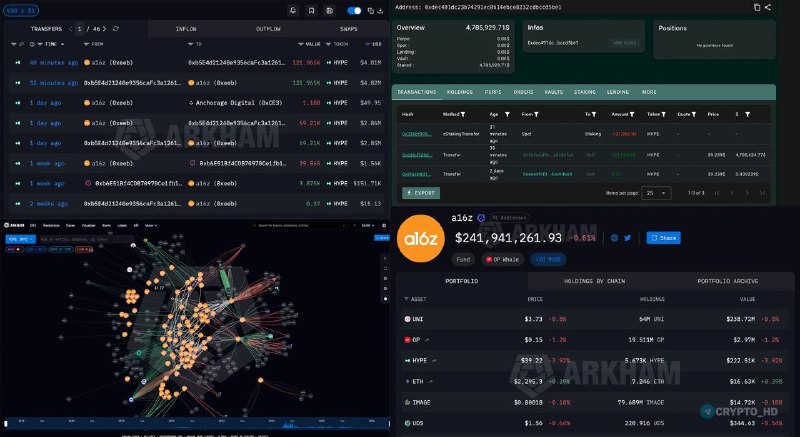
An unnamed source says the a16z-linked wallet built the HYPE position over the past month before staking most of it. The wallet purchased 1,588,000 HYPE ($67.4m), and 1,300,000 HYPE ($51.2m) later went into staking. Traders will probably care more about the second number. I would. The purchase gets the headline, sure. But staking is the part that changes the read from “someone bought size” to “someone may be comfortable holding this through protocol mechanics.” Small difference. Big signal.
Venture-linked token buying matters more when liquidity is thin and everyone is watching the same wallets. In past crypto cycles, large visible flows have often turned into reflexive trades. First the wallet moves. Then social feeds catch it. Then perps books start trading the screenshot while spot desks chase the same narrative. Most guides say on-chain flows are “transparent.” That is only half right. They are visible, but the motive is still hidden. The source does not say a16z announced the purchase. It also does not give the venue, average price, lockup term, or staking yield. The facts are narrower: 1,588,000 HYPE bought and 1,300,000 HYPE moved into staking.
The HYPE moved into staking makes this look less like a quick exchange trade and more like a bet on the network. That is the adoption angle. My take: the staking action is doing 70% of the work in this story. A wallet linked to a16z staking 1,300,000 HYPE ($51.2m) makes HYPE look more like infrastructure exposure than another token flip. Crypto investors saw a similar change around ETH after the Merge on September 15, 2022, when ETH became a staking asset instead of a proof-of-work coin. ETH still got hit hard in the 2022 risk-off market, falling more than 60% from early April to mid-June. But the conversation changed. Investors started talking about validators and issuance. Locked supply became part of the thesis too, not just price beta.
Traders may now judge HYPE by its staking flows, not just its chart. Why does this matter? Because a token with visible staking demand can trade differently from a token that is simply moving up on momentum. If 1,300,000 HYPE ($51.2m) is staked, the market will watch whether circulating supply tightens. It will also watch whether other large wallets copy the move. This is not a public corporate treasury announcement like MicroStrategy buying BTC. It is quieter, less clean, and easier to overread. Still, the instinct is familiar: when sophisticated capital appears to buy and lock tokens, traders ask what that wallet thinks it knows.
The macro backdrop will decide how much this wallet move actually matters. In crypto, venture-linked buying lands very differently when money is moving into risk than when everyone is hiding in cash. BTC showed that in the last cycle. After trading near $69,000 on November 10, 2021, BTC dropped roughly 75% toward the $16,000 area by November 2022 as liquidity tightened and speculative assets repriced. HYPE is not BTC, and the source gives no HYPE price beyond the $67.4m purchase value. Still, the rule is the same. Big buys need broader risk appetite behind them. No liquidity, no magic.
Staking can make a bullish move feel stronger, but it can also make selloffs uglier. I’ll be honest: this is the part I think gets underpriced when people see a big wallet lock tokens. If crypto risk appetite improves, staked supply can make spot demand feel sharper because fewer tokens are ready to sell. Counter to the usual advice, “locked supply” is not automatically bullish in every tape. If the market turns, staking does not remove downside. It can slow exits, raise questions about unlock mechanics, and make everyone stare at the same future liquidity date. That is why the 1,300,000 HYPE ($51.2m) staking figure may be the real headline, even more than the 1,588,000 HYPE ($67.4m) purchase.
Staking also comes with regulatory baggage, especially in the U.S. The source does not mention any regulator, but investors will still think about it. Since Ethereum’s Shanghai upgrade on April 12, 2023, ETH staking has been part of the market structure conversation. U.S. investors have watched staking through ETFs and exchanges. Enforcement headlines sit in the background too. COIN, ETH, and staking-linked tokens have moved around legal and policy news because the market cares whether yield-bearing crypto activity can grow inside regulated venues. Is this overkill for one HYPE wallet move? Maybe. But for a $51.2m staking transfer, no serious desk ignores the policy layer.
There is no official comment here, so the read has to stay narrow. The source includes no statement from Andreessen Horowitz, no comment from a HYPE representative, and no disclosed investment thesis. That matters. Yes, this slightly cools the adoption read two paragraphs after leaning into it. It should. The clean version is this: a wallet linked to a16z bought 1,588,000 HYPE ($67.4m) over the last month and staked 1,300,000 HYPE ($51.2m). Everything after that is market interpretation, not confirmed intent.
What this means
HYPE is getting more attention from traders who watch institutional wallets, and staking is why this story has weight. The affected ticker is HYPE first. The read-through touches ETH because ETH is still the main reference point for locked-token economics. To me, the key question is not “Did a big wallet buy?” It is: does staking become the frame traders use for HYPE over the next 30 days? If more large wallets stake HYPE after this 1,300,000 HYPE ($51.2m) transfer, traders may stop treating HYPE as a pure momentum token and start pricing it more like protocol exposure with a tighter float.
Watch the next 30 days before calling this a lasting trend. The important things are wallet activity and staking inflows. HYPE spot liquidity matters separately. So does whether tokens move back into liquid wallets. The next FOMC decision also matters because risk tokens usually need easier liquidity, or at least steady rate expectations, to keep venture-flow stories alive. For market structure, watch whether HYPE holds near the implied purchase zone from the source’s $67.4m for 1,588,000 HYPE, and whether staked HYPE keeps rising instead of moving back into liquid wallets. We will know soon enough.