
















































Moscow Exchange Crypto Futures Trading Push Tests Russia Adoption
Moscow Exchange crypto futures trading starts today, May 14, 2026, and the exchange is also talking with brokers about legal crypto trading in Russia. This is not a story about another small crypto app. It is bigger, and frankly more Russian: exchanges, brokers, custody rules, accounting rules, limited access. For BTC and ETH traders, I read the first signal as adoption. My take: the regulatory signal is almost as important.
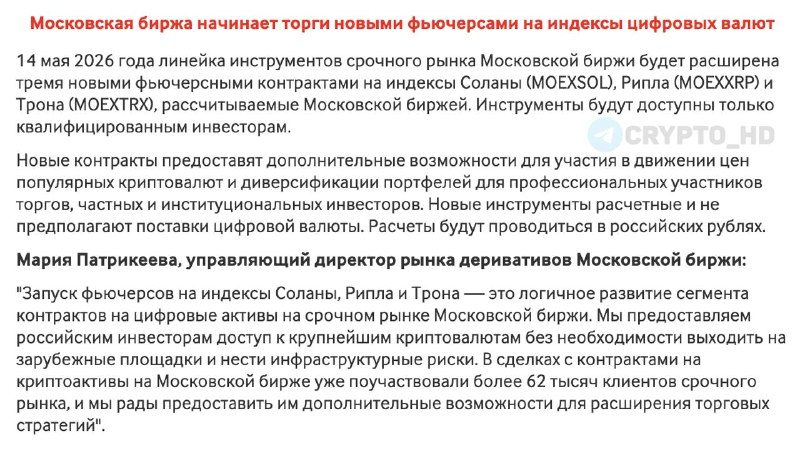
The Telegram news post says Moscow Exchange is launching futures trading today on three instruments, though the source text does not show the asset names. That missing detail matters. The more interesting part comes after the futures note: Moscow Exchange is discussing a possible launch of legal cryptocurrency trading in Russia with brokers. The structure could involve a separate exchange section, longer trading hours, and special accounts instead of standard brokerage accounts. One version would let users fund accounts by moving crypto from a cold wallet to a client address at a Russian digital depository. Why does this matter? Because that is not app-store crypto. It is crypto routed through a venue, a broker layer, a depository address, and a custody boundary regulators can actually see.
For BTC, this does not feel like a retail app headline. It feels like market structure. If crypto moves into a regulated section of Moscow Exchange, the message is institutional normalization, even if access stays narrow. The source does not say BTC, ETH, USDT or any other token will be listed for spot trading, so traders should not treat that as confirmed. Still, the direction matters. Most adoption guides say users come first and institutions follow. That is only half right. In regulated markets, wrappers often arrive before the asset becomes normal to hold directly. CME Bitcoin futures launched on December 17, 2017, giving U.S. institutions a regulated way to trade BTC exposure. Spot Bitcoin ETFs started trading in the U.S. on January 11, 2024, after years of delays. Moscow Exchange is now discussing a Russian version of that same broad idea: crypto exposure through approved financial rails, not just offshore exchanges or private wallets.
The regulation angle is sharper. The post mentions a separate section, longer hours and special accounts, which tells traders this would not be treated like a normal stock or bond account. That distinction matters for exchange-linked names such as COIN in the U.S. It also matters for liquid crypto majors such as BTC and ETH globally. Regulation can widen access and lower some risk premiums. It can also trap liquidity inside walls. Counter to the usual adoption-bull case, a cleaner legal route can still be a narrower market. Russia’s possible use of a digital depository address after a cold wallet transfer suggests regulators want custody they can trace and settlement they can control. Put plainly: this is not permissionless spot trading. It is crypto inside a gated venue. Useful, yes. Open, no.
The safe haven angle sits in the background because Russia is under heavy sanctions and crypto always enters the conversation when capital controls, banking access or geopolitical stress appear. The source does not mention sanctions, war or capital flight, so those are context, not reported facts. I would not overstate that part. Still, BTC has traded as both a risk asset and a political hedge. During the January 2020 U.S.-Iran Soleimani shock, BTC rose roughly 8% in the short risk-off window cited in market commentary at the time. Gold had the cleaner safe haven case. BTC had the messier, more volatile one. That split still matters on May 14, 2026. If a major national exchange builds legal crypto rails, traders will ask what BTC is supposed to be here: a sanctioned world settlement hedge, a regulated investment product, or just another high beta asset that follows Nasdaq liquidity.
Macro still matters. A lot. Crypto investors can get too excited about adoption headlines when the bigger forces are still rates, dollar liquidity and real yields. A Moscow Exchange crypto section would be bullish for access in a structural sense, but BTC and ETH usually need friendly liquidity to hold a trend. In the U.S., every FOMC decision in 2026 still matters for risk assets because rate expectations shape leverage, ETF flows and basis trades. Is this overkill for one exchange headline? No, because crypto market structure headlines rarely survive hostile liquidity for long. If BTC is bid while real yields fall, the exchange story can add fuel. If BTC rallies only on the Russia headline while dollar liquidity tightens, I would be careful. Infrastructure opens the door. Macro decides how much money walks in.
There are no quotes in the source. There are also no named officials, brokers or token tickers tied to the Moscow Exchange discussions. That gap matters more than it looks. Traders should treat this as an early market structure signal, not a confirmed product launch for BTC, ETH or stablecoins. The reported futures launch is happening today, May 14, 2026. The crypto trading plan is still only under discussion. Yes, this sounds less exciting than the headline. That is the point. “Launches futures” is a tradable event. “Discusses legal cryptocurrency trading” belongs on the policy watchlist.
What this means
Russia may be moving toward exchange-based crypto adoption instead of leaving the market mostly to offshore venues or peer-to-peer flows. For BTC and ETH, the immediate trade is not spot demand from Moscow Exchange. It is the longer term access premium around regulated venues. If a separate section, special accounts and digital depository custody become the model, the market gets a cleaner institutional story, but also a more controlled one. BTC is still the first ticker to watch, because national exchange infrastructure usually starts with the most liquid asset before moving into riskier tokens. My bias: watch the plumbing before watching the marketing language.
Watch the next official Moscow Exchange update after May 14, 2026, for named tickers, broker participation and any detail on whether the digital depository model includes BTC, ETH or stablecoins. Globally, keep watching the next FOMC decision and CME Bitcoin futures basis. Liquidity and leverage will decide whether this becomes a real BTC catalyst or just another infrastructure headline. The technical level is simple enough: if BTC is above its 50-day moving average when Moscow Exchange confirms any legal crypto section, traders will probably treat it as adoption fuel. Below that level, the market may fade the news until real volume appears. That is the clean test.