
















































Anthropic Claude Prompt Library: A new AI tool for crypto devs
Anthropic has released a prompt library for Claude. For crypto developers and traders, the draw is blunt: it removes the blank-page problem. Instead of staring at an empty chat box and trying to phrase the perfect request, users get starting prompts for coding, research, app design, and workflow automation.
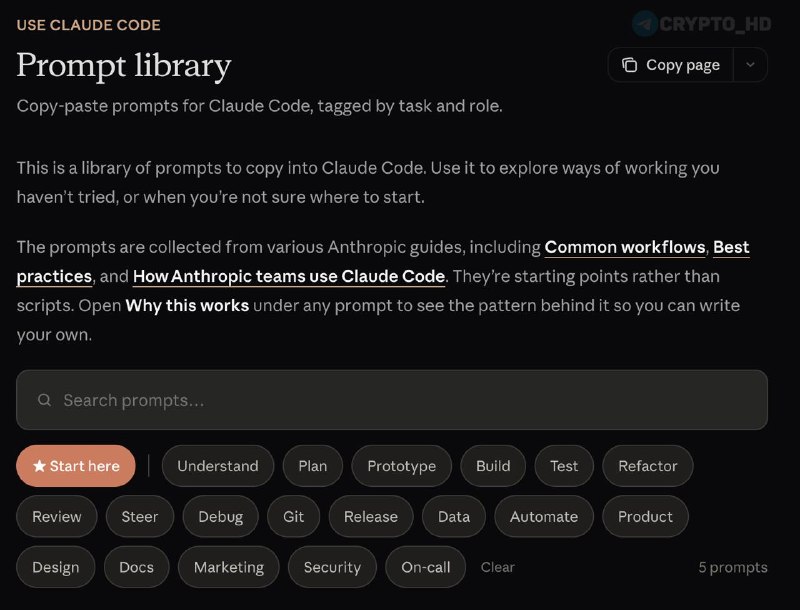
Anthropic says the library has prompts across 19 categories. That includes task automation, code writing, app development, and design work. My take: the useful part is not the templates themselves. It is that Anthropic explains why the prompts are shaped the way they are, so a developer can bend them to a real task instead of copy-pasting and praying. Small difference. Big one.
For crypto, the main point is adoption. Builders on Ethereum (ETH), Solana (SOL), and other smart contract platforms can use these prompts to sketch contract logic, review code, think through gas costs, or draft DeFi interface flows. None of this replaces an audit. I will be honest: anyone shipping Claude-written contracts straight to mainnet is asking for pain. But for prototyping, it can save real time. A team building automated liquidity tools for a Decentralized Exchange (DEX), for example, could use the library to create early contract drafts, test cases, and documentation before the audit stage. Depending on how tangled the project is, that could cut days or weeks from the first build cycle.
There is also a market angle, though it is easy to oversell. Most AI-crypto takes jump straight from “new tool” to “token rally.” That is only half right. AI tools are already changing how people build software and test trading ideas, and Claude prompts could help smaller funds or retail traders build strategies they could not build cleanly before. What happens then? More bots, more experiments, and probably more weird short-term volatility around BTC and ETH when tech sentiment heats up. During the early AI rally in February 2023, BTC gained about 15%, helped by wider appetite for tech-heavy risk assets. A prompt library will not move markets on its own. It does add one more brick to the AI-trading story.
What this means
Anthropic’s release gives a clean read on where developer tooling is headed. AI is not just for large companies with research teams anymore. A solo crypto developer can start with structured Claude prompts instead of inventing a prompting workflow from zero.
Counter to the usual advice, the biggest impact may not be “better prompts.” It may be fewer abandoned prototypes. That could speed up work on protocols and dApps across DeFi and NFTs, plus broader Web3 tooling. Expect more projects to mention AI in product updates. Some will have actual engineering behind it. Some will slap “AI” on a landing page and hope traders care. We have all seen that movie. Tokens already in the AI-crypto lane, including FET and RNDR, could get fresh attention if the market starts treating practical AI tooling as a real growth signal.
The better signal is developer behavior. Watch Ethereum and Solana activity: new repos, grant applications, hackathon submissions, protocol updates, and serious tooling releases that mention AI-assisted development. Why does this matter? Because price can move on vibes, but builders leave a trail. A partnership between a blockchain foundation and an AI lab would matter. So would an open source tool that uses Claude prompts to generate tests, review smart contracts, or help teams ship front ends faster. Traders should watch AI-related crypto assets too, but price alone is a noisy read. It always is.
Anthropic Claude Prompt Library: A new AI tool for crypto devs
The Anthropic Claude Prompt Library is a set of ready-made prompts for Claude. Developers can use it to move faster on AI-assisted work, including crypto development tasks.
Anthropic says the library includes prompts across 19 categories, including automation, code generation, app development, and design. It also explains the thinking behind the prompts. I like that part more than the prompt list itself, because it teaches users how to adjust the tool instead of treating the library like a vending machine.
Impact on crypto development
The Claude Prompt Library could make AI less awkward to use in blockchain development. Quicker prototypes. Cleaner first drafts. Less fumbling before the real engineering starts.
Developers working on Ethereum (ETH), Solana (SOL), or similar networks can use these prompts to draft smart contract logic, improve gas efficiency, and design DeFi interfaces. A team building automated liquidity provision for a Decentralized Exchange (DEX), for instance, could use Claude to generate early code, clean it up, and create test coverage. Is this enough to skip an audit? No. But before the audit stage, the time savings could matter.
Macroeconomic implications
AI tools are getting cheaper and easier to use. That matters for finance because better tools change how quickly people can build, test, and deploy trading systems. Yes, this sounds broader than crypto. It is. Crypto just reacts faster because the feedback loop is brutal.
AI-powered trading algorithms already affect market behavior. If Anthropic’s prompts help smaller funds or retail traders build more advanced strategies, BTC and ETH could see more short-term volatility around AI and tech narratives. In February 2023, BTC rose about 15% during the first big AI-driven market rally. The prompt library is not a direct macro event like a Fed decision or inflation print, but it fits with the same appetite for AI-linked risk assets.
What this means for the future
The Claude Prompt Library gives crypto developers a more practical way to bring AI into their workflows. That could shorten development cycles for new protocols and dApps. Not magically. Mechanically.
More teams may use AI for contract drafts and code reviews. Others will lean on it for documentation, tests, interface planning, or internal tooling. Most guides say AI helps teams “move faster.” True, but incomplete. The real question is whether it helps them catch dumb mistakes earlier. Some projects will market this aggressively, probably too aggressively. Still, if the tools help teams ship better products faster, tokens tied to AI-crypto infrastructure or AI-heavy applications could draw more attention. FET and RNDR are obvious examples because traders already connect them with the AI-crypto theme.
To track the impact, watch developer metrics on Ethereum (ETH) and Solana (SOL). Look for new project launches, major updates that mention AI, hackathon winners using AI-assisted workflows, and grant programs funding AI-related blockchain tools. Partnerships between blockchain foundations and AI research labs would also be worth noting. For traders, AI-related crypto asset performance can offer clues, but it should be read alongside actual builder activity, not instead of it.
FAQ
What is the Anthropic Claude Prompt Library?
The Anthropic Claude Prompt Library is a set of ready-made prompts for Claude. Developers can use it to speed up AI-assisted work, including crypto development.
How does the prompt library benefit crypto developers?
It gives developers a faster starting point for smart contract drafts, code review, gas optimization, and DeFi interface planning.
What kind of prompts are included in the library?
The library includes prompts across 19 categories, including automation, code generation, app development, and design.
Will this impact the value of cryptocurrencies?
It could affect sentiment around AI-linked crypto assets. It may also add volatility to BTC or ETH if traders connect the release to a wider AI market trend.
Are there any educational resources provided with the library?
Yes. Anthropic explains why the prompts work, so users can learn how to write and adjust stronger Claude prompts themselves.
Which crypto tokens might benefit from this development?
AI-related crypto tokens such as FET or RNDR could see renewed interest if traders view the library as another sign that AI tooling is becoming more useful in crypto.
How can one track the impact of this library on crypto development?
Track developer activity on Ethereum and Solana, watch hackathon and grant announcements, and compare AI-related token performance with actual project launches.