
















































Pokemon Card Investing: Grandma’s $250,000 Find Reveals Where Collectors Are Spending
Crypto traders are still waiting for altcoin season. An 80-year-old American grandmother, meanwhile, may have made $250,000 from Pokemon cards stored in her home. Not bad for a house clear-out. While markets swung and inflation chipped at cash savings, sealed products from the 1990s simply sat indoors. Why does that matter? Because more money has moved into collectibles lately, often for the same reason buyers choose crypto: they want assets that may rise without closely following stocks or bonds. I’ll be honest: that logic is tempting.
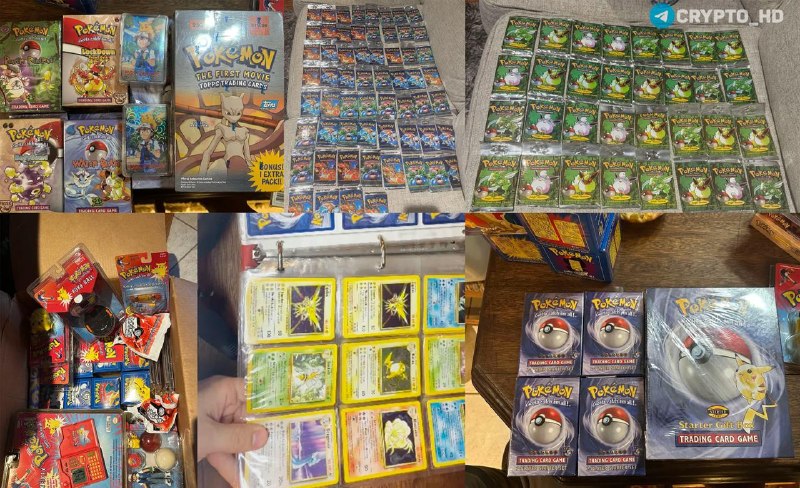
A wire report said Reddit users were helping the grandmother clear out her house when they discovered hundreds of vintage Pokemon cards. The haul included sealed 1st Edition booster boxes and Burger King golden Pokeballs. There were figurines, too, plus other merchandise from the 1990s. The estimated value: $250,000. She bought some pieces for her grandchildren but kept duplicates “for the future.” I love that detail. This was a modest bet made before grading companies and internet collectors turned old cards into big business. She figured scarce, unopened products might be worth saving. She was right—spectacularly so.
None of this proves that Pokemon cards are a dependable hedge against inflation. One fortunate collection cannot settle that question. Most collectible-investing stories imply that scarcity is enough. That’s only half right. Demand matters just as much, and the timing here is interesting: inflation remains a concern, the Federal Reserve is weighing interest rates, and investors are looking beyond the usual stock and bond markets. Crypto attracted buyers for much the same reason. Bitcoin (BTC) rose above $60,000 amid inflation fears in late 2021, then reached $69,000 that November. Supporters argued that its fixed supply made it more attractive than currencies governments could create in greater quantities. My take: the cards followed a different path, but the wager was essentially the same—buy something scarce and hope more people want it later.
There is a rough parallel with early crypto buyers. Some people bought Ethereum (ETH) before the wider public understood it; this grandmother saved sealed Pokemon packs before vintage cards had a major online market. Her version was physical and quieter. Probably far less stressful, too. Both bets still depended on scarcity. MicroStrategy pushed that idea much further when it began adding Bitcoin to its balance sheet. According to its Q3 2023 earnings report, the company owned more than 158,000 BTC. Is that comparable to storing children’s cards? Not in scale, liquidity or risk. Yet each buyer tolerated years of uncertainty because they believed demand would eventually catch up with a limited supply.
What this means
Physical and digital collectibles can fetch serious prices when few exist and plenty of buyers want them. That does not make every old toy a hidden fortune. Most are not. The same warning applies to an NFT or a gaming token. Counter to the usual advice, buying early is not the clever part; choosing something people will still care about later is. This Pokemon collection had specific advantages: a widely known brand and products dating from the 1990s. More importantly, its sealed 1st Edition boxes were difficult for collectors to replace. Crypto buyers need the same selectivity. A busy Discord proves very little, and so does a small mint count. For a digital collectible I planned to hold, I would want evidence that demand survives long after the first burst of excitement.
Inflation data and the Fed’s next comments are worth watching. If inflation persists, more investors may turn to collectibles or NFTs. Gaming tokens could benefit as well. Higher interest rates may pull in the opposite direction by making safer assets more appealing. Yes, that complicates the tidy inflation-hedge story. It should. NFT trading volume and floor prices offer a useful read on whether buyers are returning, particularly to older collections. Gaming cryptocurrencies are worth tracking, although I put far more weight on real player activity than social media noise.
For Bitcoin, the resistance level cited here is $61,400. Holding above that price could lift sentiment across crypto. Would Pokemon cards and NFTs rise automatically? No. Markets do not move that neatly. Still, speculative enthusiasm has a habit of wandering into peculiar places, and sealed 1st Edition booster boxes valued inside a $250,000 collection are a fairly vivid example.