
















































US Iran Strait Hormuz Agreement Tests Bitcoin Safe Haven Trade
A reported US-Iran deal on the Strait of Hormuz could change how crypto traders price war risk, oil, and inflation. The reported us iran strait hormuz agreement would extend the ceasefire by 60 days and reopen the Strait of Hormuz to shipping after demining within 30 days, according to WP. My take: this is not just another diplomacy headline. Less war risk can drain some heat from the safe haven bid for BTC. Smoother oil shipping can also cool inflation fears, which may help risk assets such as ETH and COIN.
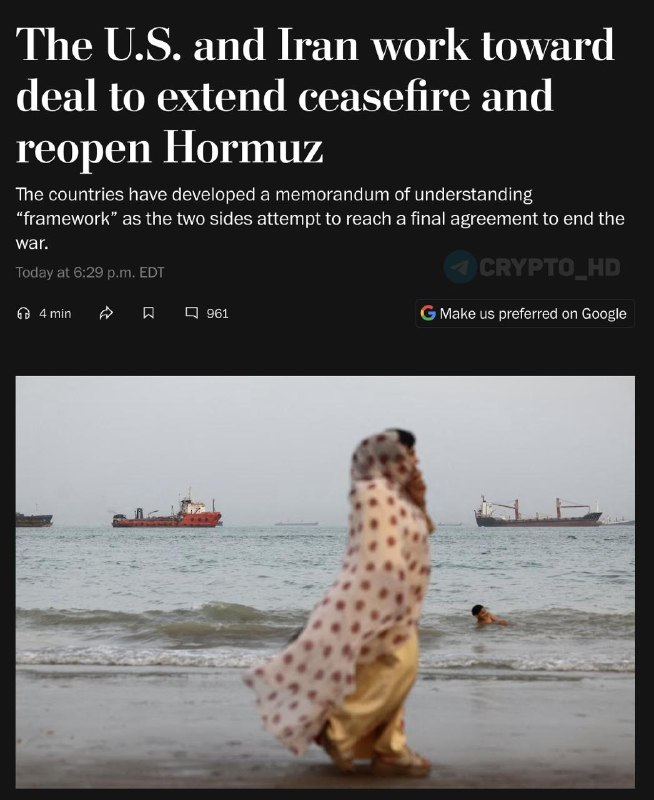
The United States and Iran have reportedly reached a preliminary plan to extend the truce and reopen the Strait of Hormuz. The report said the truce would last another 60 days, giving both sides time to work toward a final deal to end the war. Under the plan, crews would clear mines from the Strait of Hormuz and reopen it to shipping within 30 days. The earlier source cited an insider report from WT. The sourcing is thin. Really thin. Still, markets do not usually wait around for a signed packet, a minister at a microphone, and a tidy closing statement.
The Strait of Hormuz matters because it runs straight through oil prices, inflation expectations, and risk appetite. Why does this matter? Because Hormuz is not a side note for anyone trading BTC, ETH, oil, or the dollar. Traders cannot treat it like a faraway label on a map. When ships can move through Hormuz without another scare, the oil-risk premium usually eases. Inflation worries can ease with it. Then money often starts moving back into riskier trades. That matters for BTC and ETH, because both still trade like liquidity assets when macro pressure hits, even if Bitcoin’s longer term pitch is “digital gold.” If energy pressure cools over the next 30 days, crypto may read the deal as mild relief, not a pure Bitcoin panic bid.
Past Middle East shocks have sometimes pushed traders toward Bitcoin as crisis insurance. The clean example is January 2020, after the Soleimani strike, when BTC rose about 8% as traders priced escalation risk. But here is the catch: January 2020 is not a reusable button. That does not mean the same playbook works in 2026. Markets are messier than that. I would be careful with any chart that pretends otherwise. Still, it explains why crypto desks keep Iran headlines open. War risk can lift BTC when investors want assets outside banks and borders. A ceasefire extension can pull the other way by lowering the need to buy Bitcoin as emergency cover.
A calmer Strait of Hormuz would not automatically hurt crypto. Most guides frame this as simple: peace headline bad for Bitcoin, good for risk. That is only half right. If demining works and ships return within the stated 30 days, the trade may shift away from panic hedging and back toward liquidity. That is where it gets more interesting. Lower geopolitical pressure lets traders look again at rates, the dollar, ETF flows, leverage, and the next macro print. In that market, ETH can catch a bid if traders rebuild exposure to higher beta crypto. COIN may also move if traders expect better spot volumes and risk appetite comes back.
Reopened shipping through Hormuz could also take pressure off the inflation trade. Energy shocks feed inflation fears. Inflation fears feed rate expectations. Rate expectations hit speculative assets. Crypto investors know this loop by now. Is this overkill? For a 30-day reopening window tied to the Strait of Hormuz, no. If the United States and Iran keep the 60-day ceasefire alive and shipping resumes through Hormuz within 30 days, markets get one less inflation scare to price. That may matter more for ETH than BTC, because Ethereum often trades more like a growth asset when macro stress fades.
Bitcoin’s safe haven bid works better when the crisis is getting worse. That is the awkward part for BTC bulls. Geopolitical disorder supports the borderless settlement story. A ceasefire does not kill that story, but it does make it feel less urgent. A 60-day extension would not end the conflict by itself. It would buy time. Markets often trade that time before they believe in the peace. I’ll be honest: I would not mistake a pause for a settlement, but I also would not ignore what a pause can do to positioning.
The crypto reaction depends on whether this preliminary framework turns into real shipping through Hormuz. The source does not include a quote, and that matters. Traders are looking at a framework, not a signed final settlement. So the read is conditional. Counter to the usual advice, the first move may be less important than the confirmation. If Hormuz shipping restarts inside the 30-day window, the safe haven premium in BTC could fade. If the process stalls, traders may rebuild geopolitical hedges fast. Crypto does not sit still when the headline risk is this binary.
What this means
The reported agreement could move markets from war-risk pricing to wait-and-see pricing. For BTC, the safe haven bid tied to U.S.-Iran war risk could weaken if the 60-day ceasefire holds. For ETH and COIN, the same news could help if oil shipping normalizes, inflation anxiety eases, and traders step back into risk. Yes, that sounds like it contradicts the Bitcoin hedge argument two paragraphs ago. It does, a bit. That is the trade-off. The first test is blunt: does crypto sell the peace headline, or buy the macro relief?
Traders should watch the 30-day Hormuz reopening window before treating this as a real shift. After that, the next FOMC decision and CME futures positioning matter. On the chart, BTC traders should use support and resistance from their own exchange feed, because this kind of headline can move positioning before spot liquidity catches up. Skip the victory lap. If the Strait of Hormuz reopens on schedule, the trade may rotate from war hedge to macro beta. If it does not, BTC gets its safe haven test again.