
















































Russia Drafts Crypto Market Rules: A Possible Adoption Signal for Digital Assets
Russia’s central bank has published its first draft rules for a domestic crypto market. The proposal would permit organized trading in digital currencies and digital rights, potentially changing how capital moves through the country. It may also affect Bitcoin’s (BTC) reputation as a haven during geopolitical turmoil. My take: the signal matters, but the label matters more. These are draft rules, not a finished policy. Full-scale adoption? Not yet.
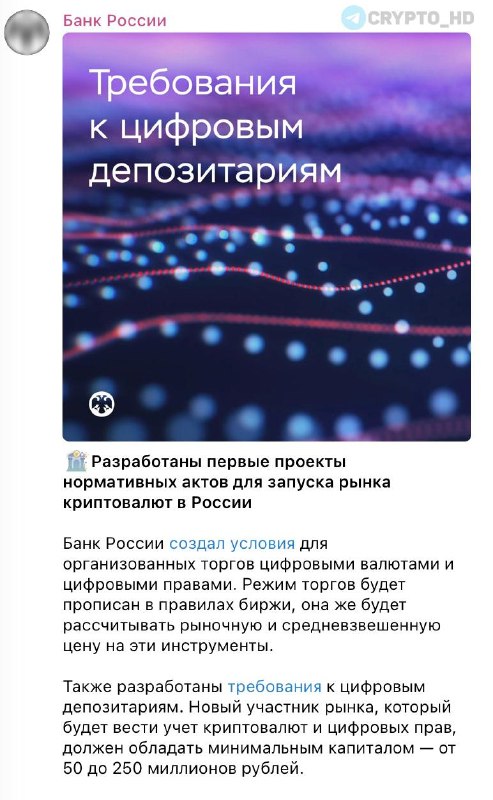
The Bank of Russia wants crypto trading to resemble the securities market. Exchanges would write their own trading rules, then calculate market prices and weighted average values for crypto assets. The proposal also introduces digital depositories—firms that would record ownership of cryptocurrencies and digital rights, much as securities depositories track stocks and bonds. Each depository would need capital of between 50 million and 250 million rubles, depending on its activities. Different thresholds may apply to firms that work with open blockchains or settle trades. Their funds would have to remain liquid. Strict credit-rating requirements would apply as well.
Electronic platform operators would face similar rules. They would operate information systems and settle digital financial assets (DFAs) through nominal accounts. The central bank plans to write the accounting standards and specify which client and asset records firms must collect. It would set procedures for opening and maintaining digital accounts, too, while maintaining the official register of digital depositories. Why does this matter? Because control over records, settlement and registration gives the central bank influence over nearly every operational layer. Still, the drafts are open for a regulatory impact assessment. Plenty could change after officials and market participants examine the details.
Russia is a large economy, so the proposal is worth watching. I’ll be honest: I would not read it as an automatic buy signal. Most crypto commentary treats formal rules as inherently bullish. That is only half right. A legal route into the national financial system could support demand, but strict supervision could just as easily hold the market back. El Salvador is an interesting comparison, even if its policy was quite different. When the country made Bitcoin legal tender in September 2021, BTC briefly traded near $52,000 before the wider market dragged it lower. Russia is building regulated market infrastructure, not granting Bitcoin legal-tender status. Even so, an active Russian market could eventually increase demand for established assets such as BTC and Ethereum (ETH).
The proposal suggests Russian officials are looking at controlled participation rather than relying entirely on bans. That is a change. The word “controlled” matters. Depositories and minimum capital requirements would put crypto inside the usual financial bureaucracy; central-bank registration adds another gate. Crypto purists probably will not like it. Banks and professional investors might. Counter to the usual advice, more regulation does not always mean broader access.
Russia’s plans may also feed regulatory arguments elsewhere. In the United States, the Securities and Exchange Commission (SEC) has spent years arguing over how existing securities laws apply to staking and exchanges, including companies such as Coinbase (COIN). That uncertainty makes markets nervous. Could Russia’s proposal settle the U.S. debate? No. It will not determine U.S. policy, though it would give regulators another concrete model to study.
The depository rules reveal plenty about the central bank’s thinking. They come straight from traditional finance and may make it easier for Russian banks, brokers and other established firms to handle crypto assets. Whether those firms will bother is less clear. A license cannot create customers. A rulebook cannot manufacture liquidity or serious trading volume either. The U.S. approval of spot Bitcoin ETFs in January 2024 showed what regulated access can do when investors already want the product: BTC rose above $49,000. My read is simple: Russia would still need to offer products that people genuinely want to trade.
What this means
The Bank of Russia is laying the groundwork for crypto trading through exchanges and account systems, with depositories keeping ownership records. The proposal addresses practical questions: who can trade, how transactions settle and who records ownership. It does not amount to official approval of crypto across the board. Wider integration is not guaranteed. Yes, that sounds cautious after calling the proposal a meaningful signal. Both can be true. A government can create a tightly managed market while limiting access and transfers—or excluding certain assets.
For Bitcoin and Ethereum, any benefit will depend on who actually takes part. Russian institutions could bring fresh capital if they enter the market and trading volume grows. If the rules are too costly or awkward, the market could stay small. The proposed capital requirement of 50 million to 250 million rubles is not an abstract detail; it offers a clue about who the central bank expects to participate. Firms with deep pockets and compliance teams will have an advantage, especially those already accustomed to dealing with regulators. Smaller operators may not make the cut. I suspect that divide will matter more than the announcement itself.
Investors should pay attention to the final rules and the rollout timetable. Start with two signals: which companies register as digital depositories and how soon electronic platform operators begin settling DFAs. Then watch whether ruble-denominated BTC and ETH pairs develop steady volume. Is a one-day price jump enough? No. Several months of liquid trading would be far more convincing.
It is also worth watching how other governments respond, particularly those still debating exchange oversight and institutional access. Russia’s framework may provide useful ideas. It may offer cautionary lessons as well. For now, the proposal shows that officials are doing the regulatory groundwork. It does not prove a crypto boom is coming. My take: the real test is brutally practical. The next few months should show whether Russia is creating a market people will use or simply another register for officials to maintain.