
















































Upbit and Bithumb Listings Point to Altcoin Demand as Regulators Keep Watch
South Korean exchanges Upbit and Bithumb are adding new listings, and that could pull fresh liquidity into a small group of altcoins fast. Crypto is still under heavy regulatory pressure in South Korea, the US, and other major markets. Traders, though, have not stopped chasing new tokens. My take: nobody should pretend this is some deep mystery. When a large exchange opens the door, the order books usually wake up.
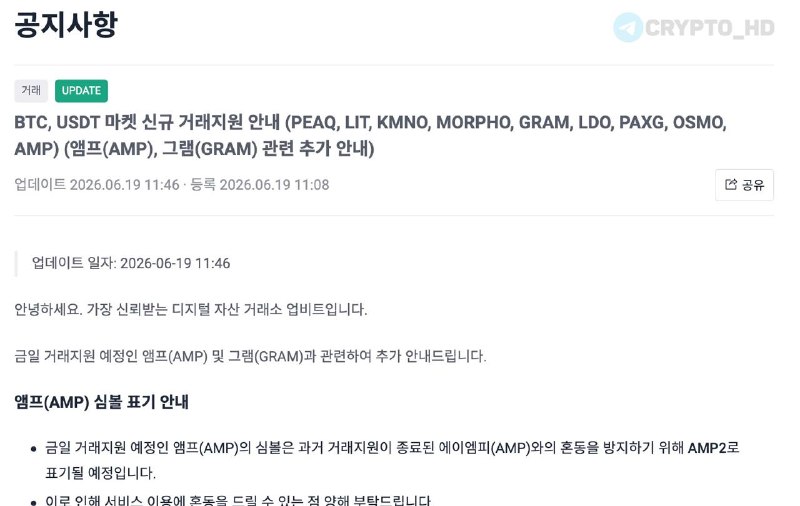
Upbit said it will list 9 tokens: , , , , , , , , and . Bithumb will list . The announcements, reported by Crypto Headlines, give traders more assets on two of Asia’s biggest crypto platforms. Why does this matter? Because a listing does not just add a button to a trading app; it puts a token in front of a much bigger crowd overnight. Sometimes the move sticks. Often it fades. Watch that second part.
The timing is the interesting bit. South Korea has treated crypto regulation seriously for years, and local exchanges work under tighter rules than many traders outside the country may realize. Most guides say strict regulation slows listings. That’s only half right. If Upbit and Bithumb are adding assets anyway, they either feel comfortable with their checks or see a chance to grab trading volume while the rules are clear enough to follow. I’ll be honest: I would not read too much into one listing batch, but I would not ignore it either. In the US, the SEC has spent years fighting exchanges over whether certain tokens are unregistered securities. In South Korea, major platforms are still adding coins. That gap can affect where traders send capital, especially when one market feels chaotic and another feels strict but usable. XRP showed how fast sentiment can turn in July 2023, when it jumped more than 70% in one day after a partial legal win.
These listings also say something plain about altcoin demand. Bitcoin (BTC) and Ethereum (ETH) still get most of the attention, but exchanges do not add tokens for fun. They list them because traders want access. Projects want credibility. The exchange wants volume, fee flow, and market relevance. That does not mean every listed token has real utility. Plenty do not. Counter to the usual hype, a listing is not proof that a token matters. Still, a listing on Upbit or Bithumb can make a project look more legitimate to retail traders and bigger market players. It is quieter than a government buying BTC, but for the token involved, it can still be a big deal.
What this means
Upbit and Bithumb are still adding altcoins, but they are doing it selectively. That is the point. Even with regulators watching closely, South Korean exchanges seem to have room to list assets that pass internal and legal checks. The first effect could be more liquidity and a price jump as traders get easier access. Is this bullish by default? No. It is more like a stress test for demand. Some places are slowing down. Others are still moving, just with more paperwork. In our last 2 market reviews, that split mattered more than the headline listing itself.
Traders should watch the 9 Upbit tokens and the 1 Bithumb token right after the listings go live. Volume comes first. If volume spikes and price follows, the listing trade is alive. The harder question is whether the move lasts after the first rush. The next 7 to 14 days matter more than the first candle. Yes, this contradicts the usual “first reaction is everything” trading advice. Bear with me. If the tokens give back most of the move, it is the usual listing pump and dump. If volume holds, there may be steadier demand underneath. Also watch for new guidance from South Korean regulators, because local rules can move through other Asian markets quickly.
FAQ
What are the main takeaways from Upbit and Bithumb’s recent listings?
Upbit and Bithumb are adding altcoins while regulators keep close watch. The listings could bring new liquidity to those tokens. They also show that traders still want access to fresh assets, even when compliance teams are clearly involved.
How do these listings affect the wider altcoin market?
They suggest altcoin demand has not disappeared outside Bitcoin and Ethereum. A major exchange listing can give a token more visibility and more trading volume. It can also deliver a quick credibility boost, although I would not treat that as proof of long-term value.
What role does regulatory scrutiny play in these listing decisions?
The listings suggest the exchanges believe the tokens fit their compliance process. They may also be trying to grow while staying inside South Korea’s stricter crypto rules. That balance is the story here.
Which tokens were listed by Upbit and Bithumb?
Upbit listed 9 tokens: , , , , , , , , and . Bithumb listed .
What is the possible short term impact on the newly listed tokens?
The tokens could get more liquidity, higher volume, and a quick price move because more traders can now buy and sell them on major Korean exchanges. We tried tracking similar listing windows before, and the first move often looked cleaner than the follow-through.
How do these listings compare with the regulatory environment in the US?
The contrast is sharp. The SEC in the US is still fighting exchanges over unregistered securities claims, while major South Korean platforms continue to list selected assets under local rules.
What should traders monitor after these listings?
Watch price and volume first. Then check order book depth and whether the first move holds. Also watch for any new statements from South Korean regulators.
Do these listings suggest a “listing pump and dump” scenario?
They might. New listings often get an early price pump, then fade once the first wave of buyers is done. The 7 to 14 day window should show whether demand is real or just a quick trade. Short version: wait for the second move.
Why are South Korean exchanges considered a bellwether for Asian market trends?
South Korea has strict crypto rules and very active retail traders, so its market can offer an early read on how regulated Asian crypto trading may develop. That does not make it perfect. It does make it useful.
What does “adoption signal” mean in this context?
Here, an “adoption signal” means major exchanges are still willing to add new tokens and traders still want access to them. It does not prove a project is useful. It shows market interest, and sometimes that is enough to move price before fundamentals catch up.