
















































Chukotka Man Loses 2,300,000 Rubles in Dating App Crypto Scam
A “dating app crypto scam” rarely begins with cryptocurrency. It begins with attention that feels personal. Scammers meet people on dating apps, build trust and only later steer them toward fake cryptocurrency platforms or direct money transfers. That delay matters.
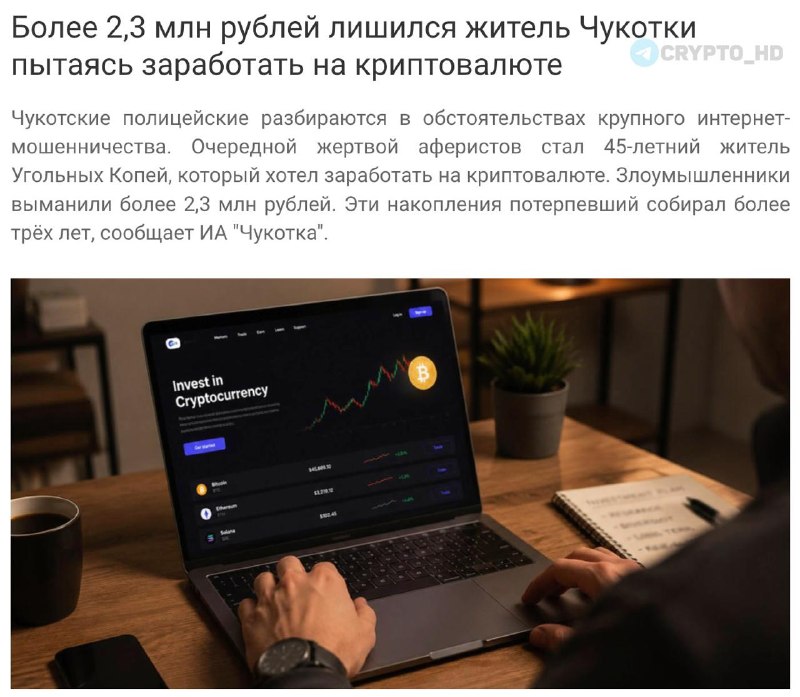
In Chukotka, a man lost 2,300,000 rubles after someone posing as a woman contacted him on a dating app. She promised large returns and persuaded him to invest through a fake cryptocurrency exchange. Police described it as a classic “pig butchering” scam. I’ll be honest: the label sounds almost too casual for what is deliberate financial and emotional abuse.
The mechanics were straightforward. The man sent money to accounts controlled by the scammers or deposited it through their fraudulent platform. His exchange account initially appeared to make a profit. Those figures were invented. Still, they did their job: he invested more. When he tried to withdraw his money, the platform locked him out. He then cut off contact, deleted the app and reported the fraud to police. Authorities have opened a criminal case.
The case took place in Chukotka, but the playbook travels easily. People new to cryptocurrency may not recognize a fake exchange or know how a genuine withdrawal should work. At the same time, crypto was receiving more public attention: El Salvador had adopted Bitcoin as legal tender, while major financial institutions were experimenting with tokenized assets. Why does that matter? Because every wave of attention brings inexperienced investors into the market, and scammers follow them.
Most warnings focus on suspicious links. That is only half right. Dating apps make the scheme persuasive because the link arrives from someone the victim has begun to trust. A stranger rarely opens with a request for 2.3 million rubles. They talk and flirt. Sometimes that continues for weeks or months before the investment pitch appears. By then, the victim may want to believe in both the relationship and the promised profits. My take: this is the ugliest part of the setup. Questioning the investment starts to feel like questioning someone who supposedly cares about you.
Fake exchanges can look convincing. Scammers copy the layouts and price charts of legitimate platforms, then populate account pages with fabricated gains. The balance rises. Nothing was earned. Victims may discover the truth only when a withdrawal fails or the exchange demands another payment for supposed “taxes” or “fees.” Stories like this can make crypto itself seem unsafe, particularly to people considering their first investment.
Regulation addresses only part of the problem. Agencies such as the SEC and CFTC concentrate heavily on exchange oversight, staking rules and investment products. An individual fraud case is harder to untangle: scammers may operate abroad, divide payments among several accounts and move stolen crypto within minutes. Police reports and recovery efforts often stall once the money crosses a border. Counter to the usual advice, stronger exchange rules alone will not solve that.
The SEC approved spot Bitcoin ETFs in early 2024, and Bitcoin traded above $61,400 in early March of that year. The ETFs gave institutional investors a regulated route into Bitcoin. They offered no protection to someone sending money through an exchange link supplied by a stranger. Easy distinction? Apparently not. A regulator’s approval of one product does not validate every crypto platform or investment offer.
Retail investors still fall through obvious gaps. A victim may not know where to report the scam, while police may have little time to trace the money before it moves again. Cooperation between countries can help, but it rarely moves quickly. Public advice needs work too. I think “be careful” is nearly useless on its own; people need to understand how relationship scams unfold before the request for money ever appears.
What this means
The easiest target in many crypto scams is not an exchange. It is the person controlling the wallet. Criminals do not necessarily need to breach a platform or steal a password when earning someone’s trust is enough.
As more people enter the market, scammers will continue using personal relationships to reach them. The Chukotka man paid 2,300,000 rubles for that misplaced trust. Technical knowledge offers limited protection here. Yes, that sounds counterintuitive. Someone can understand blockchain in detail and still believe a person who appears to care about them.
Such fraud changes how safe the wider crypto market appears. After hearing about a 2,300,000-ruble loss in Chukotka, a new investor may avoid unknown platforms or reject crypto entirely. Obscure altcoins make useful bait because their prices and developers can be difficult to verify. So can their promotional claims. To my eye, the uncertainty is the product scammers are really selling.
Investment advice from a dating-app match should set off alarms, however genuine the relationship feels. Independently verify the platform’s legal name and registration, then examine its record of processing withdrawals. Ignore links or screenshots supplied by the promoter. Treat their testimonials the same way. Check notices from regulators and reporting by established news outlets. Most importantly, wait. A genuine investment opportunity will not disappear overnight.
Self-custody tools can reduce certain risks, but they cannot stop someone from voluntarily transferring assets to a scammer. Most technical guides emphasize wallet control. Again, that is only half the problem. Simpler software and clearer transaction warnings might stop some payments. Laws written specifically for online relationship fraud could also improve reporting while giving investigators more useful enforcement options. Q2 2024 fraud reports were expected to indicate whether dating-app crypto scams were growing or adopting different tactics.
FAQ
What is a “pig butchering” scam?
A “pig butchering” scam is a drawn-out fraud. The scammer forms a relationship with the victim and later introduces a fake investment. Invented profits encourage additional deposits. Eventually, the scammer takes the funds or blocks access to them.
How can I identify a fake cryptocurrency exchange?
Watch for guaranteed returns and unusually large profits. Repeated demands for further deposits are another warning, as is a license you cannot verify. A poorly made website is obviously suspicious, but polish proves nothing. Is testing a small withdrawal overcautious? No. Research the exchange through sources you find yourself, then confirm that money can actually be withdrawn before depositing more.
What should I do if I suspect I’m being scammed on a dating app?
Stop sending money immediately. Do not provide more personal information. Before blocking the person, preserve the messages and account details; save wallet addresses and transaction records too. Report the profile to the dating app, then contact local police or the agency that handles fraud in your area.
Are dating app crypto scams increasing?
Cybersecurity companies and law enforcement agencies have recorded growth in relationship-based crypto fraud, including “pig butchering” schemes. Reliable totals remain difficult to calculate because many victims never report what happened. I would treat any precise global count cautiously.
What role do regulators play in preventing these scams?
Regulators warn the public and provide investor guidance. They can also pursue fraudulent businesses. Their options narrow when scammers cross national borders, hide behind fake identities or route payments through overseas accounts.
Can I recover funds lost in a crypto scam?
Recovery is difficult. Blockchain transfers generally cannot be reversed, and criminals can move stolen funds through numerous wallets. Report the loss immediately. Police or exchanges might freeze the assets if investigators locate them before they are moved again.
How can I protect myself from crypto scams?
Research every investment yourself and use exchanges with a documented operating record. Enable two-factor authentication. Keep private keys secret; protect seed phrases just as carefully. Above all, never invest through a link sent by someone you met through an online romance.