
















































Trump Netanyahu Lebanon crypto tension tests Bitcoin safe haven trade
Trump’s reported clash with Benjamin Netanyahu over Lebanon matters for trump netanyahu lebanon crypto because it hits the question traders keep arguing about: does BTC still behave like a risk asset, or does it turn into a wartime hedge when the tape gets ugly? The reported U.S.-Israel rupture followed escalation in Lebanon, with Trump warning that more fighting could leave Israel more isolated and damage U.S.-Iran talks. My take: crypto traders should treat this less like a politics story and more like a live test across BTC, ETH, gold, oil, and dollar liquidity.
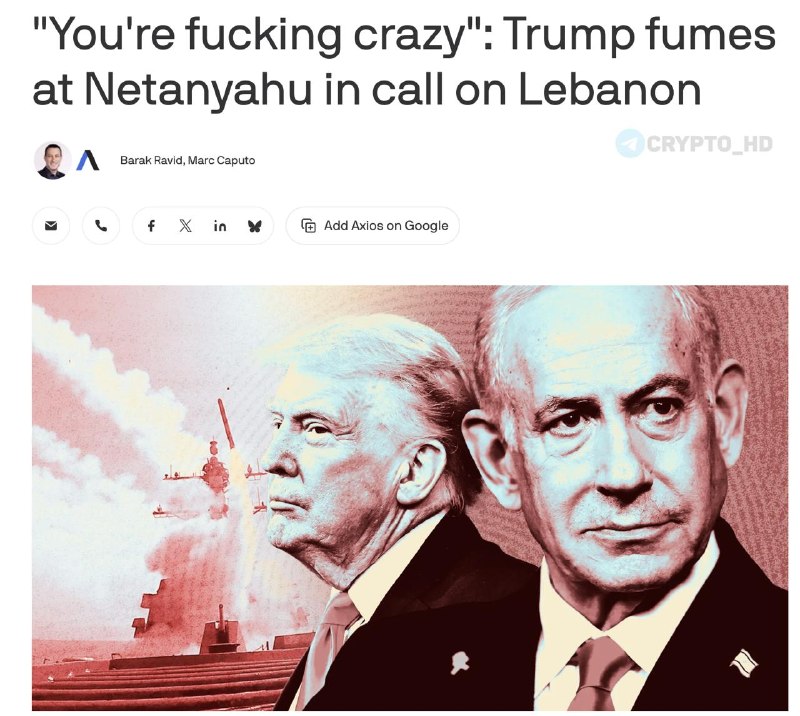
The source says Donald Trump sharply rebuked Benjamin Netanyahu over escalation in Lebanon and civilian casualties there. Axios also reported that Israel later dropped plans to hit Hezbollah targets in Beirut. One stated reason for Trump’s anger was that the Lebanon conflict could disrupt U.S.-Iran talks. That is the market hook. Not the drama. Lebanon, Israel, Iran, and the United States sit on a map that can move the safe haven assets crypto traders watch minute by minute.
Crypto does not need a missile launch to reprice risk. It needs uncertainty. After the Jan. 3, 2020 Soleimani strike, BTC gained roughly 8% in the days around the shock, while gold also rose. Does that predict the next move? No. It only explains why traders quickly connect Middle East conflict bitcoin price action with weekend liquidity, Binance order books, CME futures gaps, stablecoin flows, and the first messy bid after a headline.
The first crypto angle is safe haven demand. If Trump’s pressure cools the Beirut situation, BTC may lose part of the war bid that sometimes appears during political shocks. If the call does not calm the region, BTC could again compete with gold as a fast hedge, especially when banks are closed and crypto markets are still open. I’ll be honest: I would not over-romanticize it. BTC can act like “digital gold” on Tuesday and a high-beta Nasdaq trade by Friday. That whiplash matters more than the slogan.
Traders should keep BTC and ETH separate here. BTC usually gets the safe haven story first because the macro pitch is cleaner and the derivatives market is deeper. ETH often trades more like a growth asset tied to liquidity and staking risk. If Lebanon headlines hit equities or lift oil, ETH can lag BTC even if both rise in dollar terms. Simple stories win.
The second angle is macro flow. A wider Lebanon conflict could push oil higher, raise inflation fears, and make the Fed’s rate path harder to price. That matters for BTC and ETH because tighter real yields usually hurt speculative assets, while falling yields can bring leverage back into crypto. The chain is not elegant, but it works: Lebanon risk can hit oil, oil can hit inflation expectations, inflation expectations can hit Fed pricing, and Fed pricing can hit BTC leverage.
Trump’s reported objection cuts both ways. Most guides say geopolitical tension is automatically bullish for Bitcoin. That’s only half right. If Washington is trying to protect U.S.-Iran negotiations, markets may read the call as an attempt to contain regional risk. A contained conflict could support rotation into BTC, ETH, and COIN if traders decide the worst oil shock is fading. A failed containment effort would likely push traders first toward cash and gold. Short duration instruments enter the picture before crypto beta gets another serious bid.
The quote matters because tone moves political risk. According to the source, Trump told Netanyahu: “You’re fucking crazy. If not for me, you’d be in prison.” The rest of the reported message was just as blunt: Trump said he was saving Netanyahu, that everyone now hated him, and that Israel was being hated because of the escalation. Markets do not price profanity. They price whether the U.S.-Israel relationship looks coordinated or strained. Big difference.
For crypto, a strained U.S.-Israel signal can create two trades. One is the safe haven BTC trade, where traders buy Bitcoin because political institutions look shakier. The other is the risk-off trade, where traders sell BTC, ETH, and COIN because geopolitical stress tightens financial conditions. Yes, this sounds contradictory. It is still how the market behaves. Both can happen within 72 hours, which is why spot volume, funding rates, CME basis, and ETF tape matter more than social media slogans after a headline like this.
COIN also belongs in the discussion, even though the source does not mention Coinbase. That is analysis, not a source fact. When geopolitical stress raises volatility, exchange-linked stocks can move with crypto volumes, but they can also fall with broader risk assets. If BTC catches a safe haven bid while Nasdaq weakens, COIN may lag BTC. If risk appetite returns across the board, COIN can become a cleaner beta trade than ETH for equity traders. I would watch that split closely.
The U.S.-Iran negotiation detail is the most important market line in the source. Iran risk is not just diplomatic theater for crypto. It touches oil routes, sanctions expectations, dollar demand, and inflation hedges. Why does this matter? Because if Trump’s anger came partly from fear that Lebanon escalation could derail those talks, the market should treat Beirut headlines as linked to Tehran headlines. BTC traders already know cross-asset risk does not stay in one lane for long.
There is also a liquidity problem. Crypto trades every Saturday and Sunday. Many macro desks do not. A Friday night Lebanon headline can move BTC before oil futures, Treasury yields, or U.S. equities fully reopen. That can fool people. A weekend BTC spike may look like safe haven demand, then fade when Monday’s macro market opens and real money desks choose dollars or gold instead. Counter to the usual advice, the first move is sometimes the least useful one.
None of this means Bitcoin automatically rallies on war risk. In March 2020, BTC collapsed with global risk assets before recovering as liquidity came back. In 2022, tighter rates crushed the broader crypto market despite repeated geopolitical stress. The lesson is blunt. BTC likes crisis when liquidity is loose. It hates crisis when liquidity disappears. Lebanon headlines matter most when they collide with rates, oil, leverage, and forced positioning.
That gives traders a cleaner framework. If Trump’s pressure on Netanyahu reduces escalation and protects U.S.-Iran talks, BTC may trade more on Fed expectations and ETF demand than on Middle East headlines. If Israel revives plans against Hezbollah targets in Beirut, or if civilian casualties in Lebanon rise further, the safe haven story can come back fast. The tell is whether BTC gains while ETH and COIN lag. That looks like hedge demand, not broad crypto excitement. We have seen that pattern matter more than the headline itself.
What this means
The Axios reported call suggests U.S. political pressure may now be aimed at limiting Israel’s escalation in Lebanon, not only dealing with the fallout. For BTC, the next move is less about one quote and more about whether traders see de-escalation or a wider Middle East conflict bitcoin price catalyst. Watch BTC dominance and ETH/BTC. Then check CME Bitcoin futures basis after the next Lebanon or U.S.-Iran headline. A BTC-led move with weak ETH would point to safe haven demand, not risk-on rotation.
The levels to watch are simple: BTC’s prior local support and resistance on the daily chart, ETH/BTC for relative strength, and COIN for equity market confirmation. Is this overkill? For a headline that can hit oil, rates, and weekend crypto liquidity at once, no. The next scheduled macro checkpoint is the next FOMC rate decision, because oil-driven inflation fear would feed straight into Fed pricing and crypto leverage. Also watch CME open interest after the next U.S. trading session. If BTC rises while funding overheats, the safe haven trade may already be crowded.
FAQ
Q: What was the primary reason for Trump’s rebuke of Netanyahu, according to Axios?
A: According to Axios, Trump’s main reason for rebuking Netanyahu was concern that the Lebanon conflict could disrupt U.S.-Iran negotiations.
Q: How did BTC react to the Soleimani strike in January 2020?
A: In January 2020, BTC gained about 8% in the days around the Soleimani strike, according to market observations.
Q: What is the difference in how BTC and ETH typically react to geopolitical stress?
A: BTC often gets treated as the cleaner safe haven trade. ETH usually reacts more like a growth asset tied to liquidity and broader risk appetite.
Q: How can a wider Lebanon conflict impact the Fed’s rate path?
A: A wider Lebanon conflict could push oil prices higher, raise inflation fears, and make the Fed’s rate path harder to price.
Q: What is the significance of the U.S.-Iran negotiation detail for crypto markets?
A: The U.S.-Iran negotiation detail matters because Iran risk touches oil routes, sanctions expectations, dollar demand, and inflation hedges. Crypto does not trade outside that world.
Q: Why is weekend liquidity a factor in BTC’s reaction to geopolitical headlines?
A: Crypto trades 24/7, so BTC can move on a Friday night headline before traditional markets reopen. That early move can be misleading.
Q: Does Bitcoin always rally during wartime or crisis?
A: No. Bitcoin tends to handle crisis better when liquidity is loose. When liquidity disappears, it can fall with the rest of the risk market.
Q: What would a BTC-led move with weak ETH suggest about market sentiment?
A: A BTC-led move with weak ETH would suggest safe haven demand rather than broad risk-on rotation. Traders would be looking for a hedge.
Q: What specific levels should traders watch for BTC, ETH/BTC, and COIN?
A: Traders should watch BTC’s prior local support and resistance, ETH/BTC for relative strength, and COIN for equity market confirmation.
Q: What is the next scheduled macro checkpoint relevant to these market dynamics?
A: The next scheduled macro checkpoint is the next FOMC rate decision, since oil-driven inflation fears feed into Fed pricing and crypto leverage.