















































Bitcoin Long Liquidations Surge as Price Slips Below $63,000
A Bitcoin long gets liquidated when the price falls far enough that a trader’s margin can no longer cover the loss. Then the exchange closes it automatically. Fast. More than $121 million in Bitcoin longs vanished within one hour, and those sales helped drag BTC below $63,000 for the first time in 14 days. I’ll be honest: that is a vicious hour for bullish traders. Recent institutional inflows did not protect them once a crowded trade began to unravel.
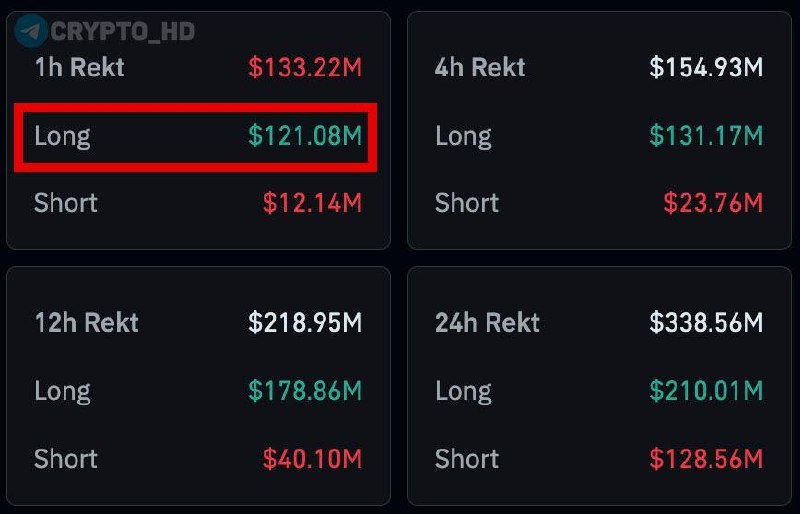
According to Coinglass, Bitcoin hit its lowest price in two weeks as liquidations mounted. The initial drop was not especially large. It didn’t have to be. Early liquidations forced more Bitcoin onto the market; the lower price then triggered further closures. Why does that matter? Because leverage turned one decline into a chain reaction. My take: the speed says more than the size of the first move. Afterward, trading can remain unsettled while traders cut exposure, then cautiously return.
The decline comes as investors weigh inflation data and the Federal Reserve’s interest-rate policy. High rates can make speculative assets less appealing, and Bitcoin still behaves like one when markets get nervous. A sharp BTC drop often pulls altcoins lower, as it did here. Traders had treated $63,000 as support; after the break, that same level may become resistance. Most market summaries blame forced liquidations alone. That’s only half right. Continued uncertainty over rates may also be pushing out money added during calmer sessions.
The sell-off weakens the case for Bitcoin as a safe haven. Not subtly, either. BTC has held its ground during some periods of geopolitical turmoil, but this decline originated inside the crypto market. Gold often attracts buyers when anxiety rises. Bitcoin has recently traded more like a risky asset, and a fairly modest decline erased $121 million in leveraged longs in 60 minutes. We should be blunt here: that looks like a speculative market, not a quiet store of wealth. The safe-haven argument is not dead. This episode does it no favors.
What this means
The mood has shifted, at least for now. Bullish traders have a concrete reason to pull back, while others may bet against Bitcoin if it cannot recover $63,000. Counter to the usual panic narrative, forced selling can eventually help: it removed a sizable chunk of leverage and may leave the market more stable once the dust settles. But not yet. BTC could still fall further, and more than $121 million in long positions disappearing within one hour shows how badly traders were caught off guard. Everyone knows crypto is volatile. Knowing does not soften the loss.
The next level attracting attention is $60,000. Round numbers collect orders, and a firm break below this one could prompt more selling or another liquidation wave. Is watching one number enough? No. Federal Open Market Committee announcements matter because changing rate expectations can move capital into or out of risky assets quickly. CME Bitcoin futures add another signal by showing whether institutional traders are cutting exposure or buying protection. They may instead use the decline to add positions. In my view, that distinction matters more than a dramatic intraday candle. No single indicator can call the next move; together, these signals make the market’s direction easier to judge.
FAQ
What is a Bitcoin long liquidation?
A Bitcoin long liquidation occurs when an exchange closes a leveraged position because Bitcoin has fallen too far. The trader’s remaining margin can no longer cover the possible loss, so the exchange sells automatically. No discretion remains.
Why did Bitcoin’s price drop below $63,000?
More than $121 million in leveraged long positions were liquidated in one hour. Those forced sales struck a market that was already falling and helped pull Bitcoin below $63,000. The sequence matters: falling price, forced selling, then more pressure.
How does this event affect the broader crypto market?
Bitcoin often determines the wider crypto market’s direction. When BTC drops suddenly, altcoins usually follow. Traders turn cautious, close positions or rearrange their exposure, and price swings can grow larger. My read: the secondary reaction can become uglier than the original Bitcoin move.
Is Bitcoin still considered a safe-haven asset?
The label is harder to defend after this sell-off. Bitcoin has remained resilient during some crises, yes. But it often moves alongside speculative assets and can drop sharply because of leverage inside its own market. That contradiction is the issue.
What are the main levels to watch for Bitcoin now?
Traders are watching $63,000 as possible resistance, while $60,000 may provide psychological support. Recovering $63,000 could settle the market. Staying below $60,000 could bring another round of selling. Simple levels, high stakes.
What role does leverage play in these liquidations?
Leverage lets traders control larger positions with borrowed money, increasing both gains and losses. Most explanations call leverage the cause. More precisely, it is the accelerator: in this case, heavy borrowing allowed a relatively small Bitcoin decline to force many positions closed.
How do macro factors influence Bitcoin’s price?
Inflation and Federal Reserve rate decisions affect investors’ appetite for risk. When rates stay high or the economic outlook becomes less certain, some investors pull money from crypto. They move it into assets they consider safer. I wouldn’t treat that relationship as mechanical, but ignoring it is a mistake.
Why does CME Bitcoin futures data matter?
CME futures offer clues about institutional traders’ response to a large price move. Position shifts may show protection against further losses or reduced exposure. They could also signal an expectation that Bitcoin will recover. The data provides clues, not certainty.
How quickly did the liquidations occur?
Coinglass recorded more than $121 million in Bitcoin long liquidations in a single hour. That concentrated wave of forced selling helped send BTC to its lowest price in 14 days. One hour. Two weeks erased.
What does “deleveraging event” mean here?
It means borrowed exposure is being removed from the market quickly. As Bitcoin falls, exchanges close positions that no longer have enough margin. The process reduces the borrowed money supporting active trades. Is that automatically bearish afterward? Not necessarily, because removing fragile leverage can eventually produce a more stable market.