
















































Bitcoin Pain Transfer Points to a Possible Bottom, While Long-Term Holders Take the Hit
CryptoQuant data suggests Bitcoin may be trying to put in a bottom through what it calls “pain transfer.” The idea is blunt: short-term holders sell BTC to newer buyers at lower prices, and that pulls the short-term cohort’s average entry price down. My take: this is one of those indicators that sounds academic until you remember what it actually describes. People give up. New buyers step in. BTC gets repriced one forced sale at a time. It works.
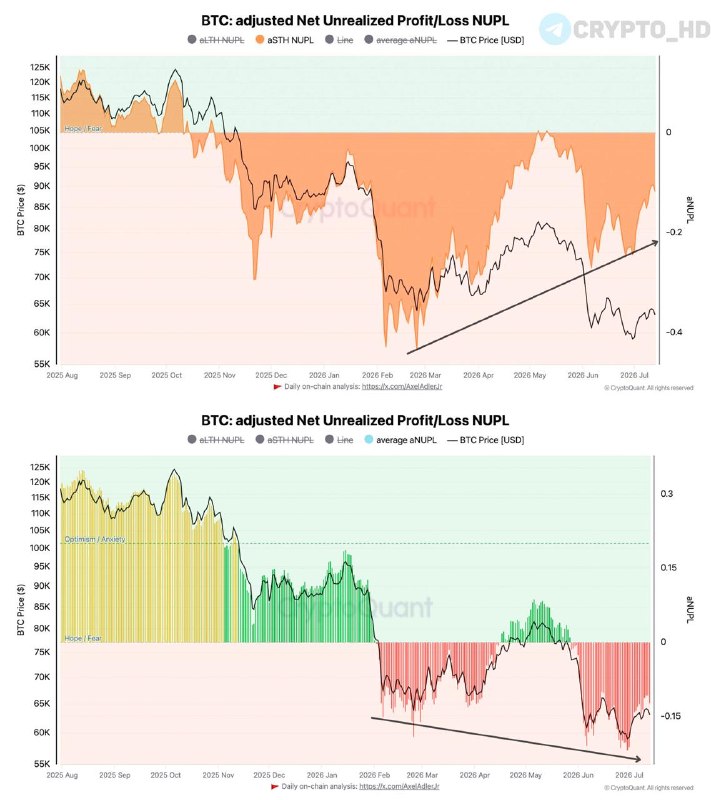
The uncomfortable part is who takes the pain next. Short-term holders are showing smaller unrealized losses on each new dip, which suggests many of them have already sold or are still selling into weakness. New buyers are getting BTC at better prices. Meanwhile, holders who bought closer to the highs and have now held for more than 155 days are carrying larger unrealized losses. That is the transfer. The pressure moves out of the fast-money group and into wallets more likely to sit through a drawdown. Most bottoming guides make this sound clean. It is not. It is ugly, slow, and usually obvious only after the worst selling has already happened.
The macro backdrop still matters. Bitcoin keeps trading like a risk asset when rates and liquidity dominate the conversation. When the Fed keeps rates high, or when traders expect more tightening, speculative assets usually get hit first. Crypto does not get a special pass. Why does this matter? Because the current selling from short-term holders may still be an aftershock from earlier tightening cycles. If markets start to believe policy has stabilized, or that a cut is more likely than another hike, this handoff could move faster. Stronger buyers get cheaper coins. Weak hands leave. Bitcoin usually needs that kind of reset before a real move higher. We saw something similar in late 2018, after Fed rate hikes helped drain risk appetite. BTC then moved sideways for months before the 2019 rally.
Then there is the awkward safe-haven question. The “digital gold” story sounds clean in a headline, but markets rarely behave that neatly. Right now, Bitcoin is not simply pulling in money from scared investors. It is going through an internal handoff, from people who want out now to people willing to sit through the damage. Long-term holders are absorbing the sell pressure. That matters. Maybe it is not enough to prove the store-of-value argument, but it does show that conviction has not vanished. Gold often gets crisis inflows right away. Bitcoin is messier. In March 2020, during the first COVID-19 panic, BTC crashed with stocks before ripping higher later. I’ll be honest: that is still the pattern I keep coming back to. Bitcoin can trade like a panic asset first and a conviction asset later.
CryptoQuant says the cleaner reversal signal comes when short-term aNUPL, adjusted Net Unrealized Profit/Loss, returns to neutral and long-term aNUPL stops getting worse. Put simply, short-term holders need to stop being deeply underwater as a group. Long-term holders need to stop bleeding more on paper. Price alone does not tell the whole story. Yes, that sounds like it contradicts the usual chart-first approach. It does. The investor base has to stop cracking too.
What this means
This “pain transfer” puts Bitcoin in a serious bottoming zone, but not a guaranteed one. BTC is moving from short-term traders, including buyers who came in too late or ran out of patience, into the hands of investors willing to take the other side. That is a familiar accumulation pattern. It hurts while it happens. It should. Bottoms are rarely comfortable. Is this enough by itself? No. But if the process holds, Bitcoin may come out of it with a healthier holder base and less forced selling overhead. BTC is the main asset here, but the spillover matters. A steadier Bitcoin would give ETH and other large crypto assets more room to recover.
The next thing to watch is CryptoQuant’s aNUPL data. Short-term aNUPL needs to move back toward neutral, and long-term aNUPL needs to stop sliding. After that, the macro calendar matters: inflation prints and Fed language come first. Rate expectations sit right behind them. Counter to the usual advice, I would not treat a single green candle as confirmation here. A softer policy outlook could speed up the handoff and bring buyers back with more confidence. On price, $60,000 still matters. A clean break above it, followed by a hold, would be a much stronger sign that sentiment has turned and this bottoming phase is close to done.
FAQ: Bitcoin pain transfer bottoming
What is Bitcoin “pain transfer”?
According to CryptoQuant, “pain transfer” happens when short-term Bitcoin holders sell BTC at a loss to newer buyers. Those buyers get a lower average entry price, while more of the unrealized loss shifts toward longer-term holders.
Why does “pain transfer” matter for Bitcoin’s market bottom?
It matters because it shows impatient or overexposed holders leaving the market while longer-term buyers take the supply. In plain English: weaker hands exit, stronger hands absorb. That kind of handoff often happens before Bitcoin forms a more durable bottom.
How do macroeconomic factors influence Bitcoin’s “pain transfer”?
Interest rate policy changes how much risk investors want to take. When rates are high or expected to rise, investors tend to cut exposure to assets like Bitcoin. When policy looks steadier or easier, buyers usually become less defensive.
What is the role of long-term holders in this process?
Long-term holders absorb coins sold by short-term holders. If they keep holding despite large unrealized losses, it suggests conviction is still there, even if the chart looks rough.
What specific metrics signal the completion of “pain accumulation”?
CryptoQuant points to two signals: short-term aNUPL returning to neutral and long-term aNUPL no longer deteriorating. Together, they would suggest the worst of the investor stress may have passed.
What is aNUPL?
aNUPL stands for adjusted Net Unrealized Profit/Loss. It tracks whether different groups of Bitcoin investors are sitting on gains or losses, based on where their coins last moved.
How does a stable BTC bottom affect the broader altcoin market?
Bitcoin still sets the tone for most of crypto. If BTC finds a stable bottom, ETH and other major crypto assets usually have a better chance of stabilizing too.
What price level should be watched for Bitcoin to confirm a shift in sentiment?
The $60,000 level is the one to watch. A sustained break and hold above it would make the bottoming argument much harder to dismiss.