
















































Polymarket phishing attack: $3M pUSD stolen, trust takes a hit
A “Polymarket phishing attack” means attackers tricked users, or pushed them through a bad route, into signing away assets on Polymarket. In this case, the loss traced back to code that reached users through the site’s frontend. Not the clean, dramatic protocol-break story people expect. Messier than that.
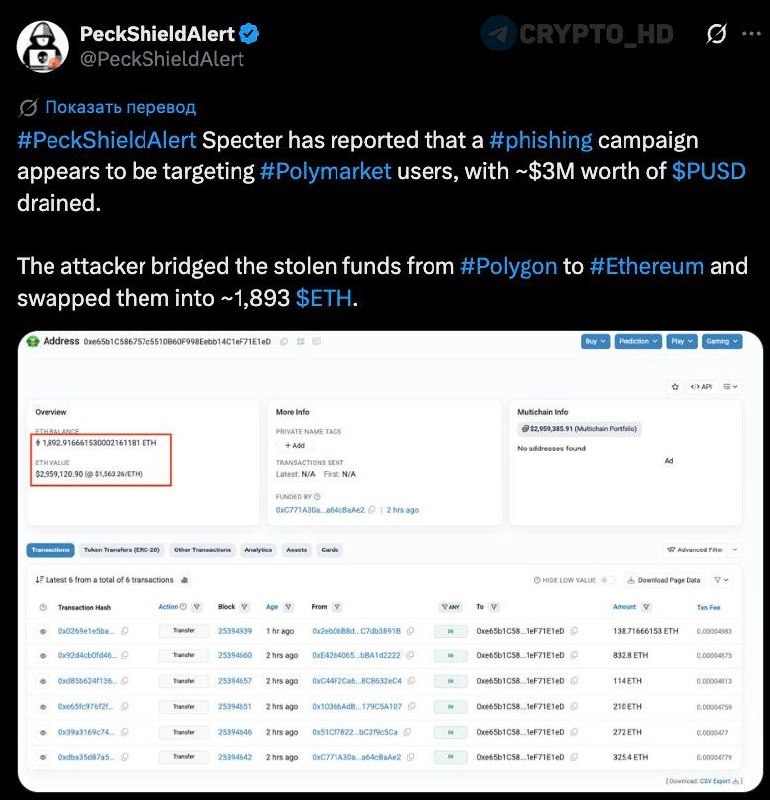
Polymarket users lost $3,000,000 in pUSD after attackers compromised code from an outside vendor. That is the part worth sitting with. The platform did not have to collapse for users to lose money. One dependency in the wrong spot was enough. Polymarket confirmed the incident, removed the malicious code, and said affected users would be reimbursed. My take: the reimbursement helps, but it does not erase the warning.
The “attack vector” was not a direct breach of Polymarket’s core protocol. It came through an outside vendor.
The attack did not break Polymarket’s core protocol. A vendor whose code ran in Polymarket’s official frontend was compromised, and attackers used that access to inject a malicious script. Users who visited Polymarket and connected their wallets had pUSD drained. Polymarket later removed the script and promised to make users whole. Good. Still, the lesson is hard to dodge: in crypto, security is not just smart contracts. It is also the vendor script, the wallet prompt, the loaded frontend, and the moment a user clicks.
The “broader narrative of regulation pressure” means crypto security failures often give regulators more reasons to push for tighter oversight.
This Polymarket phishing attack, with $3,000,000 in pUSD stolen, lands directly in the regulation pressure debate that has followed crypto for years. Regulators, including the SEC, often point to security failures and consumer losses when they argue for stricter rules. FTX gave them a giant example. DeFi bridge hacks gave them technical examples. Smaller exploits gave them the daily drip. Why does this matter? Because regulators do not need every incident to be huge; they need a pattern that ordinary users can understand.
The Coinbase case and similar fights often come back to the same question. Do retail investors need stronger guardrails than decentralized markets currently give them? Yes, that sounds like the boring policy version of the story. It is also the part that sticks. This Polymarket incident is obviously smaller than FTX, but it still feeds the “wild west” label crypto keeps trying to shake. Spot Bitcoin ETFs helped push Bitcoin past $61.4K in early March, which looked like a real win for mainstream access. Then a frontend compromise steals $3,000,000 in pUSD and gives cautious money managers one more reason to wait.
The “safe haven narrative” in crypto is the idea that assets like Bitcoin can work as a store of value during economic or geopolitical stress.
This also touches the safe haven argument, though not in the usual way. Most guides frame Bitcoin’s safe haven case around inflation, banks, and geopolitics. That is only half right. When the outside world looks unstable, Bitcoin sometimes gets framed as digital gold. When the problem comes from inside crypto, the story gets ugly fast. A user does not care whether the failure came from a core protocol, a vendor script, or a wallet prompt they should have read more carefully. Their money is gone. That is what they remember.
The Terra/Luna collapse in May 2022 showed how quickly confidence can snap. Bitcoin fell from above $30,000 to below $20,000 within weeks as fear spread through the market. This Polymarket loss is much smaller, but the emotional logic is familiar. Security failures make people question the whole setup. Some traders may pull back from smaller altcoins. Others may move into ETH, stablecoins, or cash. I would not call that panic. It feels more like a quiet decision not to be the next wallet in the postmortem.
What this means
The “implications of the Polymarket phishing attack” come down to the risk DeFi platforms take when they rely on outside code.
This attack shows how exposed DeFi platforms can be through outside integrations. A platform can have a solid protocol and still put users at risk through the frontend. That is uncomfortable, but true. Prediction markets may take the clearest reputational hit here, though the same problem applies to any DeFi project that puts vendor code inside wallet connected flows. Counter to the usual advice, another smart contract audit would not have solved this by itself. The frontend mattered. The supply chain mattered. Polymarket’s reimbursement pledge should help with trust, but regulators will still use the incident as evidence that DeFi has weak spots ordinary users cannot see.
Investors should “monitor specific indicators” to see whether this incident stays contained or spreads into wider DeFi sentiment.
Investors should watch how other DeFi protocols respond to this kind of vendor compromise. Do teams tighten reviews of integrated code? Do they remove outside scripts from wallet connected flows? Do they publish audits that cover the frontend, not just smart contracts? Those details matter now. Is this overkill? For a wallet connected product handling user funds, no. Also watch total value locked across prediction markets and related DeFi sectors. A sharp TVL drop would suggest users are not treating this as an isolated event. Polymarket trading volume, user activity on competing prediction platforms, the pUSD peg, and any SEC or CFTC comments over the next few weeks are worth tracking too. I’ll be honest: regulators rarely waste a clean example.
FAQ
What was the Polymarket phishing attack?
The Polymarket phishing attack was an incident where users lost $3,000,000 in pUSD after an outside vendor tied to Polymarket’s frontend was compromised.
How did the attackers steal pUSD?
Attackers used the compromised vendor code to inject a malicious script into Polymarket’s official frontend. When users connected their wallets, the script drained pUSD.
Was Polymarket’s core protocol breached?
No. Polymarket’s core protocol was not directly breached. The problem came from code supplied through an outside vendor.
Has Polymarket reimbursed affected users?
Polymarket said it will fully reimburse users affected by the stolen pUSD.
What is the broader impact of this attack on DeFi?
The attack puts more attention on outside code risk in DeFi. It may also bring more regulatory scrutiny and closer reviews of frontend supply chain security.
How does this incident affect investor confidence?
It hurts trust in decentralized prediction markets and may make users more cautious about DeFi platforms that depend on outside code.
What is pUSD?
pUSD is a stablecoin used within the Polymarket ecosystem. It is designed to hold a stable value.
What steps did Polymarket take after the attack?
Polymarket removed the malicious code from its frontend and said it would fully reimburse affected users.
Could this lead to more regulation?
Yes. Incidents like this give regulators, including the SEC, more material to argue for stricter oversight and stronger consumer protection rules in crypto.
What should investors watch for next?
Investors should watch how DeFi protocols respond to outside code risk, shifts in DeFi security sentiment, Polymarket activity, the pUSD peg, and comments from regulators.