
















































Trump Media Sells Bitcoin at Loss, Pressuring the Corporate BTC Story
Trump Media reportedly sold 2650 BTC for $205 million, according to a Lookonchain post. If that wallet read is accurate, the sale was rough. I’ll be honest: it also pokes a hole in the tidy story that corporate Bitcoin buyers are always patient holders.
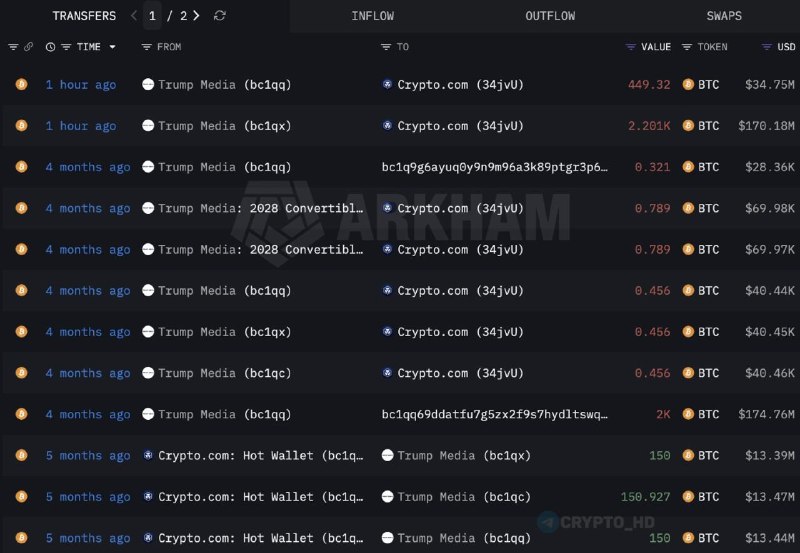
Lookonchain said Trump Media sold 2650 BTC for $205 million. The coins were likely sold below their acquisition cost, which the post estimated at $87,000-$118,000 per BTC. The reported floating loss was about $455,000,000. That number lands hard. Even a politically connected company can end up selling BTC when price, timing, and cash needs collide.
The source post names Trump Media and says Lookonchain flagged the wallet activity. The reported sale was 2650 BTC, worth $205 million, against an estimated entry range of $87,000-$118,000 per coin. It also mentions “Earlier: Trump’s decree” but gives no date, decree text, or direct Trump Media comment. So yes, the trade may be visible. The reason is not. That gap matters.
Corporate Bitcoin buying looks clean in a bull market. In a drawdown, BTC in a company treasury can stop looking like a grand macro bet and start looking like cash that can move 5% in a day. Why does this matter? Because balance sheet assets are not memes when the company needs dollars.
MicroStrategy made the BTC balance sheet trade famous. Trump Media’s reported sale shows the less glamorous side. Most guides talk about corporate reserves as sticky demand. That’s only half right. If a company buys BTC at $87,000-$118,000 and later sells 2650 BTC for $205 million, traders will ask whether this was treasury stress or bad timing. Maybe it was a planned exit. Corporate reserves help BTC when they soak up supply; they hurt when they add supply into a weak market.
The macro backdrop still matters because Bitcoin often trades like a high beta risk asset when liquidity tightens, even though supporters call it “digital gold.” My take: both claims can be true, just not on the same trading day.
In rate sensitive markets, investors tend to pull money from volatile assets first. BTC, ETH, and COIN usually feel that faster than slower moving equity sectors. The source does not give dates for Fed moves, inflation prints, or exact BTC spot levels, so those should stay out of the fact column. Still, a reported $455,000,000 floating loss is not a throwaway detail. Traders notice numbers like that. It tells them corporate BTC positions still answer to dollar funding needs. Stock market pressure matters too. So does election cycle noise.
This sale also complicates the safe haven argument for Bitcoin. BTC has caught bids during political shocks before, but that does not make it immune to ordinary balance sheet math. Is that a contradiction? Not really.
During the January 2020 Soleimani strike period, Bitcoin reportedly rose about 8% as traders treated it, briefly, like a crisis hedge. That history is useful, but it does not erase the current signal. The source links Trump Media to the President of the United States, and the “Trump’s decree” line adds a political shadow to the trade. My read is simple: when politics and treasury selling meet, BTC does not automatically behave like gold. It may just be the easiest asset to sell.
Regulation sits in the background here, although the source itself does not mention it. I would not jam a legal narrative onto a wallet post.
The post does not refer to the SEC, CFTC, ETF flows, staking, exchanges, or legal filings, so those should not be treated as reported facts. Still, BTC, ETH, and COIN traders can see why a politically branded company selling 2650 BTC would get attention. Counter to the usual advice, the key issue may not be regulation first. It may be disclosure timing, custody, and treasury policy once corporate Bitcoin holdings get pulled into partisan market stories. That is analysis, not a claim from the source. Bigger holders move coins, and the market wants to know why.
The lack of a quote or reaction from Trump Media is important. Without it, traders cannot tell whether this was a strategic sale, a liquidity sale, or a risk management sale. That is the whole problem.
A strategic sale would suggest management changed its view on BTC. A liquidity sale would point to a need for cash. A risk management sale would mean the company tried to limit further downside after buying between $87,000 and $118,000. Those are very different stories. Traders should not mash them together just because the wallet moved. We have all seen that movie in crypto: one transfer, three narratives, no confirmation.
What this means
Trump Media’s reported sale suggests the corporate Bitcoin story has entered a harder stretch. Buying BTC is easy to market. Holding it through a large reported loss is the harder part. Simple as that.
For BTC, the reported $87,000-$118,000 purchase range now becomes a psychological marker for corporate treasury pain. If other companies that bought near those levels start selling, traders may stop treating treasury adoption as permanent demand. Yes, this pushes against the clean “institutions never sell” line. Good. It should. Demand with strings attached is still demand, but it is not the same thing as a permanent bid.
Traders should watch BTC around the reported $87,000-$118,000 range and check whether Lookonchain or similar wallet trackers show more selling after the 2650 BTC move. What is the next real checkpoint? Another visible transfer from Trump Media linked addresses. That would matter more than any broad statement about Bitcoin reserves. CME BTC positioning in the next weekly release is also worth watching, along with the next Federal Reserve rate decision. Macro liquidity will help decide whether this $205 million sale was a one off or part of a wider move away from risk assets.
FAQ
Q: How much Bitcoin did Trump Media reportedly sell?
A: Lookonchain said Trump Media sold 2650 BTC.
Q: What was the reported sale value?
A: The reported sale value was $205 million.
Q: What was the estimated purchase range?
A: The estimated purchase range was $87,000-$118,000 per BTC.
Q: What was the estimated floating loss?
A: The estimated floating loss was about $455,000,000.
Q: Who flagged the wallet activity?
A: Lookonchain flagged the wallet activity.
Q: Did Trump Media comment on the reported sale?
A: The source did not include a direct statement from Trump Media.
Q: How might traders read the sale?
A: Traders may read it as treasury stress, bad timing, or a tactical unwind.
Q: Why do corporate Bitcoin reserves matter?
A: They support BTC when they absorb supply. They can pressure BTC when they add supply into weakness.
Q: Did the source mention the SEC or CFTC?
A: No. The source did not mention the SEC, CFTC, or related legal filings.
Q: What should traders watch next?
A: The next thing to watch is any visible transfer from Trump Media linked addresses.