
















































ChatGPT’s SpaceX Investment Strategy: A Macro Flow Bellwether?
A recent wire post said ChatGPT 5.5 (High), asked to act like a top Wall Street investment manager, came up with a plan for buying SpaceX shares. Odd? Yes. I would still not wave it away. My take: the interesting part is not SpaceX by itself. It is what happens if investors start leaning on AI for private market allocation calls, because capital may begin moving through risk assets in a different pattern. Crypto would feel that too.
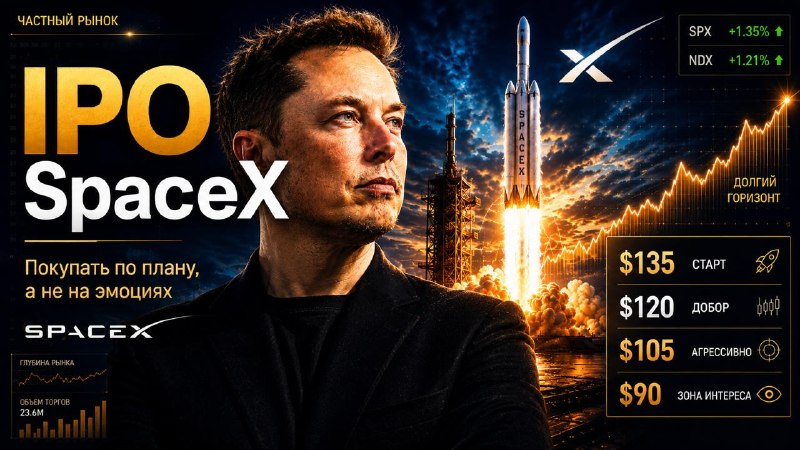
The story is simple, maybe too simple. Someone asked ChatGPT 5.5 (High) to act as a “top investment manager on Wall Street” and create a “plan of action for buying shares (SpaceX).” The source did not show the plan itself. That matters. It only called the output a “strategy,” which is frustrating if you want to inspect whether it handled position size, timing, liquidity, or risk limits in a serious way. Still, the prompt gives away the shape of the question. “I am ready to buy, but I don’t want to go crazy” does not sound like a person asking where to click buy. It sounds like someone trying to avoid a bad allocation.
That is the part worth watching. When Wall Street starts using AI for investment planning, even as a test, the effects can spill into every risk market, including crypto. We have seen a version of this before, just without the AI layer. In late 2020 and early 2021, corporate BTC buying changed the tone quickly. MicroStrategy bought its first BTC in August 2020, when BTC was around $11,000. By January 2021, it had traded above $40,000, a move of more than 300%. The SpaceX example is not about crypto directly. Still, it points to a market where AI helps decide when institutions buy and how much they buy. It also helps decide which assets fail the first screen.
Most guides would frame this as “AI makes markets more efficient.” That’s only half right. If AI can help evaluate a private, illiquid name like SpaceX, it can probably help build portfolios across public equities, private shares, treasuries, BTC, ETH, and anything else a fund is allowed to hold. That does not mean markets get calmer. They may just get faster, more crowded, and less forgiving. An AI guided fund could rebalance between traditional assets and digital assets based on price, liquidity, volatility, funding rates, and macro data. Useful. Also uncomfortable. Why does this matter? Because if several models land on the same trade at the same time, BTC could move 5% to 10% in a day without much warning, the way risk assets sometimes do when algorithmic selling stacks up.
The SpaceX angle matters because SpaceX shares are hard to buy. This is not Apple stock sitting in a phone app. A prompt about a high profile, illiquid private asset suggests people are testing AI on messy investment problems, not just clean spreadsheet tasks. I would not call that proof of a new market regime. Too much is missing. But it does suggest AI is being treated as more than a data assistant. People are asking it to shape decisions. Yes, this slightly contradicts the caution above: the example is thin, but the behavior behind it is not trivial. Eventually, that same logic can reach crypto allocations, not as a weekend gamble, but as one part of a portfolio. If institutional AI models start favoring BTC as a hedge or liquidity asset, a move toward $75,000 becomes easier to picture, especially if price is already pushing through resistance.
What this means
AI is moving further into finance, from analysis into investment planning. For crypto, that means institutional flows may get faster, more model driven, and harsher when conditions shift. A fund does not need a long committee meeting if its system is already built to react to macro data. That can create sharp moves. It can also push capital toward tokens with obvious institutional uses. Lido Finance (LDO) and Chainlink (LINK), for example, could draw interest if models rank staking infrastructure or oracle networks as useful parts of future market plumbing. Counter to the usual advice, the first winners may not be the flashiest tokens. They may be the ones a model can explain in one clean institutional sentence.
Investors should watch what large asset managers and hedge funds say on earnings calls about AI portfolio management. I would pay close attention to mentions of AI managed mandates, AI assisted allocation, or private market strategy tools. A real crypto allocation from an AI managed fund would matter. Is this overkill? For a 50-page site, maybe. For a market where BTC can trade above $72,000 and then pull in billions of dollars of attention, no. On the chart, BTC above $72,000 is the level to watch. A clean break could suggest fresh institutional demand, especially if it comes with stronger risk appetite. Regulation matters too. Clearer rules for AI in finance could speed up adoption. If regulators clamp down or leave firms guessing, this stays slower and more experimental.