















































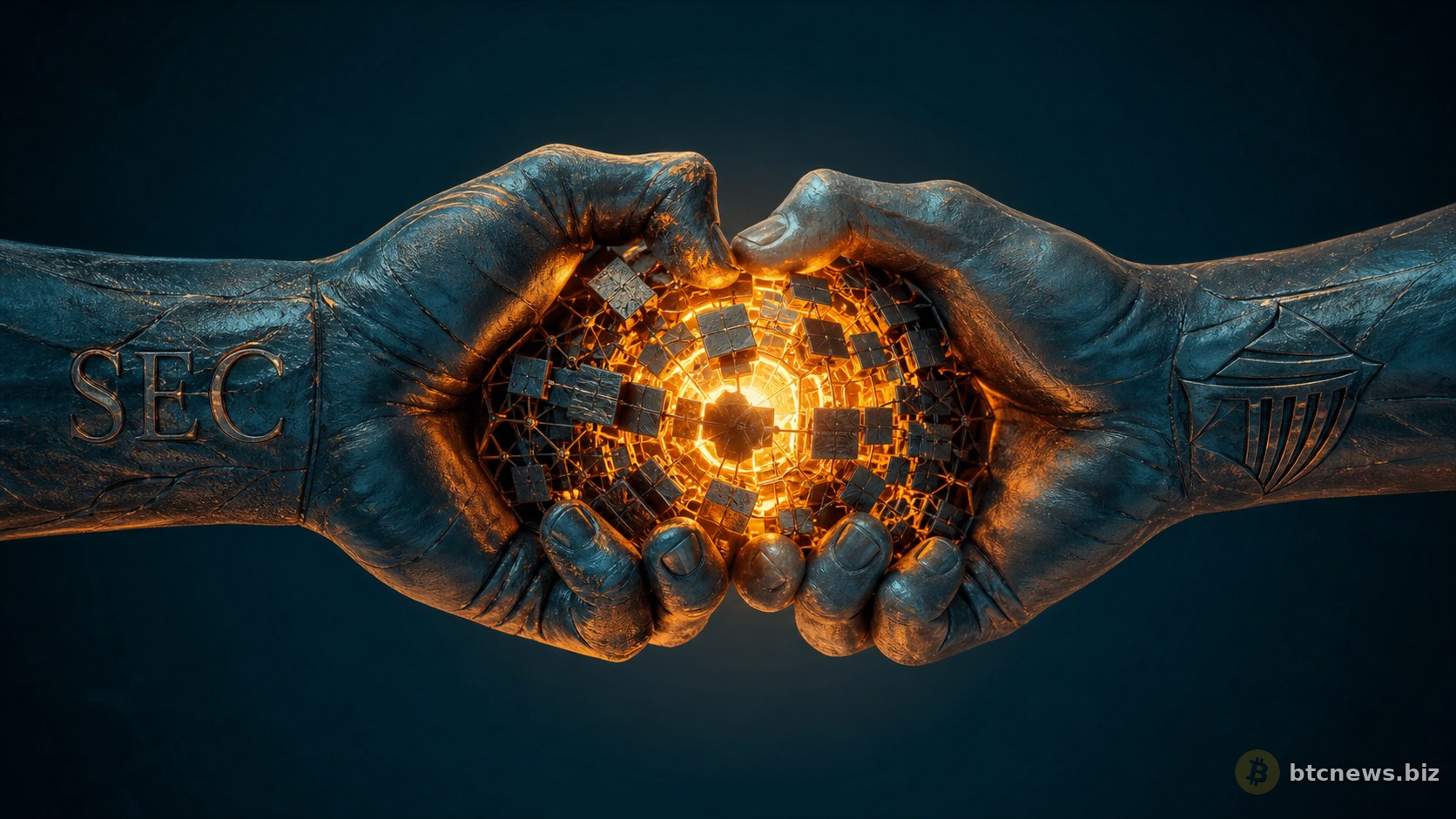
SEC Adds NFA to Crypto Oversight Effort as Regulators Tighten Their Grip
In a May 21 announcement, the SEC said it had added the National Futures Association (NFA) to its list of regulatory partners through a Memorandum of Understanding (MOU). The agreement covers exams, information sharing, and risk monitoring across securities and derivatives markets. It is the third major interagency agreement in three months. That is a quick clip. My take: this is not just another process memo. U.S. regulators are trying to make oversight less scattered, and crypto firms with derivatives businesses will probably notice first.
The MOU focuses on emerging risk management, coordination between exam programs, and monitoring financial market conditions. SEC and NFA staff will meet from time to time and share compliance data without waiting for separate requests each time. Put simply, the agencies are turning ad hoc cooperation into a standing routine. Sounds boring. It is not.
For crypto investors and traders, this likely means more regulatory pressure. The MOU does not name digital assets, which matters. But that is only half the story. The NFA already oversees some companies tied to crypto derivatives. Coinbase Financial Markets, for example, received NFA approval in 2023 to operate as a futures commission merchant. Other crypto firms also have NFA registrations. Those firms are now inside a more coordinated oversight system. That could mean tougher compliance reviews and higher operating costs. It could also mean fewer gaps between agencies. Why does this matter? Because if a large derivatives platform has to spend more time and money on compliance, liquidity or trading volumes in some crypto derivatives could suffer. ETH and SOL products are worth watching.
The agreement follows a March MOU between the SEC and the Commodity Futures Trading Commission (CFTC). SEC Chairman Paul S. Atkins said that deal was meant to end “decades of regulatory turf wars” that had “stifled innovation and pushed market participants to other jurisdictions.” On March 17, the agencies released a joint interpretation that created a taxonomy for crypto assets and explained how federal securities laws apply to common crypto activity. That was the first concrete output from the coordination effort. I would read the SEC-NFA MOU the same way: not as a headline event, but as infrastructure. It could do something similar for derivatives, especially if it leads to joint exams instead of separate agency visits.
Most regulatory coordination is sold as efficiency. Fair enough, but that framing is too clean. This may reduce duplicate requests for firms, and it gives regulators a cleaner way to act together. I would not assume crypto companies experience that as relief. One coordinated regulator front is easier to understand, but also harder to sidestep.
Coordination between regulatory organizations provides businesses a predictable, straightforward path to compliance and comprehensive protections for investors that build trust in our markets.
SEC Chairman, Paul S. Atkins
Thomas W. Sexton, NFA’s president and chief executive officer, called the agreement an “important milestone” for customer protection and market integrity. The SEC has used similar arrangements before with FINRA and state securities commissions, with mixed results. Firms supervised by several agencies have long complained about duplicate reports and conflicting expectations. This agreement appears aimed at the same problem in derivatives.
Will it actually help? Maybe. Coordination can cut paperwork. It can also speed up enforcement. I would watch the second part more closely than the first.
What this means
Three MOUs in three months is the fastest burst of coordination in U.S. financial regulation since the Dodd-Frank period. For crypto firms that touch both securities and derivatives, the signal is hard to miss: regulators are closing gaps. The agencies enforcing the rules are comparing notes more directly. The rules have not changed yet. The machinery around them has. That matters because crypto companies have often benefited from unclear boundaries between agencies. Those boundaries are becoming less useful.
Counter to the usual advice, this is not automatically bearish for crypto. Over time, it could help the market if it gives institutions more confidence and makes compliance less chaotic. In the short term, though, it probably means more legal bills, more exam prep, and more nervous trading around firms exposed to both securities and derivatives markets. Coinbase (COIN) is the public company to watch because it touches both sides.
Investors should also watch for joint guidance, joint exams, or enforcement actions that come out of this coordination. Is this overkill? For a firm sitting in both securities and derivatives markets, no. Any real clarification on whether specific tokens are securities or commodities could move prices quickly. That question still depends on pending legislation such as the CLARITY Act and future SEC-CFTC guidance. Until then, the uncertainty remains. Regulators just have a more direct way to act on it.