















































Telegram Update Trolls Roskomnadzor as Pressure Builds
Pavel Durov’s latest Telegram update is not subtle. It takes a shot at Roskomnadzor, and honestly, the timing is the point. Telegram still carries a ridiculous amount of crypto activity: group chats, project posts, trading talk, bot alerts, rumors, support requests, launch hype. If regulators squeeze the app harder, some crypto projects lose one of their main ways to reach users. Simple as that.
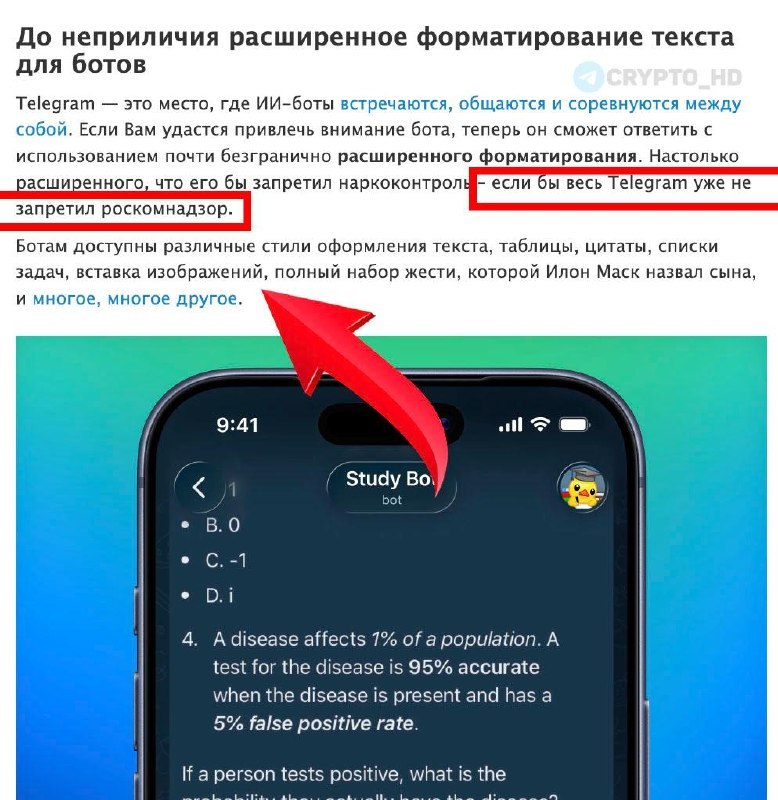
In the update description, Durov jokes that Telegram is now a place where “AI bots meet, communicate, and compete.” He says that if you manage to get a bot’s attention, it can reply with “almost infinitely expanded formatting.” Then comes the jab: “So expanded that drug control would ban it – if Roskomnadzor hadn’t already banned all of Telegram.” That line is doing two jobs at once. It sells the update, and it needles the regulator. My take: this is very Telegram, dry and irritated, with the joke landing harder because Telegram has also kept shipping features under pressure, including a smartwatch app.
The Roskomnadzor dig matters to crypto because Telegram is still one of the market’s messiest but most useful communication channels. Crypto teams use it for announcements, support, token communities, trading groups, launch coordination, and the kind of half-verified chatter that moves faster than official posts. Most guides frame this as a free speech story. That’s only half right. For traders, Telegram is also market plumbing. Russia is not the whole market, obviously, but the pattern is familiar: the SEC has targeted crypto firms in the United States, hitting staking services, exchanges, and token projects. XRP is the obvious example, because court rulings have repeatedly triggered sharp price moves in both directions. A Telegram disruption would be different. Still, it could slow information down. In crypto, that is often enough to make people do stupid things. Channels go quiet. Panic fills the gap.
The bigger issue is adoption, though I hate how overused that word has become. Telegram is not just another chat app for crypto projects. In some communities, it is the front desk, support line, news feed, trading room, and bot layer at the same time. Why does this matter? Because the app is not sitting outside the crypto workflow; it is inside it. Its bot system, now with “almost infinitely expanded formatting,” lets teams run price alerts, automated replies, trading signals, moderation tools, and token sale flows. Counter to the usual advice, the risk is not only that users lose access to messages. The risk is that teams lose the little operating system they built around Telegram. BTC may not care much about a Russia ban, especially after its recent 3% slide to $61.4K during a wider pullback, but smaller local projects could feel it quickly. Growth does not always stop with a bang. Sometimes it just gets harder.
What this means
Durov’s joke points back to a fight that has been running for years: state control against private messaging platforms. For crypto investors, this is not only a free speech issue. It is plumbing. I will be blunt: people underrate the boring infrastructure until it breaks. Telegram carries market noise, project coordination, support queues, and community trust. If access breaks, traders move slower. Teams repeat announcements across backup channels. Smaller tokens can take more damage than BTC or ETH. Is that overkill for one app? For Bitcoin, maybe. For Telegram-native altcoin communities, no.
Traders should watch Roskomnadzor and similar regulators for any follow-up. A Telegram disruption probably would not move Bitcoin or Ethereum by itself, but it could hurt altcoins that depend on Telegram for liquidity and launch momentum. Yes, this sounds like I am arguing both sides. I am, because the market impact is uneven. Watch regional access reports, regulator statements, and how projects move their communities if Telegram becomes unreliable. Also keep BTC’s $60,000 area on the screen, because a regulatory headline near a technical level can turn a normal dip into a messier selloff. We have seen that pattern before: the headline is not always the cause, but it gives nervous traders permission to sell.
FAQ: Telegram and regulatory pressure
- Q: What is Roskomnadzor?
- A: Roskomnadzor is Russia’s federal agency for media, communications, information technology, telecommunications, and personal data oversight.
- Q: Why is Telegram facing regulatory pressure?
- A: Telegram faces pressure because it offers encrypted communication. Some governments treat that as a national security risk or a tool for illegal activity.
- Q: How does Telegram’s defiance affect the crypto market?
- A: It adds uncertainty. Many crypto communities use Telegram for announcements, support, trading discussion, and fast-moving project updates, so any disruption can slow information flow and hurt sentiment.
- Q: What does “almost infinitely expanded formatting” mean in Telegram’s update?
- A: It refers to expanded bot formatting features. In practice, bots can send richer replies, which makes them more useful for alerts, trading tools, community workflows, and automated support.
- Q: Could a Telegram ban in Russia affect global crypto prices?
- A: A ban limited to Russia probably would not move major coins like BTC by itself. It could still hurt local crypto activity by cutting off a common communication channel.
- Q: What should crypto investors monitor?
- A: Watch for new Roskomnadzor action, similar moves by other regulators, regional access problems, and signs that crypto projects are moving users to backup channels.
- Q: Has Telegram been banned in Russia before?
- A: Yes. Roskomnadzor tried to block Telegram in Russia in 2018. The ban was lifted in 2020 after Telegram agreed to cooperate with terrorism related investigations.
- Q: How does this relate to the SEC’s crypto actions?
- A: Both show regulators putting more pressure on crypto adjacent platforms and companies. The SEC targets digital asset businesses directly, while Roskomnadzor targets communication infrastructure.
- Q: What could happen to altcoins if Telegram is disrupted?
- A: Some altcoins could see weaker liquidity and choppier prices, especially if their communities rely on Telegram for updates and trading chatter. We tried to treat this as a minor channel risk, but that feels too neat.
- Q: What is Pavel Durov’s stance on government regulation?
- A: Durov has long defended user privacy and open communication. He has also resisted government demands for user data or restrictions on Telegram’s operations.