
















































Kevin Warsh Fed rate hike crypto risk returns
Kevin Warsh taking over the U.S. Federal Reserve puts rate hike risk back in the crypto conversation. Warsh will be sworn in this Friday and take over the Fed. That changes the mood fast. BTC, ETH, and other risk assets now have to price something uglier than the old cut-only script. CME FedWatch puts the odds of a 25 b.p. hike by the December meeting at 37.4%, up from 0.5% a month ago. My take: that is the whole story hiding in one number. Not subtle.
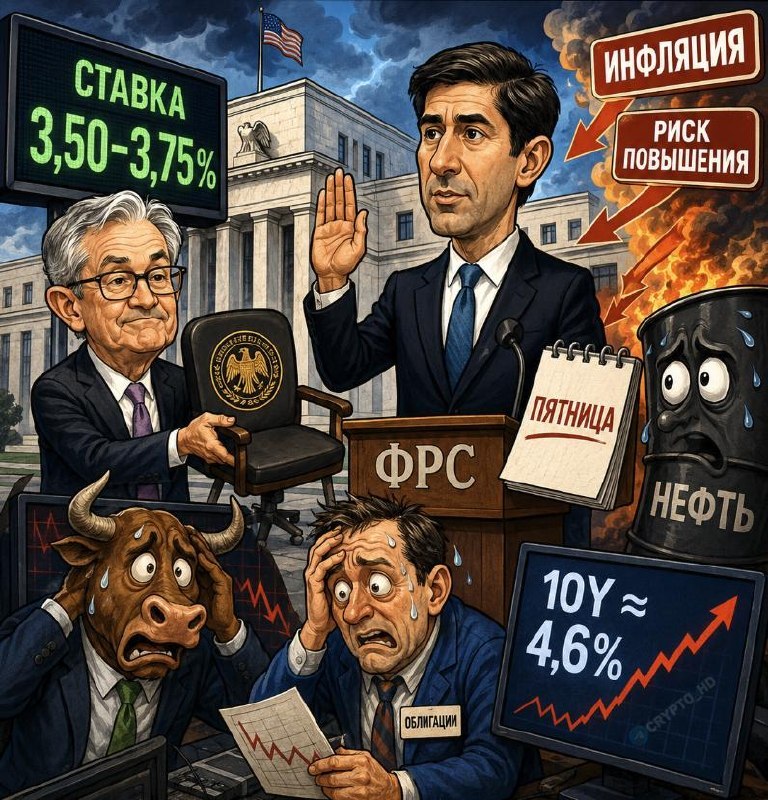
April inflation gives the Fed a reason to wait, and maybe to hike again. The Fed range is 3.50-3.75%. The next meeting is 16-17 June, and that date now matters more for crypto than it did a few weeks ago. April CPI rose to 3.8% year over year. Core inflation came in at 2.8%. A month ago, traders could lean on lower rates as a tailwind for risk assets. Now they have to price a Fed that may sit still, or worse for crypto, push rates higher.
Crypto is still tied to inflation, oil, and bond yields, even when traders hate the idea. BTC and ETH do not trade in a sealed crypto bubble once macro starts moving. Most crypto commentary acts like that link only matters during crashes. That is only half right. They usually like easier liquidity, and they usually struggle when real yields rise because investors can earn more from cash or bonds. A 25 b.p. hike would not feel like a tiny policy adjustment here. It would tell funds that safer yield is competing harder with crypto risk.
When the Fed path flips from cuts to hikes, traders usually cut leverage first. That is the macro flow problem. BTC is still the cleanest crypto ticker for this trade. ETH is messier, and probably more sensitive, because it carries monetary risk plus staking and protocol-specific stories. Why does this matter? Because if the 3.50-3.75% range starts to look like the floor instead of the ceiling, the fed hike crypto trade gets defensive quickly.
The 37.4% December hike probability is the number to watch. The source does not give live BTC or ETH prices, and making them up would be pointless. I will be honest: the cleaner tradable signal here is not a price tick, it is the policy probability itself. CME FedWatch is at 37.4% for a 25 b.p. hike by December, compared with 0.5% a month ago. Put that beside your own BTC and ETH levels. Add SOL and COIN if those are on your screen. The macro signal may have moved before the chart fully admits it.
The rate risk also depends on how crowded the cut trade had become. If investors were buying crypto because they expected rate cuts, Warsh arriving this Friday is awkward timing. April CPI at 3.8% gives the Fed less room to sound relaxed. Core inflation at 2.8% keeps the argument alive too. Counter to the usual advice, this is not just about the next Fed statement. It is about whether the old liquidity trade was already too comfortable.
Oil matters because it can keep inflation sticky and make the Fed less friendly to risk assets. No mystery there. The source points to oil, inflation, and bond yields as forces pulling the market away from an easy-policy setup. For crypto investors, oil-driven inflation is the wrong kind of macro pressure. It weakens the familiar “bad data now, liquidity later” trade. If energy keeps inflation hot, the Fed may decide risk assets can fend for themselves.
Bitcoin still has a safe haven case, but this is mostly a rates story. BTC gained 8% during the Jan-2020 Soleimani strike, so political stress can help the Bitcoin narrative. I would not dismiss that. But this setup is different, and yes, that cuts against the easy digital-gold pitch. The source is about U.S. inflation, oil, yields, and Fed policy, not a direct war shock. Any safe haven bid in BTC has to fight a cleaner rates headwind.
In this setup, Bitcoin may trade more like long duration tech than digital gold. That distinction matters. Gold can catch a fear bid and still wrestle with higher rates. BTC has to convince investors it is hard money, not just another risk asset with better branding. Is that unfair? Maybe. But with the Fed range at 3.50-3.75% and December hike odds at 37.4%, the market may treat BTC like long duration tech anyway. COIN, miners, and high beta crypto stocks could feel that pressure before spot traders fully give in.
Warsh gives markets a new Fed figure to price, but the source does not give him a fresh quote. That matters. There is no need to invent hawkish lines or pretend he said something he did not. Still, markets trade expectations. If investors think Warsh’s Fed will care more about inflation credibility after April CPI hit 3.8%, crypto liquidity assumptions have to change. Maybe not overnight. But they do change.
The better trade read is not “sell everything.” It is “stop assuming cuts are guaranteed.” BTC can still rally on flows, ETF demand, or coin-specific catalysts. I keep coming back to this because it is where traders get sloppy: a rally can be real and still have worse macro math underneath it. ETH faces the same test, especially if higher yields make staking-adjusted returns look less attractive. SOL and other higher beta tokens usually need even more confidence in liquidity. That confidence just got harder to justify.
The old setup was simple. Lower inflation, lower rates, stronger crypto. That logic is under pressure now. CPI accelerated in April. CME FedWatch moved hard. The 16-17 June Fed meeting now carries more weight than it did a few weeks ago. Crypto investors should treat that as a warning, not background noise.
The market is reacting to data and probabilities, not a dramatic Fed soundbite. There are no source quotes to parse here, which is important. The 37.4% December hike probability is the story. One month ago, it was 0.5%. A move that big can make desks reprice funding assumptions and hedge ratios. Risk exposure changes too. Quietly, then all at once.
What this means
The crypto market has moved from “Fed cuts help risk” to “the Fed may hike if inflation stays hot.” That is a real macro flow risk for BTC, ETH, COIN, and the wider crypto market. Higher expected rates can pull money toward bonds and cash. The Fed range is still 3.50-3.75%, but the market number that matters is CME FedWatch’s 37.4% chance of a 25 b.p. hike by the December meeting.
Watch the June meeting and the FedWatch odds together. The 16-17 June Fed meeting comes first. After that, watch whether the December hike probability climbs above 37.4% or starts to reverse. For crypto, the practical levels are the ones traders already have marked on BTC and ETH after April CPI at 3.8% and core inflation at 2.8%. If those levels break while hike odds rise, rate risk has moved from headline to price.