
















































Fed Balance Sheet Drops $11B: Inflation Fight Gets Tougher, Crypto Flinches
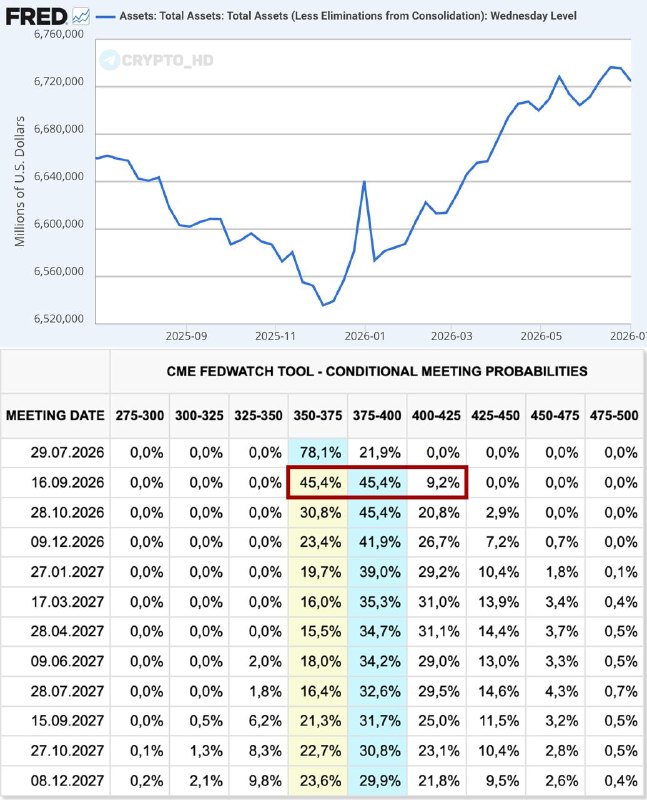
The Federal Reserve’s balance sheet fell by $11,081,000,000 in one week. Not small. Not cosmetic. My take: that number matters because it means liquidity is still draining from the system, and risk assets usually hate that setup. Crypto does not get a special pass. When the Fed keeps shrinking its balance sheet through quantitative tightening, money has less room to chase speculative trades. Bitcoin and Ethereum tend to feel that pressure fast.
Fed’s balance sheet reduction and inflation pressure
The Federal Reserve is still using its balance sheet to fight inflation. The latest $11.081 billion drop lands while inflation is still above the Fed’s target. Hammack, a Fed Chairman, said inflation remains “too high” and is not just about energy. He pointed to core inflation, especially services, where prices have been stubborn. Most market commentary treats balance sheet runoff as background noise. That is only half right. When Hammack also says the Fed “may consider raising the rate” if needed to bring inflation back to its 2% target, while admitting that a higher rate “may negatively affect the rest of the economy,” the message is pretty blunt. The Fed is still choosing inflation control over market comfort. For crypto, that means the liquidity squeeze is not finished just because the balance sheet already looks smaller.
AI’s potential impact on inflation and economic resilience
Federal Reserve officials are also watching whether AI spending changes the inflation picture. Daly, another Fed Chairman, said the “investment boom in AI” could “amplify inflation.” That sounds backwards at first. Technology is supposed to lower costs, right? In the short run, no. Data centers need power. Chips need capital. Engineers and specialized labor get bid up now, not five years from now. I’ll be honest: this is the part traders sometimes underprice because “AI productivity” sounds cleaner than “AI demand shock.” Daly also said the U.S. economy “remains resilient” even with inflation above target, but said it is “too early to draw conclusions on the future rate trajectory.” Decisions still depend on “incoming data.” Traders will pick through every jobs print, CPI report, and PCE update like there is a hidden message in it. Sometimes there basically is. BTC fell 3% on June 15, 2023, after a hotter than expected CPI report, according to market data.
Market expectations for interest rates and their historical impact
Rate expectations are messy, which usually means more volatility for crypto. According to market analysis, traders are pricing in a “PAUSE” on July 29, then a 25 basis point hike on September 16. That would bring the target range to 3.75-4.00%. If that September hike happens, financial conditions tighten again. We have seen this movie recently, and it was ugly. During the Fed’s 2022 rate hike cycle, Bitcoin dropped from over $45,000 in April to below $17,000 by November, according to cryptocurrency market data. Ethereum fell from over $3,000 to under $1,200 over the same stretch. Yes, this slightly contradicts the idea that crypto only trades on crypto-native catalysts. Bear with me. Macro flows can overpower the whole board when they turn. The market may get a pause in July. The possible September hike is the problem.
Macro flow of capital and its influence on risk assets
Inflation and rate signals shape where big money goes, and crypto sits near the risky end of that map. When the Fed sounds ready to keep tightening, institutional investors often cut risk. Crypto is usually one of the first places they trim. Why does this matter? Because BTC and ETH can look technically strong for a few sessions, then get shoved lower by a stronger dollar or a hotter inflation print. Part of this shows up in the relationship between the DXY, or US Dollar Index, and crypto prices. A stronger dollar often follows hawkish Fed policy and tends to weigh on BTC and ETH, according to financial market analysis. The reverse can happen too. In early 2023, hopes for a Fed pause helped BTC climb from $16,500 to more than $23,000 by late January, according to cryptocurrency market data. That is the maddening part. One dovish phrase can send it higher. One hot inflation print can erase the move. The July 29 and September 16 FOMC meetings matter because they will shape the short and medium term path for crypto.
What this means
The Fed is still fighting inflation, and that keeps pressure on Bitcoin and Ethereum. The balance sheet is shrinking. Hammack and Daly are still talking tough on inflation. My read is simple: the Fed is willing to accept some economic pain if that is what it takes to get inflation closer to 2%. For crypto investors, the core issue is liquidity, not vibes. Less liquidity usually means less appetite for speculative trades. Is a summer rally still possible? Yes. Is the backdrop friendly? Not yet. BTC may have trouble breaking and holding above $31,000 while traders expect more tightening, according to technical analysis.
The next few data releases and Fed meetings deserve attention. Core CPI and PCE matter most because they feed straight into the Fed’s rate decisions. Skip the noise. The expected “PAUSE” on July 29 is one pressure point, and if the Fed surprises the market there, volatility could jump. The September 16 FOMC meeting is next, especially if traders keep expecting a 25 basis point hike. Counter to the usual advice, I would not only watch the headline Fed decision. Watch how the dollar reacts after it. For BTC, the levels to watch are $28,500 support and $31,000 resistance. A clean break below $28,500 would point to more downside. A real move above $31,000 probably needs better macro sentiment or a surprise dovish shift from the Fed, according to technical analysis.
FAQ
Q: What is quantitative tightening?
A: Quantitative tightening is when a central bank reduces its balance sheet by selling assets or letting them mature without reinvesting the proceeds. That pulls liquidity out of the financial system.
Q: How does a shrinking Fed balance sheet affect the crypto market?
A: A smaller Fed balance sheet usually means less market liquidity. That can hurt speculative assets like cryptocurrencies because investors often cut risk first.
Q: What is core inflation?
A: Core inflation tracks price changes in goods and services while excluding food and energy. The Fed watches it because it can give a cleaner read on underlying inflation.
Q: Why might AI amplify inflation?
A: According to Fed Chairman Daly, the AI investment boom could lift demand for chips, power, infrastructure, and specialized labor. Those costs can add inflation pressure, at least in the short run.
Q: What is the DXY and how does it relate to crypto?
A: The DXY, or US Dollar Index, measures the dollar against a basket of major currencies. When the DXY rises, often because of hawkish Fed policy, crypto prices usually face pressure.
Q: What is an FOMC meeting?
A: An FOMC meeting is where the Federal Reserve’s policy committee discusses interest rates and other monetary policy decisions.