















































trump middle east peace crypto tests Bitcoin safe-haven trade
Trump said talks with Israel, Hezbollah and the Islamic Republic of Iran have shifted toward de-escalation. For crypto, that is not background noise. Middle East risk can hit Bitcoin quickly. My take: traders searching “trump middle east peace crypto” should read this as a pressure-release headline, not a victory lap. Less fighting can drain some heat from the BTC safe-haven trade. If Iran talks fall apart, that bid can come back fast. It works both ways.
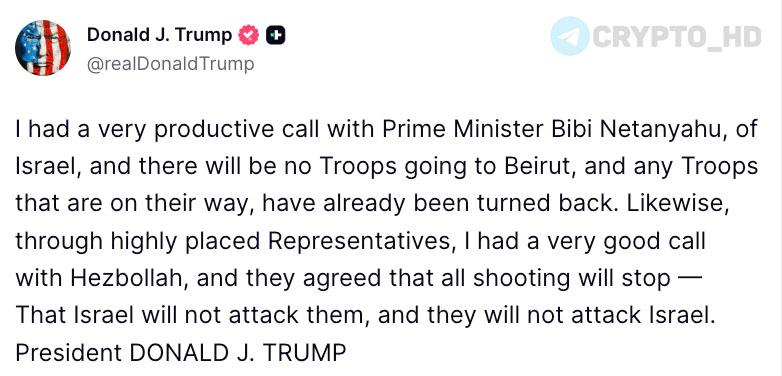
According to the source post, Donald Trump said he had a “very productive” conversation with Israeli Prime Minister Netanyahu. He said no troops would be sent to Beirut, and troops already heading there had been turned back. He also said senior representatives had a “very good” conversation with Hezbollah, which agreed that all shooting would stop. Israel would not attack Hezbollah. Hezbollah would not attack Israel. Talks with the Islamic Republic of Iran, he said, are still moving at an intense pace. The same source had sounded much darker earlier: the blockade would continue, and negotiations had broken down.
For BTC traders, this is not a clean peace headline. It is a volatility headline. Most guides say geopolitical stress is automatically bullish for Bitcoin. That is only half right. Bitcoin has often traded like a high beta macro asset during crisis windows, even when people revive the “digital gold” argument. Around the Jan. 3, 2020 Soleimani strike, BTC moved sharply within days. Oil and gold repriced Middle East danger. Risk assets did too. That does not mean BTC always rallies when conflict rises. It means traders have to decide which Bitcoin is on the screen this time: gold proxy, Nasdaq proxy, liquidity trade, or just a cleaner story with leverage attached. If Trump’s statement lowers near term Israel-Hezbollah risk, BTC may give back some crisis premium. If Iran talks break again, the safe-haven bid can return.
The macro side matters too. Middle East conflict can push energy prices higher, and higher energy prices can feed inflation expectations. Why does this matter? Because BTC and ETH now trade through the Fed lens as much as the crypto-native lens. Inflation pressure can delay rate cuts and hurt risk appetite. Crypto learned that lesson in 2022. BTC fell from its Nov. 10, 2021 high near $69,000 to below $16,000 in Nov. 2022 while the Federal Reserve tightened policy. So traders now read these headlines through rates. A cleaner ceasefire path around Israel, Hezbollah and Beirut would remove one inflation risk. A renewed blockade and another Iran negotiation breakdown would add it back.
ETH reacts differently. BTC gets the first safe-haven story, but ETH usually cares more about liquidity and positioning. Risk rotation comes after that. I will be blunt: ETH is not the clean hedge here. When macro stress rises, traders often cut ETH leverage faster because ETH sits closer to the growth and tech side of crypto. COIN belongs in that same conversation. Coinbase stock usually moves with crypto volumes, risk appetite and U.S. equity sentiment, not with Middle East diplomacy itself. A Trump-Netanyahu-Hezbollah de-escalation headline can help risk tone if traders believe the ceasefire will hold. If talks with the Islamic Republic of Iran still look fragile, ETH and COIN may stay heavy.
There is a regional adoption angle, but the source does not say anything about crypto regulation. The phrase middle east crypto regulation trump only fits indirectly here. Counter to the usual advice, I would not force a regulation story onto a security headline. Lower military risk can keep capital market talks alive across the region. The Abraham Accords period already made Gulf-Israel finance and technology talks more visible. Custody belongs in that bucket too, and abraham accords cryptocurrency is still a useful lens for watching whether regional banks, exchanges and sovereign-linked investors treat digital assets as serious infrastructure. Even so, Hezbollah, Beirut and Iran negotiations are security stories first. Crypto adoption needs stability. It rarely outruns missiles, sanctions or blockades for long.
For geopolitics crypto investment middle east, the market question is whether this is a pause or a real reset. Trump’s statement says troops will not be sent to Beirut and that troops already moving were turned back. That is concrete. But the same source also says the earlier state of play included a continued blockade and disrupted negotiations. I would not squeeze that into one easy bullish or bearish take. Yes, this contradicts the neat safe-haven framing above. Bear with me. BTC can rally on relief if oil cools and risk appetite improves. BTC can also rally on fear if Iran talks break again. Same ticker, different trade.
The clean read is this: Trump is trying to move a military escalation channel into a negotiation channel. Markets usually like that, but they still want proof on the screen. What counts as proof? Follow-through in BTC, not just a calmer headline. For BTC, the first test is whether buyers keep treating geopolitical stress as a reason to own Bitcoin. The second test is whether lower Middle East risk pushes attention back to liquidity. Rates matter. ETF flows matter. For ETH, the test is whether risk-on rotation gets strong enough to pull capital back into higher beta crypto assets. For COIN, it is simpler: better sentiment has to show up in crypto volumes and equity appetite.
What this means
This event points to a possible move away from escalation between Israel, Hezbollah and the Islamic Republic of Iran, but the source still leaves plenty of risk on the table. BTC is the main ticker to watch because it has the strongest safe-haven story in crypto. ETH is more exposed to liquidity and risk rotation. I would watch the first confirmed Israel-Hezbollah or Iran negotiation update before trusting the move. Is that overkill? For a headline this fragile, no. Watch whether BTC holds major psychological levels after that update. If BTC cannot hold those levels during calmer headlines, the market is telling you the safe-haven bid was thin.
Watch the next Federal Reserve decision date, Wednesday, June 17, 2026, because any Middle East energy shock would land straight in the inflation and rates debate. Also watch CME BTC futures positioning and spot BTC ETF flows. Then check the BTC/ETH ratio after fresh Iran or Beirut headlines. My take: that ratio may say more than the headline itself. If CME positioning rises while BTC holds above a major round number such as $100,000, traders are treating geopolitics as tradable risk. If BTC slips while ETH and COIN recover, the market is moving away from war premium and back toward risk assets.