
















































Trump family crypto bank license: a real US crypto banking test, or just politics with a ticker?
World Liberty Financial, the crypto company linked to the Trump family, may soon get a US “crypto bank” license. If it does, the family gets a direct lane into regulated crypto banking and stablecoin issuance. That matters. It is also a messy story. My take: the market will probably trade the license first and argue about the ethics later.
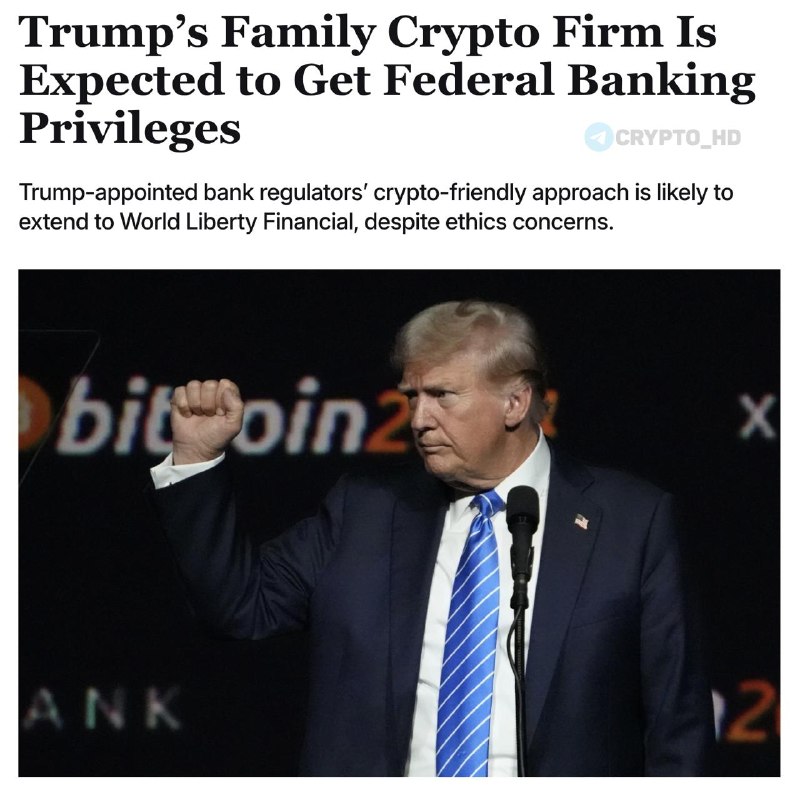
NOTUS, citing former OCC employees, reported that World Liberty Financial is “practically certain” to receive a national trust bank license. One source told NOTUS that denying the application would be “unthinkable.” That is the kind of quote that wakes up traders and makes lawyers reach for a notebook. If approved, the company could issue its USD1 stablecoin in the US and settle transactions on its own platform instead of leaning so much on outside intermediaries. Critics are already calling it an “unprecedented conflict of interest” because the former US president’s family could profit from the business. Public records also show current OCC leadership approving crypto company applications faster. Put simply, World Liberty Financial could become one of the first major crypto firms wired directly into the US banking system. Is that normal bank charter politics? Not really. This one comes with a ticker, a stablecoin, and a campaign-season shadow.
For crypto, this would be a loud adoption signal, especially for stablecoins. Short version: watch USD1.
A politically connected family issuing a stablecoin like USD1 under a national trust bank license would push crypto closer to ordinary finance. The crypto industry has spent years asking for clearer rules and better access to traditional banking rails. Here it might get both, just in the most awkward package imaginable. Most guides frame regulation as either good for crypto or bad for crypto. That is only half right. Regulation can bless one product while boxing in another. Markets have reacted sharply to institutional signals before: MicroStrategy began buying BTC in August 2020, when bitcoin traded near $11,000. By the end of that year, it was above $20,000. A licensed crypto bank with Trump family ties could attract money from institutions that still see USDT and USDC as too far outside the banking perimeter. I would not treat that as automatic bullish fuel. Still, it changes the conversation. More regulated ways to move money in and out of crypto could also lift demand for BTC and ETH if traditional firms start treating crypto exposure as less toxic.
The bigger fight may be over regulation pressure. Not price. Pressure.
The OCC’s reported willingness to approve this license, even with the conflict of interest hanging over it, says plenty about where US crypto regulation may be going. Regulators seem to be pulling crypto into the system, awkwardly and politically, but pulling it in all the same. This is different from the SEC’s approval of spot Bitcoin ETFs in January 2024, which helped push BTC past $45,000. Here, a federal banking regulator appears to be moving a crypto company toward bank-like status. That could push other agencies to spell out their rules for crypto banking and stablecoin issuance. The conflict of interest criticism could also make later applications harder, because every new crypto bank request may get measured against this one. Counter to the usual advice, the scandal may not slow the market reaction at first. It may speed it up, because traders love a clean catalyst even when the governance story is ugly. Clearer rules usually help, even when they arrive with baggage. In December 2017, after the CFTC approved Bitcoin futures trading, BTC ran close to $20,000. Different cycle. Different market. Same basic lesson: traders like it when a new door opens.
What this means
This license would point to a real shift in US crypto regulation. The government may be more willing to let crypto firms sit inside the banking system, even when the politics are ugly. Why does this matter? Because stablecoins are not just crypto tokens; they are payment pipes, liquidity tools, and dollar distribution products. The near-term read is simple: stablecoins and crypto banking would look more legitimate to some institutions. That could bring more interest in stablecoin products and, by extension, more demand for BTC and ETH as regulated access improves. Banks and asset managers may also feel pressure to build their own crypto plans instead of watching from the sidelines. I’ll be honest: the sidelines look less comfortable when a politically connected stablecoin issuer is moving first.
Investors should watch the World Liberty Financial license timeline and the exact powers attached to USD1. The details matter. A trust license with narrow permissions is not a blank check. Yes, this sounds like it contradicts the bullish read above, but bear with me: the approval matters, and the fine print may matter more. Any public statement from the OCC or another regulator could move the market if it hints at how future crypto bank applications will be handled. USDT and USDC are worth watching too, because a federally licensed, politically connected stablecoin issuer would change the competitive map. The date that matters is the official OCC announcement, if it comes. That could spark a fast reaction in BTC and ETH, with traders likely watching whether BTC can retest the $73,000 area.