















































Russia Roskomnadzor IP Address Control Raises Crypto Access Risk
Russia’s Roskomnadzor is tightening control over IP address reporting. The agency has already fined 85 telecom operators for failing to provide subscriber IP address data. For crypto investors, this is not just another censorship headline. It hits market access, VPN reliability, exchange logins, and the awkward gap between holding BTC yourself and relying on a network the state can pressure. Officials point to DDoS attacks and cyberthreats. Fair enough. I do not think that explanation should be dismissed. But the market read is wider: the pipes are becoming part of regulation.
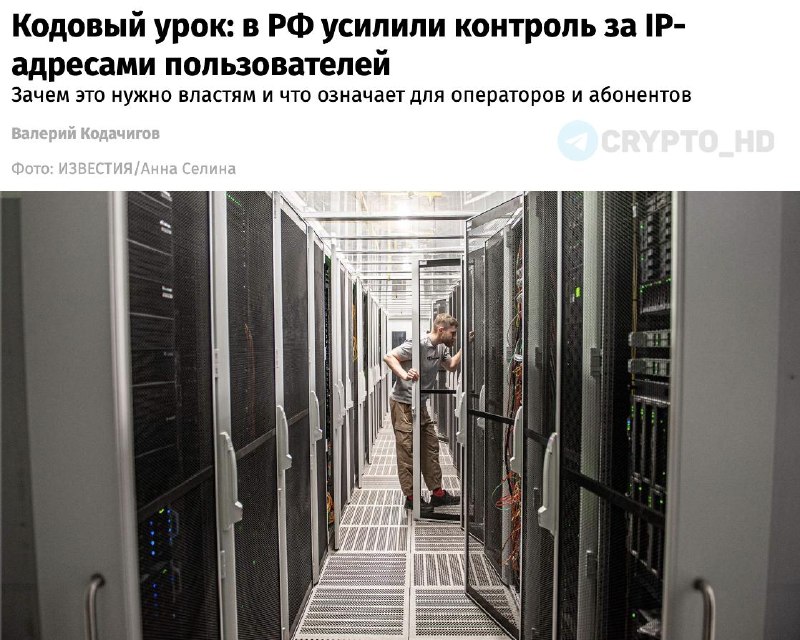
According to the source post, providers now have to report IP address changes within 24 hours, and in some cases within 1 hour. Authorities call it a cybersecurity measure. Experts cited in the post say the same system can identify users with active VPN connections and restrict access fast. Why does this matter? Because crypto trades around the clock, and national internet controls do not pause when New York closes. In 2026, that timing mismatch is not a footnote.
The target is fairly specific. Roskomnadzor is paying close attention to IPv6 and dual stack IPv4/IPv6 connections, which paid VPN services often use. That detail matters. Paid VPNs are one of the practical ways Russian users reach global exchanges, DeFi apps, wallets, news sites, and stablecoin liquidity. If those routes get worse, BTC/USD may not show it first. Watch the smaller frictions: wider spreads, failed logins, slower withdrawals, thinner local liquidity. Also, more trouble getting access to USDT or BTC.
That is the crypto link. This is regulatory pressure, even if it does not arrive as an exchange rule, ETF decision, or SEC filing. Most guides treat crypto regulation as something written by securities agencies. That is only half right. BTC, ETH, USDT, and exchange stocks like COIN all depend on open connectivity at the user edge. In June 2023, when U.S. regulators sued major crypto venues, COIN became a market proxy for regulatory stress. Russia’s pressure point is different. The investor question is just as blunt: who controls the gateway?
This is not a clean bullish or bearish headline for BTC. Bitcoin’s safe haven case usually gets louder when investors see capital controls, sanctions risk, or political pressure on payment channels. During the Russia Ukraine shock in February 2022, BTC traded both like a risk asset and like a censorship resistant settlement tool. Awkward, but true. My take: traders should stop pretending those two behaviors cannot coexist. BTC can get a stronger story and still sell off with Nasdaq-style risk when liquidity tightens.
The macro-flow angle is uncomfortable too. Telecom operators in the source post say the new rules mean much higher costs: equipment, automated IP tracking systems, and extra staff. For large providers, the source says the workload can reach hundreds of thousands of IP address changes per day. Experts warn those costs may push communication tariffs higher for users. This is not a Fed headline. Still, it is inflation showing up for households and businesses through a less obvious channel.
For crypto markets, pricier or less reliable connectivity can quietly shrink participation. Retail users who already deal with exchange blocks, VPN problems, and payment restrictions may trade less often. Some may use fewer venues. Others may move into peer to peer channels. ETH and DeFi feel that pressure differently from BTC. Bitcoin can sit cold in self custody. DeFi usually needs a working front end, reliable RPC access, a wallet connection, and enough network stability to finish the transaction. A 1-hour IP reporting window changes that routine.
Worth noting: the source does not say Roskomnadzor is banning crypto, targeting BTC, or naming an exchange. That line matters. I’ll be honest: this is where headlines can get sloppy. The immediate event is narrower: 85 telecom operators fined, 24-hour reporting required, 1-hour reporting in some cases, and more scrutiny of IPv6 plus IPv4/IPv6 dual stack. My read is that network compliance can become crypto regulation through the side door, especially in places where VPN use is normal market infrastructure.
For BTC traders, the safe haven lens should focus on behavior, not slogans. If Russian users lean harder into self custody, stablecoins, offshore venues, or peer to peer markets, that supports the longer term censorship resistance case. If weaker exchange access lowers local activity, the short term effect can be a liquidity drag. Yes, this sounds like it contradicts the bullish censorship-resistance story. It does not. Both can happen in the same week. Markets are irritating that way.
For ETH traders, the risk sits closer to the interface. Many Ethereum users rely on browser wallets, DeFi front ends, RPC endpoints, bridges, and paid VPN connections. If IPv6 and dual stack detection makes paid VPN access easier to identify, ETH activity may face more friction than simple BTC storage. Is this overkill for a casual holder? Maybe. For active DeFi users, no. Tokens tied to trading, lending, and bridges could feel it before spot BTC does.
For COIN and other listed crypto-access proxies, the signal is indirect but still worth watching. Exchange businesses are valued on user growth, transaction volume, compliance posture, and geographic reach. A country-level push to tighten IP address monitoring does not change COIN revenue by itself. Counter to the usual advice, I would not look only at exchange-specific regulation here. The 2026 market theme is broader: access to crypto now runs through telecoms, app stores, banks, regulators, identity systems, and sometimes the VPN session itself. That is a long way from the cypherpunk version of adoption.
There is a stablecoin angle as well. USDT and other dollar-linked assets often matter more when users face banking limits, sanctions fear, or currency uncertainty. Stablecoins still need usable rails, though: wallets, exchanges, peer to peer markets, and messaging channels. If VPN restrictions work better, stablecoin demand may not disappear. It may move into less visible and less liquid routes. Lower visible volume does not always mean lower demand. That part gets missed too often.
The first market signal probably will not be one dramatic BTC candle. It will be a change in access risk. When a regulator can demand faster IP-change reporting, and when providers have to build automated tracking for hundreds of thousands of daily changes, anonymity gets more expensive. Crypto markets price court cases and securities actions loudly. Network rules tend to price in slowly, then suddenly. I would watch the plumbing before the chart screams.
What this means
The event points to a wider 2026 pattern: governments are moving pressure from platforms to infrastructure. In Russia, the source says Roskomnadzor has already fined 85 telecom operators and now wants IP address changes reported within 24 hours, or within 1 hour in some cases. For BTC, ETH, and USDT, the affected layer is access itself. Wallet connectivity. VPN reliability. Exchange sessions. The basic ability to move value when normal financial rails are constrained.
Watch May 27, 2026, for the first full 24-hour window after this report, especially for signs that providers are speeding up IPv6 and IPv4/IPv6 dual stack monitoring. For traders, the practical checks are BTC liquidity on major venues, ETH gas activity around Russian trading hours, USDT peer to peer spreads, and COIN sensitivity to fresh access-control headlines. The level to watch is not only a BTC chart line. It is whether VPN-dependent crypto access still works when IP changes may have to become visible within 1 hour.