
















































Kazakhstan POS terminals accept crypto: Binance Pay signals adoption surge
Kazakhstan is giving crypto payments a proper checkout-counter test. Alatau City Bank now has 5,000 POS terminals that accept cryptocurrency through Binance Pay, according to Changpeng Zhao. I’ll be honest: this matters more than another exchange listing. It is not a trading-screen headline. It is a shopper at checkout, scanning a code, and paying with crypto.
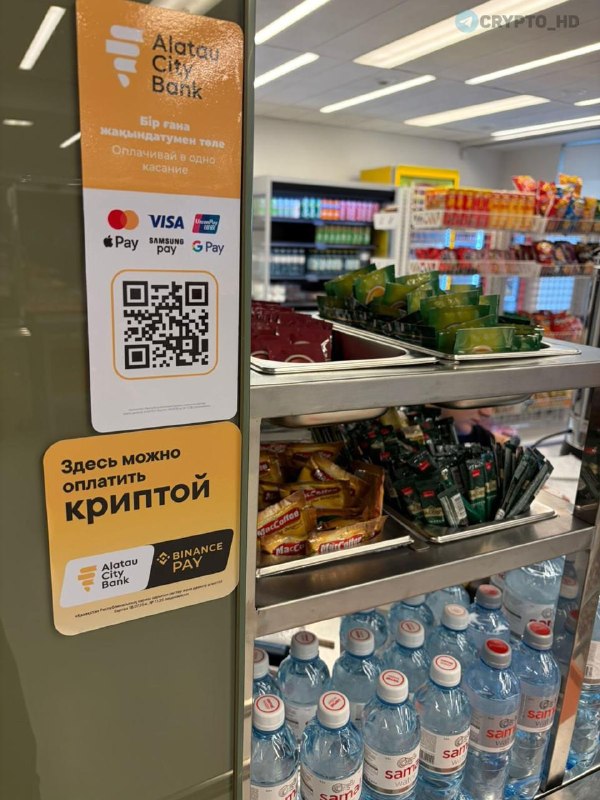
Customers in Kazakhstan can use Binance Pay at those 5,000 Alatau City Bank terminals. The terminals have QR codes and “Here you can pay with crypto” signs, so the offer is sitting right in the customer’s line of sight. Kazakhstan already has a crypto history through mining and earlier Solana activity in Alatau. This is different. Mining runs in the background. POS payments put crypto in front of customers and cashiers. Merchants too.
This is a real adoption signal for the crypto market. My take: the important part is not the sticker on the terminal, but the bank connection behind it. When a local bank connects crypto payments to 5,000 terminals, crypto starts to look less like a trading screen and more like a normal payment option. Most guides treat acceptance as adoption. That is only half right. Acceptance does not mean people will use it much. Still, 5,000 terminals is not a tiny pilot with three cafes and a press release. It is a decent footprint.
Why does this matter? Because real payment use can change how investors think about crypto over time, especially stablecoins and tokens used for fast settlement. El Salvador’s Bitcoin legal tender move in September 2021 helped BTC briefly move above $52,000, showing that national adoption headlines can move markets. Kazakhstan’s rollout is not legal tender. Smaller. More practical. But it still supports the idea that crypto can move from speculation into everyday payments.
There is a macro flow angle here, though it is messy. Inflation, currency pressure, and distrust in traditional systems have pushed some countries toward digital assets. The Kazakhstani tenge is not under the same stress as the weakest emerging market currencies, so this does not look like panic. Counter to the usual advice, that may make the rollout more interesting, not less. It looks like a bank trying to get ahead of where payments may be heading.
If Kazakhstan keeps building clear rules and usable crypto payment rails, it could attract more crypto companies and payment firms. Technical talent follows usable rails too. Institutions notice countries that make crypto usable instead of merely tolerated. MicroStrategy started buying BTC in August 2020 partly as a hedge against inflation and dollar debasement, with BTC later moving from under $12,000 to much higher levels. Alatau City Bank is not putting Bitcoin on its balance sheet. Different story. But letting customers pay with crypto still feeds the view that digital assets can sit beside traditional finance, rather than only outside it.
Zhao’s announcement also shows Binance Pay moving further into markets where crypto payments may have room to grow. The QR codes and visible checkout signs matter more than they sound. I keep coming back to that detail because payment habits are brutally practical. People do not adopt payment tools when the process feels awkward or hidden. This is not just a bank accepting crypto. It is Binance putting its payment product in front of everyday shoppers, which gives it a stronger presence in a region that has already shown interest in digital assets.
What this means
The 5,000-terminal rollout in Kazakhstan gives crypto a practical use case. Not theoretical. Not “someday.” A customer can walk into a store, see the sign, and pay. Is this overkill for a regional rollout? No, because terminals are where payment behavior either becomes normal or dies quietly. If this spreads across other emerging markets, the addressable market for crypto payments could grow in a way that trading volume alone does not capture.
Tokens built for quick, cheap settlement may get more attention, including Solana because of its earlier Alatau connection. Stablecoins may matter even more for daily transactions, since most shoppers do not want their coffee price moving with a volatile token. Yes, this complicates the cleaner “crypto adoption lifts everything” story. Bear with me. The more places crypto can be spent, the easier it becomes to argue that it has value beyond speculation, but daily payment demand may favor the assets that feel boring enough to use.
Investors should watch whether other regional banks or payment processors follow. Binance Pay’s Kazakhstan rollout could become a template, but only if people actually use it. Transaction volume is the number to watch. Signs are nice. Usage is proof. If crypto payments rise steadily in these new markets, that would give the broader market a cleaner bullish signal and could help BTC retest the $70,000 area in the coming months. Regulation matters too. Continued support from Kazakhstan’s government would keep the story moving. New restrictions would cool it fast.