















































Trump’s Hormuz Comments Put Bitcoin’s “Safe Haven” Story Back on Trial
Donald Trump’s comments about ships leaving the Strait of Hormuz through a “safe, protected, and clean” “southern highway” could jolt crypto markets again, especially Bitcoin. The remark lands after an earlier “agreement,” but the market will not hear it as clean diplomacy. It hears oil routes. It hears inflation anxiety. It hears risk-on/risk-off, the kind of switch that can shove BTC around fast.
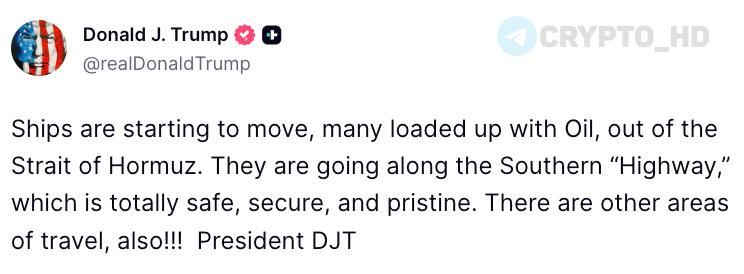
Trump said vessels, many of them “loaded with oil,” are now taking other routes and called those routes secure. Fine, that sounds like shipping logistics. It is not. The Strait of Hormuz carries a huge share of the world’s oil traffic, so even a small scare there can move crude. Markets remember this stuff. After the Soleimani strike in January 2020, BTC gained about 8% in 72 hours. I’ll be honest: that still does not make Bitcoin gold with Wi-Fi. It just proves that, in a real geopolitical panic, some traders do reach for it.
Bitcoin’s safe haven story always sounds tidy until actual money gets involved. Gold is still the old reflex. Bitcoin is the newer one, especially for investors who would rather hold a private key than a metal bar. Most guides say geopolitical stress is automatically good for BTC. That’s only half right. If oil prices rise because the new route looks expensive or politically shaky, BTC could catch a bid as people look for another place to park cash. If traders believe the route really is secure, that bid may not show up at all. BTC was recently near $61.4K. One sharp push could send it through nearby resistance. Or nothing happens. That is possible too.
The macro backdrop is ugly in a very mechanical way. Oil affects inflation. Inflation affects Fed policy. Fed policy affects nearly everything else. Why does this matter? Because rerouted ships are not just a headline if they keep crude prices high. The Federal Reserve then has a harder job, and tighter policy usually hurts risk assets, including crypto. Yes, this slightly contradicts the safe haven argument two paragraphs ago. Bear with me. If geopolitical stress makes traditional finance look fragile, some investors may still reach for crypto, and ETH or other decentralized assets can look more appealing when the old rails feel exposed. My take: the trade is not “war equals Bitcoin up.” It is higher rates versus distrust in the system.
What this means
Energy risk is still one of the quickest ways to flip the market’s mood. For crypto, this is another live test of whether Bitcoin acts like a safe haven or just another high beta asset with better marketing. I would watch how traders read Trump’s comments first, not the loudest crypto takes after the fact. Is this de-escalation, or just a new route around the same problem? Oil will probably answer first. If crude moves sharply higher, BTC could see fresh buying and maybe break out of its recent range. Simple test.
The next 72 hours matter. Watch Brent and WTI for sudden moves, then compare Bitcoin against gold. Is this overkill? For a market sitting near a narrative pivot, no. If BTC holds above $62,000, the safe haven argument gets a little more believable. Counter to the usual advice, I would not stare only at Bitcoin’s chart here. If oil jumps and BTC barely moves, the market is probably saying this Hormuz story does not matter much for crypto yet. The next FOMC minutes matter too. Any hint that inflation is keeping rates tighter for longer will hit the wider risk market, and Bitcoin will not get to ignore that just because the story sounds good.