
















































NEAR Protocol tokenomics shift: limited supply over burns
NEAR Protocol’s co-founder is pushing back on token burns and buybacks. That is not a tiny wording change. It is a real shift in the way NEAR wants people to think about value. Instead of leaning on the old “reduce circulating supply, maybe price goes up” story, NEAR appears to be moving toward a limited supply model. My take: that is cleaner than another burn campaign, and it treats investors like they can read a supply chart.
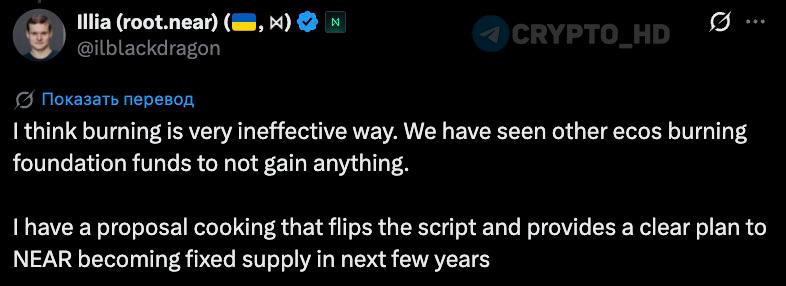
Ilia Polosukhin, co-founder of NEAR Protocol, said publicly that burning tokens and buying back NEAR are “ineffective.” Sharp word. He pointed to other projects that tried the same playbook and did not get much from it. His alternative is a roadmap, expected soon, that would move NEAR toward limited emissions over the next few years. Why does this matter? Because crypto has spent years doing the same awkward dance: issue too much supply, then promise deflation later. Most guides frame burns as a bullish mechanic. That is only half right. Burns can help in narrow cases, but they are not a substitute for demand, credible issuance rules, or actual network use.
NEAR’s shift also fits this market better than it would have in 2021. Investors are asking harder questions now, and not politely. How much supply is coming? Who gets it? When does it unlock? What happens if rates stay high? When the Federal Reserve raised rates by 25 basis points in March 2023, plenty of altcoin rallies faded fast, including projects with aggressive burn mechanics. Capital left risk assets anyway. We saw this pattern across the last cycle: token mechanics looked clever until macro pressure made them irrelevant. A limited emission model will not save NEAR by itself. It can’t. But if the plan is clear and the execution is believable, holders get something better than a burn headline. Bitcoin (BTC) has already shown why predictability matters. The halvings get the attention; the supply schedule does the quieter work.
This could also make NEAR easier for larger funds to understand. Institutions usually dislike moving targets. Actually, that undersells it: they hate them. A planned supply schedule is easier to evaluate than occasional buybacks, surprise burns, or governance-shaped supply tweaks. That is especially true while the SEC keeps pressing crypto projects over securities questions, disclosures, and vague economics. Funds already have enough reasons to avoid messy token models. NEAR does not need to hand them another one. The spot Bitcoin ETFs approved in January 2024 helped push BTC back above $45,000 partly because they gave institutional money a cleaner route into the asset. NEAR is a very different case, of course. Still, clarity lowers friction.
What this means
NEAR is moving away from one of crypto’s favorite shortcuts. Burns and buybacks can look good in a tweet. They do not automatically create demand. They do not prove usage. They do not build trust. Counter to the usual advice, the less flashy tokenomics pitch may be the stronger one here. A limited emission model puts attention back on supply discipline, network activity, developer traction, and whether people actually want to use the chain. If NEAR can explain the plan plainly, it may get another look from investors who had written it off as another Layer 1 fighting for attention.
The details matter now. Watch the timeline. Watch the supply cap or reduction mechanism. Watch the transition steps before the new model takes full effect. Is this overkill? For a major Layer 1 trying to reframe its economics, no. A specific roadmap could help NEAR, especially if the market believes the numbers. A vague one will probably hurt more than help. I’ll be honest: “limited emissions over the next few years” sounds serious, but it is not enough on its own. Price action around the announcement will be worth watching, along with NEAR’s performance against other Layer 1s such as Solana (SOL) and Avalanche (AVAX). The next few months should show whether this is a real economic reset or just a cleaner version of the old tokenomics pitch.
FAQ
What is NEAR Protocol’s new tokenomics strategy?
NEAR Protocol is moving away from token burns and buybacks and toward a limited emission model with a more predictable supply schedule.
Who announced this change?
Ilia Polosukhin, co-founder of NEAR Protocol, announced the shift publicly.
Why is NEAR Protocol moving away from token burns?
Polosukhin said token burns and buybacks are “ineffective” and pointed to other projects where they did not produce the intended results.
How will this affect NEAR’s supply?
The plan is to move NEAR toward limited emissions over the next few years. That likely means a cap, a sharp reduction in new issuance, or both, depending on the final roadmap.
What is the expected timeline for this transition?
Polosukhin is expected to share a clearer roadmap soon. For now, the transition has been described as taking place over the next few years.
How might this affect institutional adoption of NEAR?
A predictable supply schedule could make NEAR easier for institutions to evaluate. Funds generally prefer clear issuance rules over token models that can change with little warning.
What are the potential benefits for investors?
Investors could get a cleaner long term thesis for NEAR if the supply plan is specific and credible. That is more useful than hoping a burn announcement moves the price for a week.
Will this change affect NEAR’s price?
It might. A detailed roadmap could support bullish sentiment, while delays or vague mechanics could make investors more cautious.
How does this compare to other Layer 1 protocols?
NEAR would be leaning into supply predictability instead of aggressive burn mechanics. That gives it a different pitch from Layer 1s with looser or more complex emission models.
Where can I find more details about the new plan?
Watch official NEAR Protocol channels for Polosukhin’s roadmap and any follow up details on the limited emission plan.