















































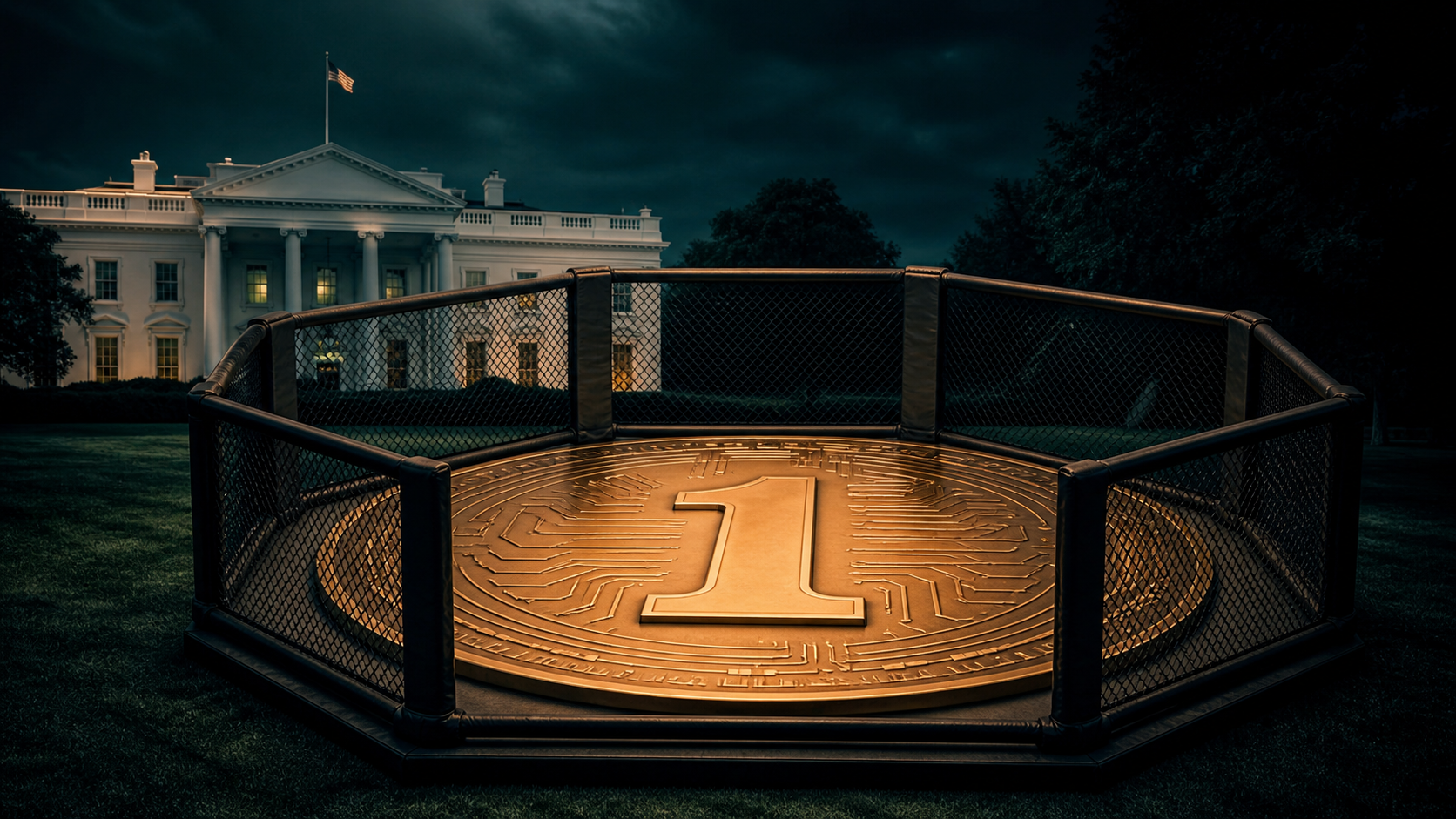
UFC Fighter Bonuses in Trump Family Stablecoin Spark Conflict of Interest Debate
The UFC plans to pay part of the fighter bonuses for the UFC Freedom 250 tournament at the White House in USD1, a stablecoin tied to Donald Trump’s family company, World Liberty Financial. Weird sentence. The issue is not just crypto prize money. It is the White House, a president’s family-linked coin, and a public payment decision landing inside a political fight. My take: this is where stablecoins stop looking boring, which is usually when crypto gets into trouble. For investors, this is not a clean adoption headline. It is a trust test. It is also a regulation test.
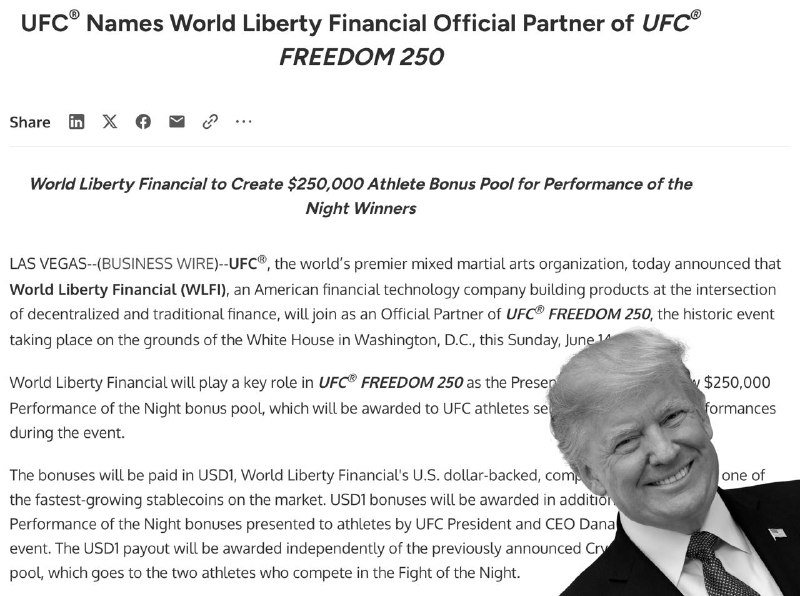
Critics are already pointing to the conflict of interest risk, and honestly, it is hard to wave that away. The location matters. The USD1 link to the US President’s family matters too. World Liberty Financial (WLFI) was already getting attention before this, including reports about ties between CZ and WLFI, as well as Congressional investigations into crypto income connected to the Trump family. Most guides would frame this as a sponsorship issue. That’s only half right. It reads more like another collision between political power and a young crypto business that still wants the market to treat it like ordinary finance.
For the crypto market, the announcement cuts both ways. It may count as an adoption signal, but it also brings regulation pressure. The adoption side is not fake: the UFC is a global sports brand, not a small crypto meetup, and paying fighters in a stablecoin puts USD1 in front of athletes, managers, fans, payment companies, and regulators at the same time. Why does this matter? Because payment rails only become credible when real people use them outside exchanges. Still, USD1 is not a neutral payment option. The Trump family connection changes the story. A normal stablecoin rollout might help sentiment around payment rails or ETH gas demand, and it might even support BTC if investors read it as another sign that crypto is moving into regular commerce. Corporate Bitcoin news, like MicroStrategy’s continued BTC buying, has helped steady the market before or produced small BTC moves around 0.5% to 1% on major announcements. This UFC case feels different. It is not a treasury strategy. It is a payment experiment with politics wrapped around it, and I would not expect traders to treat it the same way.
The regulatory side is the part I keep coming back to. Congressional investigations into the Trump family’s crypto earnings are already underway, and WLFI has already been pulled into scrutiny involving CZ. Regulators are not coming to this cold. Stablecoins are already hard for agencies to classify, supervise, and police. Add a White House event and a president linked coin, and the noise level jumps fast. Counter to the usual crypto-market instinct, more visibility is not always bullish. Lawmakers could use USD1 as an example when arguing for tougher stablecoin rules. Crypto markets hate that kind of uncertainty. SEC actions against crypto firms have often hit specific altcoins hard, sometimes 5% to 10% on enforcement news. If this puts stablecoin oversight back in the headlines, exchanges could face more compliance pressure, and traders may start asking whether politically connected stablecoins create risk for the wider market. Even USDC and USDT, which have lived through plenty of regulatory heat, could get pulled into the argument. Fair or not, that is usually how these cycles go.
What this means
The UFC payment plan shows that stablecoins are still trying to move beyond trading desks and speculation. That part is real. Paying fighter bonuses is a practical use case, even with all the baggage attached here. Is this overkill for one tournament? No, because the venue and the issuer make it bigger than one payout. BTC and ETH may not move much on this news alone. The cleaner signal is stablecoin utility. But USD1’s political ties make the trust question harder, and yes, that slightly contradicts the adoption argument above. Both things can be true. If regulators respond, the scrutiny may not stop with World Liberty Financial. It could spread to other stablecoin issuers and change how institutions think about these coins as liquidity tools.
Investors should watch for statements or investigations from the SEC, Treasury, or Congress about USD1 and its use at the UFC event. Skip the hype. Any enforcement action or new stablecoin proposal tied to this case could move the stablecoin market, especially liquidity and trading volume in major coins. WLFI related tokens are worth watching too if they become publicly tradable. So are changes in the market capitalization of larger stablecoins. The political debate matters as well, especially as crypto becomes campaign material in the next election cycle. For BTC, the $60,000 area is still the level I would watch. Heavy regulatory pressure could test it. A broader adoption story, even one this politically awkward, could keep buyers interested.