















































uk sanctions russian crypto services widen BTC rails scrutiny
The United Kingdom’s new sanctions package names Russian-linked crypto services including Rapira, Bitpapa, EXMO, ABCEX and Huobi Global S.A., the legal entity listed separately in the full sanctions notice. For crypto markets, the Russia angle is only part of it. My take: this is mostly a rails story wearing a geopolitics jacket. Payment access is being squeezed. Exchange access is being questioned. Stablecoin liquidity is back in the policy crosshairs. BTC and ETH traders should read uk sanctions russian crypto services as regulatory pressure first, and safe-haven talk second.
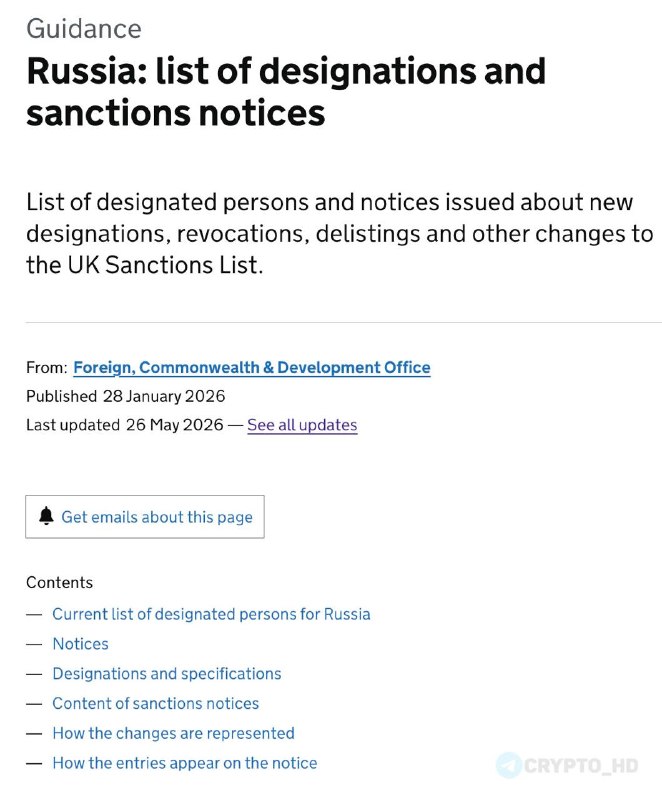
The source post says Britain sanctioned crypto services, banks and financial structures that allegedly helped Russia dodge Western restrictions and settle international payments through shadow channels. The crypto-facing names include Rapira, Bitpapa, EXMO and ABCEX, along with related companies, payment services and individuals. The measures include asset freezes, bans on financial operations and limits on internet access for British users. That is more than a stern memo. Why does this matter? Because liquidity does not need to disappear to damage a market. It only has to become clunkier, slower, more expensive and harder to explain to a bank compliance team. That is usually enough.
Britain links A7 to the Russian government and the Russian financial sector, while Reuters describes A7 as a Kremlin-backed sanctions evasion network, according to the source post. The full sanctions list also names Huobi Global S.A., which the post connects to HTX. Britain alleges the entity may have provided financial services to structures linked with A7 and Garantex. Important caveat: the post does not say HTX’s wider exchange business was sanctioned everywhere. It also gives no trading volumes, wallet balances or customer exposure. Still, Huobi Global S.A. is not some random wallet at the edge of the market. Exchange entities are in the blast zone now too. I would not treat that as background noise. For COIN, BTC and ETH market structure, that is the part worth watching.
The regulatory story is pretty plain. Since 2022, sanctions enforcement has moved beyond banks and into crypto payment infrastructure. This United Kingdom action keeps pressure on exchanges, brokers, payment companies and virtual asset issuers. The source post names Alistera, Sooty, Eurasian Savings Bank, Diamond Estate, Trace Road, State Brokerage Company and Virtual Asset Issuer, including the issuer of USDKG. It also says three Georgian companies were sanctioned, then names Arvix and Aifory as exchangers and payment infrastructure aimed at the Russian market. That wording is messy. If the source says three but names two, the article should not invent the missing name. The cleaner market point is this: regulators are following settlement paths, not just token tickers.
For BTC, this does not automatically mean a bearish price shock. Most guides flatten this into “sanctions bullish for Bitcoin.” That’s only half right. The market’s “neutral money” story gets tested again when states sanction crypto rails. Bitcoin’s censorship resistance pitch gets attention. Centralized exchange liquidity gets examined harder. Both can happen at the same time. BTC gained about 8% during the January 2020 Soleimani strike episode, which showed that geopolitical stress can briefly help the safe-haven trade. But sanctions are not a missile headline. They move slowly. Paperwork, lists, counterparties, banks, lawyers. They can push some demand toward BTC self custody while making regulated capital more cautious around venues with unresolved counterparty risk.
Here is where it gets awkward: BTC can catch a political risk bid while crypto equities and exchange tokens take the compliance hit. COIN is the cleanest listed proxy for that split. I’ll be honest: this is the tradeoff I would watch before the headline itself. Coinbase’s U.S.-regulated profile often trades with a compliance premium when offshore venues come under pressure. ETH is trickier. It is not just a macro asset. It is also the base layer for stablecoins, DeFi and tokenized settlement. If sanctions scrutiny spreads around payment companies and virtual asset issuers like USDKG, traders should watch whether stablecoin flows move toward better regulated issuers and away from thinly disclosed regional rails. Not a one day candle trade. A venue quality trade.
The macro backdrop still matters, even though this sanctions package is not a Federal Reserve event. Crypto still trades like a high beta liquidity asset when rates dominate the tape. The next scheduled FOMC meeting is June 16-17, 2026, according to the Federal Reserve calendar. That date matters because any sanctions-driven BTC bid has to fight, or ride, the dollar liquidity setup. If real yields rise into June 17, BTC’s safe-haven story can struggle even with fresh Russia headlines. If rate pressure eases, the same sanctions story can look more supportive because traders have room to buy risk and hedges at the same time. Same headline. Different market.
That is why the market link is about liquidity routes, not moral theater. Rapira, Bitpapa, EXMO, ABCEX, A7, Garantex, Huobi Global S.A., Arvix and Aifory are not household names for most U.S. retail traders. They matter because crypto depends on fiat on-ramps, OTC desks, brokers and payment processors. It also depends on stable value instruments that most BTC buyers never see. When Britain freezes assets, bans financial operations and restricts internet access for British users, it raises the cost of using those pipes. Is that overkill for a retail BTC holder? Usually, yes. For a market maker, exchange operator or COIN trader, no. Wider spreads and lower counterparty trust can move faster than the legal text.
The named individuals make the sanctions map more personal. The source post lists Sergey Mendeleev, Igor Gorin, Irina Akopyan and Liran Cohen among sanctioned persons, saying Britain links them to A7, EXVED/InDeFi Bank and structures that may have served the Russian financial sector. There is no quote in the source, so there is no quote to use. But the pattern matters. Sanctions are hitting corporate shells. They are also tying people, payment entities, banks, brokerage structures and virtual asset issuers into one financial network. For traders, compliance risk can jump from an entity to its affiliates, then to liquidity partners, then to venues that touched them. Fast.
The adoption signal is uncomfortable. Governments are basically admitting crypto services matter enough to police as international settlement infrastructure. That is not the adoption story BTC treasury buyers usually want to put in a deck, but it is still adoption. Counter to the usual crypto victory-lap version, this is not clean validation. A7, Garantex, EXVED/InDeFi Bank, USDKG and HTX-linked Huobi Global S.A. appear in the source because crypto rails can meet cross-border payment demand when banks are blocked or constrained. The market should not romanticize that. It should price it. Regulation will keep splitting crypto into two buckets: assets investors want exposure to, such as BTC and ETH, and intermediaries regulators want to squeeze when they touch sanctioned finance.
For ETH, the follow-on question is stablecoin and settlement routing. The source does not name USDT, USDC or any Ethereum protocol, so a direct accusation would be wrong. I am spelling that out because this is where bad crypto commentary gets sloppy. Sanctions on payment infrastructure and a virtual asset issuer such as USDKG will still make traders watch stablecoin liquidity more carefully across centralized venues. If sanctioned rails become harder to use, liquidity usually searches for another route. Sometimes that shows up in exchange spreads before it shows up in headlines. ETH’s sensitivity comes from that settlement role. BTC gets the macro story. ETH gets the plumbing risk. Related, yes. Same trade, no.
For exchange operators, the obvious issue is jurisdictional segmentation. British users face restrictions tied to the sanctioned services, while global venues have to decide how hard to ring fence entities, wallets and affiliates named around A7 and Garantex. This is where COIN and other regulated exchange exposures can split from offshore exchange beta. Yes, this partly contradicts the broad “regulation hurts crypto” line. Bear with me. A sanctions headline can sour the broad crypto mood for 24-72 hours and still strengthen the relative case for venues that can show clean banking, audit trails and user screening. That does not make COIN immune. If macro conditions worsen into the June 16-17, 2026 FOMC window, a broad BTC drawdown can still pull it lower.
What this means
This United Kingdom package pushes sanctions policy deeper into crypto’s settlement layer, from named exchanges like Rapira, Bitpapa, EXMO and ABCEX to payment companies, banks, brokers, individuals and a virtual asset issuer tied to USDKG. For BTC, the hit is narrative rather than legal: the market will test whether Bitcoin trades like a sanctions hedge or like a risk asset caught in tighter compliance conditions. For ETH, watch stablecoin and exchange liquidity. Where does stress show first? Usually in spreads, withdrawal friction and counterparty limits. Not in speeches.
Watch June 16-17, 2026, the next scheduled FOMC meeting. Rates will decide whether this geopolitical story becomes fuel for BTC or another regulatory weight on the tape. I would keep the dashboard simple: CME BTC futures basis, COIN relative performance versus BTC, and the $60,000 BTC level as a sentiment marker if sanctions headlines keep spreading through exchange and payment infrastructure. The official FOMC calendar is here: https://www.federalreserve.gov/monetarypolicy/fomccalendars.htm