
















































Cyborg Cockroach Crypto Investment: Biotech Experiment Opens a Strange New Market
Everyone has been waiting for altcoin season. Meanwhile, scientists in Singapore and Japan put tiny underwater gear on Madagascar cockroaches. Weird? Yes. Also real. My take: this is exactly the kind of ugly little experiment crypto people should watch, because it touches DeSci, sensor networks, disaster response, and useful machine-readable data instead of another airdrop points campaign.
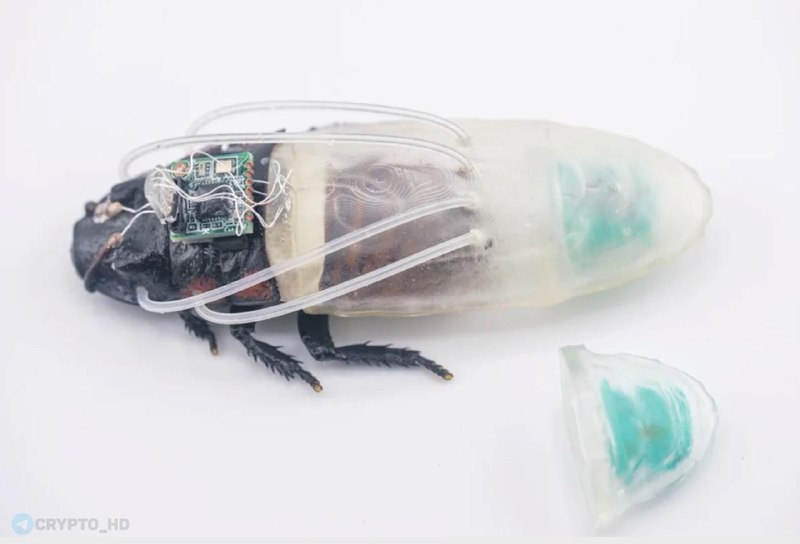
The researchers fitted the cockroaches with miniature “diving suits” that include oxygen generators and breathing tubes. The setup lets the insects stay underwater for up to 3 hours. The useful part is not the shock value. It is access. Four places matter here: flooded tunnels, pipes, collapsed buildings, and other zones where humans should not go while normal robots get stuck. Why does this matter? Because if the insects can collect location, pressure, chemical, or environmental readings, the next question becomes dull but valuable: who verifies the data, who stores it, and who gets paid for it?
That is where crypto comes in, at least in theory. I would not buy a token just because a cockroach wore scuba gear. Please don’t. Most guides would turn this into a clean “DeSci narrative” trade. That’s only half right. Markets do chase new data sources once they look commercially useful, but they also punish anything that smells like a meme wearing a lab coat. AI-related tokens like Render (RNDR) and Fetch.ai (FET) ran hard in Q1 2024, gaining about 150% and 120% respectively, because traders had a clean story to trade: AI needs compute, agents, and data. Bio-robotics could end up with a smaller, stranger version of that setup. Environmental readings from dangerous places could feed oracle networks, trigger insurance contracts, support carbon credit audits, or give disaster response teams verified field data. Not tomorrow’s trade. More like an infrastructure idea that starts sounding less absurd after one good pilot.
The timing matters too. Traditional markets are still reading inflation prints and Fed language like sacred texts. After the Fed’s recent tougher tone on rate cuts, BTC slipped from $71,000 to $68,500 in a single day last week. In that kind of market, investors go looking for assets that do not move exactly like BTC, ETH, and the usual high-beta altcoin basket. Biotech plus robotics plus decentralized infrastructure is messy, early, and very easy to overhype. I’ll be honest: that mess is part of the signal. Still, it has a better story than most copy-paste crypto narratives. This does not mean Bitcoin hits $100,000 because of an insect in a wetsuit. It means the next wave of crypto adoption may come from odd, specific data problems: environmental monitoring, disaster mapping, lab funding, and DAOs that manage scientific equipment. Field deployments too.
What this means
The cockroach experiment points to a practical use case for crypto-adjacent infrastructure: collect data from places humans cannot easily reach, then prove where it came from. That could matter for DeSci projects, environmental monitoring networks, oracle providers such as Chainlink (LINK), and storage protocols such as Filecoin (FIL). The pitch is simple enough. If a bio-robot collects rare field data, someone has to verify it, timestamp it, store it, and make it usable. Blockchains are often the wrong tool. Here, at least, they are worth testing. Yes, that contradicts the usual “blockchain is overused” complaint. Bear with me: provenance is one of the few cases where the database argument gets more interesting.
For investors, the thing to watch is not hype around “cyborg cockroach coins.” That will probably happen, and most of it will be trash. Skip that trade. Watch venture funding into bio-robotics, DeSci DAOs, sensor authentication, and partnerships between biotech labs and blockchain infrastructure teams. Is this overkill for one insect experiment? For a single lab demo, yes. For flood mapping, insurance claims, or environmental reporting systems that need authenticated field data, no. The first real catalyst would be a pilot that proves data from these bio-robots can be authenticated and used in a working system. Until then, this is a strange but useful signal from the edge of the market.