
















































US Iran Crypto Impact Tests Bitcoin Safe-Haven Trade
U.S. forces struck targets in southern Iran, according to the source post, and the us iran crypto impact is not some abstract macro puzzle. It starts with three screens traders check fast: BTC, ETH, and COIN. Then oil. Then the dollar. The reported targets were Iranian boats allegedly trying to place mines in the Strait of Hormuz, plus missile launchers in southern Iran. I’ll be honest: that is the kind of headline that makes crypto people reach for the “safe haven” script too quickly. U.S.-Iran talks on a possible deal and an extension of the truce are still underway, so this is not a clean panic trade.
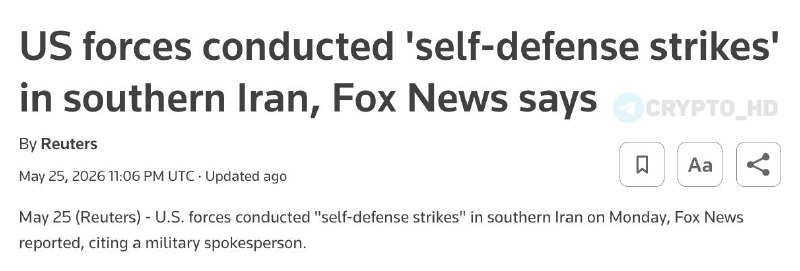
The facts are thin. Very thin. The United States carried out what the post called “defensive strikes” against targets in southern Iran. U.S. military officials, according to the post, said the strikes hit Iranian boats attempting to install mines in the Strait of Hormuz and missile launchers in the south of the country. The source gives no casualty figure, oil price, crypto price, date, or named official. Those blanks should stay blank. Why does this matter? Because traders love filling blanks with whatever trade they already wanted to put on. Hormuz risk can drag energy, inflation expectations, gold, the dollar, BTC, and even COIN sentiment into the same screen in minutes.
Here is the uncomfortable part for crypto: Bitcoin wants a tidy story during geopolitical shocks, and this one is messy. After the Jan. 3, 2020 U.S. strike that killed Qasem Soleimani, BTC rose roughly 8% in the next risk window. Traders still cite that move when they talk about safe haven assets crypto flows. Most guides say geopolitical fear helps Bitcoin. That is only half right. BTC is not gold. It can rise on fear, then get hit when real rates move higher, the dollar strengthens, or leveraged longs get forced out. If traders buy BTC on the Iran headline while ETH lags, that looks less like a full crypto rally and more like a narrow “digital hedge” trade.
The safe-haven case matters most for BTC, but my take is simple: do not treat the headline like a button marked buy. A Strait of Hormuz mining scare is an energy supply story before it is a crypto story. The oil prices bitcoin correlation can move fast if inflation anxiety comes back. Higher oil can hurt risk assets if traders start pricing stickier inflation and fewer rate cuts. That is where BTC and ETH may split. BTC can draw a geopolitical hedge bid. ETH often trades more like a high-beta tech asset tied to liquidity. COIN is even less straightforward, because exchange stocks can slip if volatility rises but retail traders do not actually show up.
The macro read matters just as much. If the market treats the strikes as contained, BTC could trade like a volatility asset and benefit from the attention, especially if traders think negotiations will keep the conflict from spreading. If the market treats Hormuz as an inflation shock, the setup gets worse. Yes, this cuts against the neat “hard money wins during stress” line. Bear with me. A stronger dollar and higher yields can drain liquidity from BTC and ETH, even when the headlines seem friendly to hard-money narratives. The source says talks on a possible deal and truce extension are continuing. That line matters. It separates a panic bid from a slower, more cautious hedge.
There is no quote to parse here. No named policymaker either. I would not skip over that. Crypto markets can overreact to thin breaking posts, especially when “Iran,” “United States,” and “Hormuz” appear in the same sentence. Traders should separate what the post says from the trade they want to believe in. Confirmed in the source post: U.S. defensive strikes, Iranian boats allegedly trying to lay mines, missile launchers in southern Iran, and continuing talks. Not confirmed in the source: oil prices, BTC price action, ETH liquidations, gold moves, the dollar reaction, or any U.S. political statement.
What this means
The signal is not “war risk means buy BTC.” Too neat. Bitcoin’s safe-haven story is getting another live test, while macro liquidity still decides whether any move lasts. Counter to the usual advice, the cleaner bullish case is not a scarier headline. It is a contained strike, continued U.S.-Iran talks, and no lasting oil shock. For ETH, the risk is different. If rates and the dollar rise because of inflation fears, ETH can lag BTC even when crypto headlines are everywhere. For COIN, the read-through depends on whether volatility brings real spot volume or only defensive positioning.
Watch the next confirmed update on U.S.-Iran talks and any statement about extending the truce. That is the hinge in the source post. On the market side, BTC traders should watch the nearest big round levels, especially $100,000 and $90,000 if price is trading in that range on their venue. Also watch CME futures basis. Options skew too, especially after the next U.S. session opens. Is this overkill? For a headline involving Hormuz, BTC, ETH, and COIN, no. The next FOMC decision date also matters, because a Hormuz-driven inflation scare would feed straight into rate-cut expectations. If BTC rises while ETH and COIN lag, the market is buying protection. If all three fall together, macro stress is running the trade.
FAQ: US Strikes Iran Targets and Crypto Impact
What were the reported targets of the U.S. strikes in Iran?
According to the source post, the reported targets were Iranian boats allegedly trying to place mines in the Strait of Hormuz and missile launchers in southern Iran.
How did Bitcoin (BTC) react to the 2020 U.S. strike that killed Qasem Soleimani?
After the Jan. 3, 2020 U.S. strike that killed Qasem Soleimani, Bitcoin (BTC) gained about 8% in the next risk window. That move still gets cited in safe haven assets debates.
What is the potential impact of a Strait of Hormuz mining scare on energy markets and Bitcoin?
A Strait of Hormuz mining scare points first to energy supply risk. If oil brings inflation worries back, the oil prices-Bitcoin correlation can change quickly.
How might a contained strike and continued U.S.-Iran talks affect Bitcoin (BTC)?
If traders see the strikes as contained and U.S.-Iran talks keep moving, with no lasting oil shock, Bitcoin (BTC) could catch a bid as a volatility asset.
Why might Ethereum (ETH) underperform Bitcoin (BTC) in certain geopolitical scenarios?
Ethereum (ETH) may underperform Bitcoin (BTC) if inflation fears push rates and the dollar higher. ETH often trades more like a high-beta tech asset, while BTC can attract a hedge bid.
What factors should traders monitor regarding U.S.-Iran talks and their impact on crypto?
Traders should watch confirmed updates on U.S.-Iran talks and any statement about extending the truce. My read: those details matter more than the loudest headline.
What market indicators should BTC traders watch after a geopolitical event like this?
BTC traders should watch major round price levels such as $100,000 and $90,000, along with CME futures basis and options skew after the next U.S. session opens.
How does a Hormuz-driven inflation scare relate to FOMC decisions?
A Hormuz-driven inflation scare could change expectations for rate cuts. That makes the next FOMC decision date more important for traders.
What does it signify if BTC rises while ETH and COIN lag?
If Bitcoin (BTC) rises while Ethereum (ETH) and Coinbase (COIN) lag, the market is probably buying protection or a “digital hedge,” not broad crypto beta.
What does it signify if BTC, ETH, and COIN all fall together?
If Bitcoin (BTC), Ethereum (ETH), and Coinbase (COIN) all fall together, broader macro stress is probably overpowering the crypto-specific story.