
















































White House Declares Iran War Over — Iran Conflict Crypto Market Impact Fades as Ceasefire Holds
The White House formally notified Congress on April 29, 2026 that hostilities with Iran have ended, pulling a key geopolitical risk premium out of Bitcoin and the broader crypto market. The Trump administration told Congress on Wednesday that the fight with Iran is officially done. That should ease the iran conflict crypto market impact traders have been pricing in since late February. A letter went to House Speaker Mike Johnson. It said the military action that began February 28, 2026 ended with the ceasefire — and that single line yanks one of the louder geopolitical bids that lifted Bitcoin’s safe-haven trade through March and April.
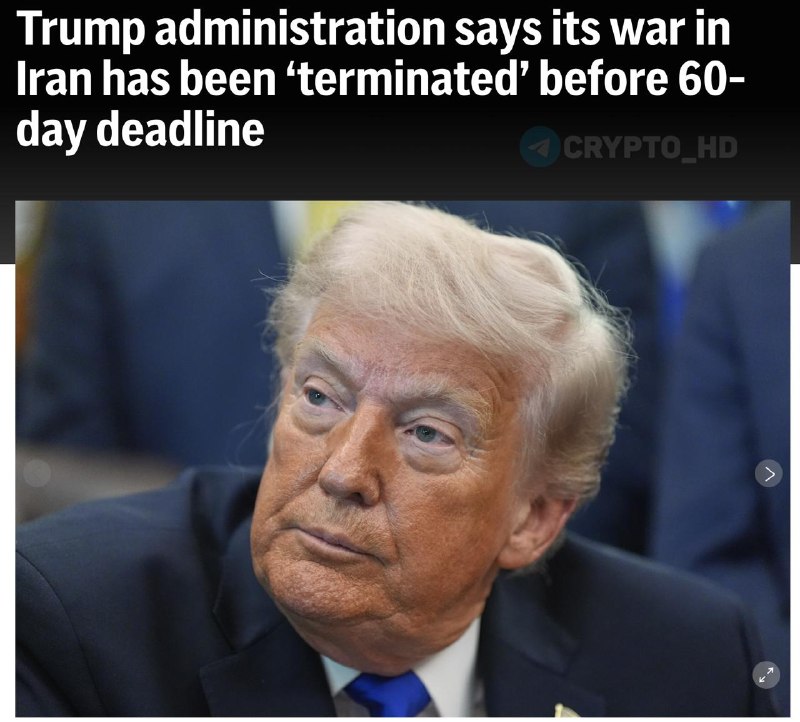
The letter argues something sharper than a ceasefire announcement. The White House told Speaker Johnson that the requirement for congressional authorization on further action against Iran no longer applies, because the war effectively ended when the truce took hold. Translation: the executive branch is closing the legal book on this conflict without going back for a vote. That is a procedural claim with market consequences. It shifts the probability distribution on a re-escalation surprise.
Risk desks were already leaning this way. The geopolitical premium that built into Bitcoin during the opening weeks of the conflict has been bleeding off since the ceasefire, and Wednesday’s letter is the kind of bureaucratic period-stamp that accelerates the unwind. Think of it like an insurance policy that the market has been quietly canceling — the headline just made the last payment due. When Washington formally argues a war is over, traders who held BTC as a Middle East hedge tend to rotate.
Bitcoin’s safe-haven behavior during Iran stress follows a documented pattern: BTC rallied roughly 8% in 72 hours during the January 2020 Soleimani strike as Asian desks bid digital gold alongside physical. The safe-haven angle is the cleaner trade to watch. Bitcoin’s behavior during acute Iran stress has a track record worth respecting. In January 2020, after the Soleimani strike, BTC ran around 8% in 72 hours while Asian desks bid digital gold next to physical. The 2026 conflict produced a similar pattern in March, with capital rotating into BTC and ETH on every escalation headline. Now that the White House is telling Congress the fight is finished, that bid loses its anchor. Expect the safe-haven premium lingering in Bitcoin’s price to compress further, especially if the oil tape confirms the de-escalation.
The macro-flow angle is messier and arguably more important. Wartime spending and Middle East oil disruption had been feeding the inflation conversation that kept the Fed cautious. A formal end to hostilities — paired with no fresh sanctions tied to active combat — gives the rates market room to price more dovishly into the back half of 2026. That is risk-asset positive at the margin. A softer rates path historically supports the high-beta end of crypto more than BTC itself, which is why ETH, COIN, and the larger L1 names tend to outperform once the geopolitical fear bid leaves Bitcoin and the macro bid takes over. No surprise that altcoin desks have been quietly adding through April.
Worth noting what the letter does not say. There is no mention of sanctions relief, no detail on prisoner exchanges, and no timeline for diplomatic normalization. The administration is closing the military chapter, not the broader pressure campaign. For crypto, that distinction matters. Sanctions-evasion narratives — Iranian mining, USDT flows through grey corridors, exchange compliance pressure — sit downstream of the sanctions regime, not the shooting war. Those threads keep running regardless of Wednesday’s letter.
The constitutional argument embedded in the letter is also a signal traders should not ignore. By telling Johnson that the War Powers framework no longer applies because the conflict is concluded, the administration is asserting unilateral authority on any future flare-up. That cuts both ways for markets. Faster response to a fresh provocation, yes — but also a thinner congressional brake on escalation. It is a bit like removing the seatbelt warning chime: the car still works, but you’d want to drive more carefully. Implied volatility on Middle East-linked Bitcoin moves should not collapse to pre-February levels even if the immediate bid fades.
Reaction inside the administration tracks the letter’s confident framing. The official phrasing says hostilities “ended with the start of the ceasefire regime” — the kind of declarative line that closes off legal debate rather than inviting it. Earlier Trump statements on the negotiations set up this outcome. The formal letter to Johnson is the procedural bookend.
What this means
The end of formal Iran hostilities triggers a rotation out of Bitcoin’s safe-haven bid into the macro trade, with ETH and high-beta L1s positioned to outperform if the rates path softens. The signal is a steady drain of geopolitical premium out of Bitcoin and a corresponding handoff to the macro trade. BTC’s safe-haven story around Iran has been one of the cleaner narratives of Q1 2026, and it just lost its primary catalyst. The unwind should show up first in funding rates and CME basis — both expanded sharply during the March escalation and have been normalizing since the ceasefire. ETH and the high-beta L1 cohort are the more interesting expressions if the rates path softens into the next FOMC, because they capture the macro-flow rotation that follows a fading geopolitical bid.
Watch next: the May FOMC for confirmation that easing Middle East risk is feeding into the rate-path debate, CME Bitcoin futures positioning data for evidence that the geopolitical longs are closing, and any Iranian response to the White House’s unilateral framing. Tehran has not endorsed the “war is over” language, and a single contradicting headline could reprice the safe-haven bid in hours. One technical level worth marking: Bitcoin’s reaction to the ceasefire low set the floor for the current range. A clean break of that level would tell you the macro trade is not yet strong enough to absorb the geopolitical unwind.