
















































Steam Wallpaper Engine Crypto Theft: Anime Wallpapers Hide Lumma, Vidar Malware
Crypto theft has found another ugly hiding place: anime wallpapers on Steam’s Wallpaper Engine. Some Workshop downloads reportedly carried malware that stole browser data, Steam account details, passwords, and crypto wallet information. I’ll be honest: that is more unsettling than another fake exchange popup. Wallpapers are not special. That is the problem. Crypto security now depends on ordinary habits: what you download, what you click, what runs at startup, and what sits on the same machine as your wallet.
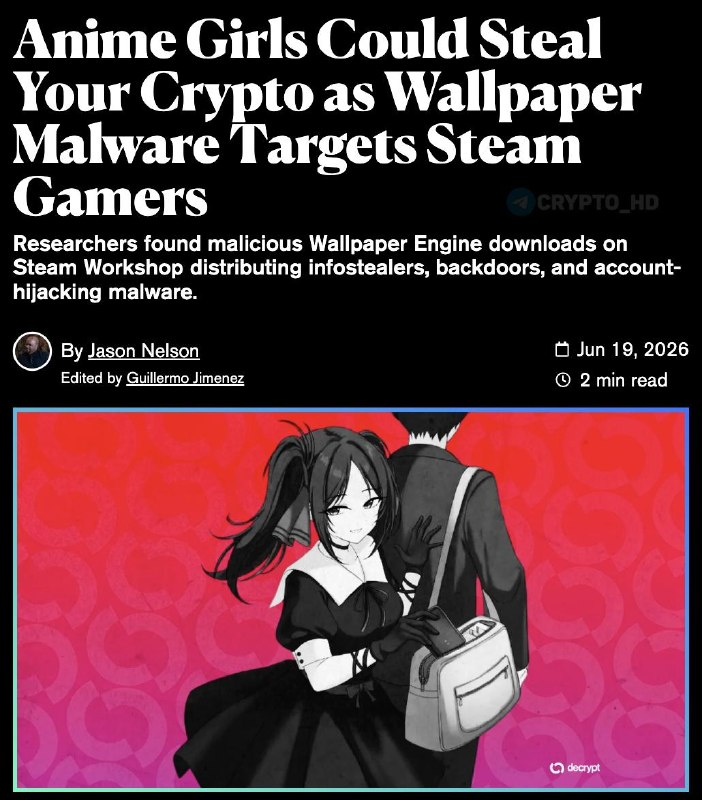
Researchers found dozens of malicious wallpapers in the Steam Workshop, many using popular anime characters as bait. These were not dead files with three downloads. Some had thousands, even tens of thousands, before anyone flagged them. Once installed, the malware could pull data from browsers, Steam accounts, and crypto wallets. Lumma and Vidar appeared in the reports. Both are built for the bleak little business of stealing passwords and cryptocurrency. Some wallpapers hid the malware inside protected archives. Others opened normal-looking apps while the infection ran quietly in the background. Nasty stuff. Why does that matter? Because for most users, the trick is invisible until something is already gone.
For crypto holders, this is the part that matters: Bitcoin (BTC) can behave like a haven during market stress, but that does not help if your own keys get stolen by a wallpaper. BTC gained about 8% during the January 2020 Soleimani strike period. Fine. Market gains still mean nothing when a wallet gets drained. Most guides talk about exchanges, bridges, or bad token contracts. That is only half right. The risk is also the laptop on your desk. We have seen the same basic pattern in DeFi phishing, where users lost money even while ETH was pushing past $4,000 in early 2024. More people are entering crypto. More institutions are, too. My take: adoption expands the target surface before it improves user discipline. A new wallet app, a new chain integration, a country testing a CBDC, a company adding BTC to its treasury. Each one brings in users who can make one small mistake.
Here is what bothers me: info stealers like Lumma and Vidar are turning personal security into a regulatory problem. The SEC and CFTC already look at crypto through consumer protection. Incidents like this give them another reason to ask whether wallets, DApps, and platforms should meet tougher security standards. Until now, the loudest debates have been about exchanges, custody, and ETF approvals. Counter to the usual advice, this is not just a “use better custody” story. If users keep losing funds because malware grabbed a browser session or seed phrase, the pressure will move closer to the user side of the stack. This is about trust. Is that too dramatic? Not really. If people think a random anime wallpaper can wipe out their wallet, it will not matter much whether BTC is at $61.4K or $70K that week.
What this means
This Steam Wallpaper Engine crypto theft case points to a wider problem, though I hate how tidy that sentence sounds. Attackers are reaching crypto users through normal consumer apps, not only fake exchanges or suspicious wallet popups. Securing an exchange account is not enough. A hardware wallet helps, but it does not fix careless behavior on the device you use every day. Yes, this contradicts the usual “just buy a hardware wallet” advice. Bear with me. Harmless-looking downloads can become a path to wallet theft, and that changes how retail users think about risk. If people start to feel their personal machines are never really clean, some will back away from crypto altogether. That could hurt sentiment for retail-heavy assets like SOL or AVAX, where participation depends on people feeling safe enough to connect wallets and move funds around. Try apps later. Move funds first.
The practical answer is boring. It works. Treat downloads as risky unless you trust the source. Use reputable antivirus tools. Keep your browser and wallet software patched. Patch the operating system, too. For serious holdings, use a separate machine or an air gapped setup instead of managing everything from the same gaming PC. Watch for reports from cybersecurity firms on new wallet-targeting malware, especially strains spreading through gaming platforms, mod sites, wallpaper tools, and other casual download channels. Also watch what exchanges and wallet providers do next. Better warnings, cleaner signing flows, and built in malware checks may matter as much as the next FOMC meeting or ETF filing. Maybe more, if you are the one holding the keys.