















































Thetanuts Finance Hacked for $2.1M: DeFi Security Gets Another Ugly Headline
Another DeFi exploit. Thetanuts Finance was reportedly hit for $2.1 million, and the timing is ugly. Crypto traders are warming up to the bull-run conversation again, but DeFi still has the same awkward flaw sitting in the middle of the room: protocols keep getting drained. My take: that is not a side issue anymore.
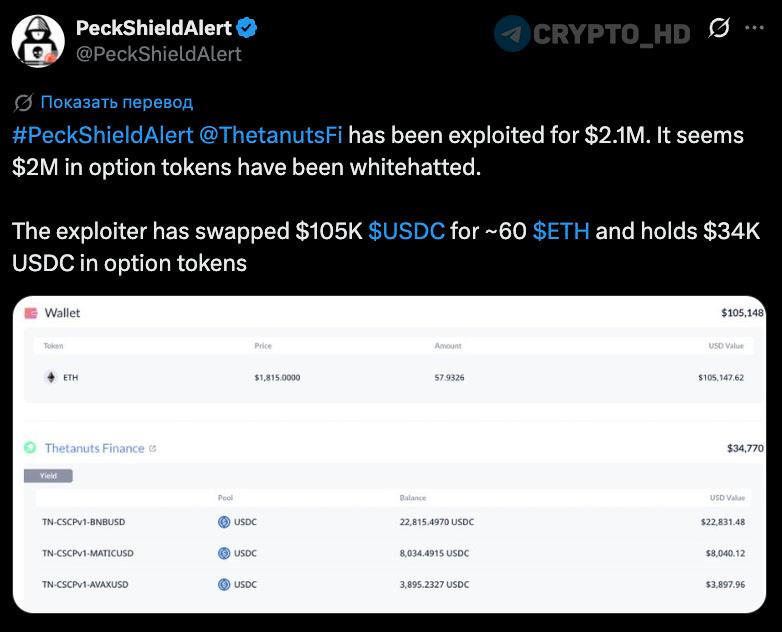
PeckShield flagged the incident. The full exploit path has not been made public, so pretending to know exactly how it happened would be ridiculous. We know the important part for now: $2.1 million is gone. That hurts. It hurts Thetanuts Finance first, obviously, but it also lands on the wider DeFi market. The pitch is trustless, transparent finance. Then another protocol gets emptied, and suddenly the pitch sounds less like a breakthrough and more like a promise with missing bolts.
Most crypto-native commentary treats hacks as protocol-level events. That is only half right. These incidents do not stay neatly contained inside one app, one token, or one Discord thread. They go straight into the regulation file. The SEC has already been looking hard at DeFi, and every exploit gives regulators one more example to cite. That can slow momentum around crypto products, including spot Ethereum ETFs. FTX was a different kind of failure, but after its collapse in November 2022, the SEC got much tougher across the board. Staking came under pressure. So did exchange listings and custody. DeFi hacks feed the same perception: from the outside, crypto still looks messy. In February 2023, Kraken settled with the SEC over its staking service, and ETH later traded below $1,500. That kind of regulatory overhang matters. Traders remember it.
The money side matters too. If a pension fund, hedge fund, or asset manager is weighing crypto exposure, security is not a footnote. It is the meeting. I’ll be honest: a $2.1 million loss is not one of crypto’s largest hacks, not even close. But it still joins the exploit-alert pile that makes cautious investors pause before allocating. They want infrastructure that does not keep appearing in security threads. Fair enough.
Why does this matter? Because sidelined capital changes the whole market setup. If that money stays away, BTC and ETH have a harder time holding big moves, especially around obvious levels like BTC at $70,000. Macro liquidity still drives much of the risk trade, especially around Fed rate decisions. Counter to the usual advice, though, this is not just about watching the Fed calendar. Security worries add drag. Even when the broader market wants risk, crypto still has to explain why the plumbing keeps leaking.
What this means
The Thetanuts Finance exploit shows, again, how uneven DeFi security still is. Some protocols are careful. Some are audited. Some have survived real stress. Others are one bad contract away from a very expensive morning. I do not think this kills DeFi. But the casual “code is law” pitch sounds lazier every time this happens.
Expect more pressure for better audits and clearer risk controls. Less hand waving around security, too. Capital may leave smaller or unaudited protocols and move toward platforms with longer records. The first hit will probably land on smaller DeFi tokens with thin liquidity, because traders usually sell those first when the mood turns defensive. We have seen that pattern enough times in crypto markets that it no longer feels surprising.
Is this overkill for a $2.1 million exploit? For a single balance-sheet hit, maybe. For sector confidence, no. Investors should watch how regulators talk about this. If the SEC or CFTC brings up the incident in speeches, enforcement actions, or guidance over the next few weeks, the market will notice. TVL is worth watching too. A broad drop across DeFi would suggest this is bigger than Thetanuts. Price action in tokens like UNI and AAVE can also show whether traders are repricing the whole sector. For UNI, a break below $10 would be a warning sign. Not proof of collapse, but enough to pay attention.
FAQ: Thetanuts Finance hack
Short answers on what happened, what is known so far, and what traders may watch next. No mystery theater here.
Q1: What happened to Thetanuts Finance?
PeckShield reported that Thetanuts Finance was hacked for about $2.1 million. The attacker took funds from the protocol.
Q2: Why does this matter for DeFi?
It adds to the security problem DeFi still has not solved. One hack does not define a whole sector, but repeated exploits make investors less willing to trust smaller protocols. That is the real damage.
Q3: How could this affect regulation?
Regulators can point to incidents like this when arguing for tighter DeFi oversight. The SEC, in particular, has already shown it is willing to push hard on crypto products and services.
Q4: What could this mean for institutional crypto investment?
Traditional finance firms care about security before they care about yield. My read: another exploit makes crypto infrastructure look riskier, which can slow new capital entering the market.
Q5: What should investors watch now?
Watch SEC and CFTC comments. Watch DeFi TVL. Watch the price action of major DeFi tokens such as UNI and AAVE. Sharp weakness across several protocols would matter more than one token dipping for a day.
Q6: Is the exploit vector known?
Not yet. Initial reports did not fully explain how the attacker pulled it off.
Q7: How big is this compared with other crypto hacks?
$2.1 million is a real loss, but it is nowhere near the top of the crypto exploit list. The bigger issue is repetition. There are too many of these.
Q8: Could this cause a move toward safer DeFi platforms?
Yes. Some investors may pull funds from smaller or unaudited projects and move toward protocols with longer track records and deeper liquidity. Counterpoint: “safer” in DeFi is still relative, not absolute.
Q9: What happens to smaller DeFi tokens?
They usually take the first hit when traders get nervous. Thin liquidity can make those moves sharper than the news itself might justify.
Q10: How does this affect crypto’s “wild west” image?
It makes that image harder to shake. Serious teams are building useful products, yes. But repeated hacks give skeptics an easy argument: the market still feels unsafe.