
















































Dragonfly Partner Questions Crypto Industry’s Future After Raising $1 Billion
Haseeb Qureshi, a managing partner at crypto venture firm Dragonfly, is asking whether the industry that built his career has much of a future. That lands harder than the standard Crypto Twitter obituary. Dragonfly has raised more than $1 billion; where it invests can determine which projects get funded and which never leave the pitch deck. Why does Qureshi’s opinion matter? Because it comes from an investor with a direct view of regulation, adoption, and the industry’s financial plumbing. Still, my take is simple: influence is not prophecy.
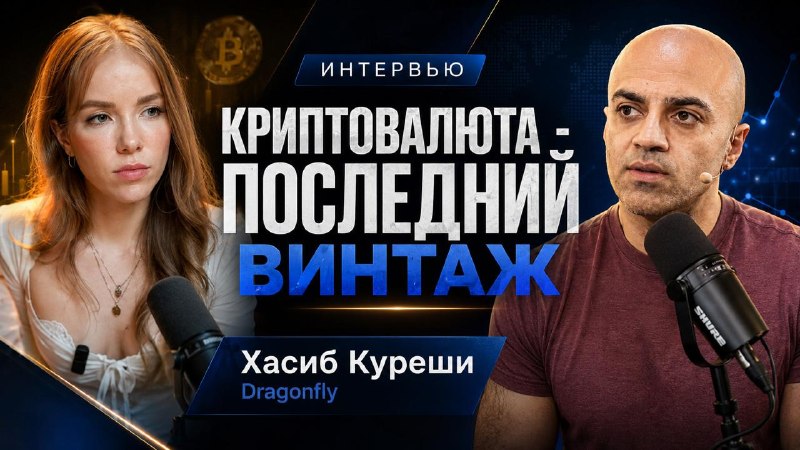
In a recent interview, Qureshi made a strange but compelling argument: if cryptocurrency succeeds, the crypto industry eventually becomes obsolete. That took me a minute. Blockchains do not disappear in his version of events. They slip into ordinary finance and technology until calling crypto a separate industry feels unnecessary. Most commentary treats industry survival and crypto success as the same outcome. That is only half right. The argument deserves attention from someone who helped raise more than $1 billion, although it remains one investor’s opinion.
The interview was translated from Russian. It covers what Qureshi expects to survive, two “stop-factors” that make Dragonfly reject founders, and his opinion of Solana. But the summary never identifies those rejection criteria. Stop there. Guessing would add drama, not information. Even without the missing details, a large fund’s screening rules matter to founders seeking early financing: Dragonfly may have soured on particular business models or token designs, while other firms could be reaching similar conclusions. That could leave fewer projects funded before launch and reduce the money reaching smaller tokens. Or perhaps Dragonfly is merely tightening its own process. I’ll be honest: until the full interview appears, one firm’s standards tell us little about the whole market.
Talk of the industry’s “end” is difficult to shrug off when it comes from a Dragonfly partner. Retail traders often chase signals from funds, founders, and large holders—sometimes much too fast. Sentiment breaks quickly. Bitcoin traded near $69,000 in November 2021 but dropped below $35,000 by January 2022, when the Federal Reserve was preparing to raise rates and investors were dumping riskier assets. Is that a clean parallel? No. Qureshi is discussing crypto’s structure, not monetary policy. Even so, traders who hear his remarks as proof that the model itself is broken may become less willing to finance speculative assets or keep holding them.
Qureshi also explains what will “definitely survive” and shares his view of Solana. So, no—the position is not quite as dire as the headline sounds. Some parts of crypto may last even if a long list of companies and tokens does not; individual chains may fail too. Honestly, I find that more plausible than total collapse. Ethereum continued drawing institutional interest during the awful 2022 market, particularly around the Merge. Solana retained its developers and venture support despite repeated network outages. Counter to the usual advice, neither endurance nor a major fund’s approval proves future success. Qureshi’s remarks may reveal whether Dragonfly still sees Solana as a credible long term platform, and that could affect how some investors judge SOL. It proves nothing by itself.
What this means
The interview suggests that crypto venture capital has cooled. Effortless growth is a weaker pitch now. Investors want actual users and workable economics; projects also need a defensible reason to exist. Dragonfly’s $1 billion fund gives Qureshi influence in that debate, but money does not make his prediction inevitable. If other funds adopt comparable standards, speculative projects could receive lower valuations, while more capital shifts toward Bitcoin, Ethereum, and a handful of established networks. Yes, that sounds less dramatic than an industry-ending collapse. It is also the sharper interpretation. Crypto could become a smaller, narrower market without disappearing, and I think that distinction matters far more than the word “end.”
Investors should wait for the full explanation of Dragonfly’s two “stop-factors” and Qureshi’s remarks about Solana. Those details matter more than the headline. What would count as real evidence? Fewer deals, smaller checks, or tougher terms in funding rounds—not one alarming quote. A shift in Dragonfly’s investment strategy could hurt mid-cap tokens that depend heavily on venture money, especially if other firms retreat simultaneously. SOL could move once the complete interview circulates, but I would treat a short term price swing cautiously: it may be little more than speculation. It would not necessarily reveal anything about Solana’s developers or how much people use the network.