
















































Wall Street Crypto Jobs Surge Signals Institutional Adoption Push for Bitcoin
Wall Street is hiring crypto talent in 2026 at a pace nobody penciled in six months ago. Per Bloomberg, the major banks and funds are filling dozens of digital-asset seats across five concrete tracks: tokenization, stablecoins, custody, trading infrastructure, and blockchain engineering. My read: this is not mood music for crypto bulls. It matters for every coin in your portfolio because banks don’t approve headcount for narratives. They approve it for revenue lines.
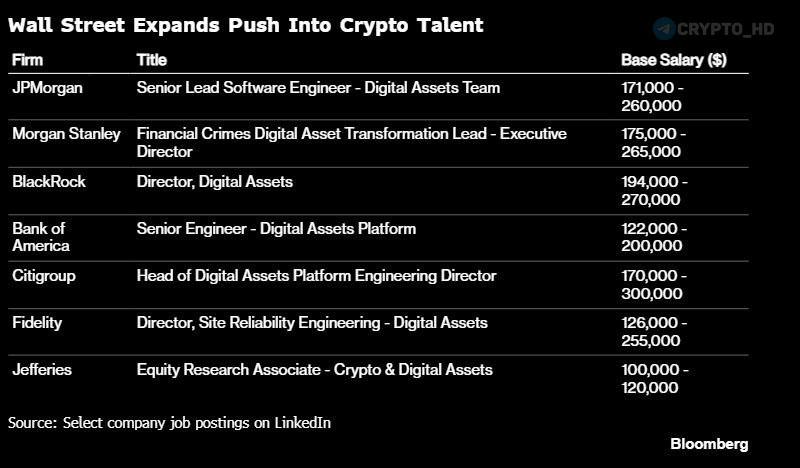
The tracks themselves are the tell. These are not innovation-lab gigs. They’re plumbing roles, the kind firms only fund when products are weeks away from shipping to clients. Big difference. A bank can run a “crypto research desk” with three analysts for years and call it strategy. You cannot run a custody business without lawyers, ops people, security engineers, compliance coverage, and a 24/7 trading floor. The second one costs real money, which is why I read this hiring wave more seriously than the 2021 one.
Bloomberg points at two converging forces: a friendlier SEC posture and rising institutional appetite for digital assets. Both have been building for months. The job postings are the receipt. Banks move slowly on headcount, so when crypto hiring accelerates across tokenization, stablecoins, custody, trading infrastructure, and blockchain engineering at the same time, the budgets were green-lit quarters earlier. The strategic decision was already made.
Why Wall Street crypto hiring matters for BTC and ETH flows
Custody and trading infrastructure roles directly affect the bid for BTC and ETH. Every additional bank that brings custody in-house removes a friction point for pension funds, endowments, and insurers, the patient money that doesn’t trade headlines. Why does this matter? Because Coinbase (COIN) has dominated institutional custody almost by default. Broader bank entry compresses that moat, yes, but it also expands the total custody pool. Net-net, I still think the effect on flows is positive. The spot Bitcoin ETF complex already proved institutions will allocate when the wrapper is regulated. Direct bank custody is the next wrapper.
Regulatory risk: why a friendlier SEC is not permanent

Here’s the part I keep coming back to. A friendlier SEC isn’t a structural shift. It’s a policy stance, and policy stances flip with one election or one new enforcement priority. Banks staffing up for tokenization and stablecoins are betting the current thaw lasts long enough to launch products. If it doesn’t, those teams pivot to compliance or get cut. The risk is asymmetric. Bank entry can pull prices up gradually, while a regulatory reversal can hit sentiment in days. Per industry consensus, US stablecoin legislation has been the gating item for most of these workflows.
Tokenization: the sleeper story inside the Bloomberg crypto job report
Tokenization is the track I’d watch most closely. Most guides frame Wall Street crypto hiring as a BTC custody story. That’s only half right. Tokenized treasuries, money-market funds, and private credit have quietly grown into a multi-billion-dollar market on Ethereum and a handful of permissioned chains. When JPMorgan, BlackRock, or Goldman staff tokenization desks, they aren’t chasing memecoins. They’re moving traditional fixed-income products onto blockchain rails. ETH is the obvious beneficiary as the dominant settlement layer, with Layer 2s like Arbitrum and Base picking up overflow. Solana still matters for high-throughput use cases. No surprise that ETH/BTC has been quietly rebuilding a base in recent weeks.
Stablecoin hiring: bank-issued dollars and the FX rail race

Stablecoin roles tell a parallel story, and I’ll be honest: this bucket looks more important than it sounds. Per industry settlement data, USDT and USDC together clear over a trillion dollars in monthly settlement volume. Banks want a piece of that float. They also want the FX rails it enables. Expect more bank-issued stablecoins, more partnerships with Circle and Paxos, and sharper pressure on offshore issuers. For traders, the read-through is simple. Stablecoin supply growth has historically led BTC rallies by 4 to 8 weeks. If bank stablecoin programs ship in the second half of 2026, the liquidity tailwind into 2027 could be substantial.
Trading infrastructure: the boring bucket that decides real flow
Trading infrastructure hiring is the boring bucket: matching engines, prime brokerage, market-making algorithms, settlement systems. Retail traders never see any of it, which is exactly why it gets ignored. Is this overkill? For a real institutional market, no. This is what determines whether institutional liquidity actually shows up. Deeper liquidity narrows spreads. It cuts slippage. It brings basis trades back to professional levels. CME futures open interest and BTC/ETH funding-rate behavior over the next two quarters will be the cleanest gauge of whether the hiring wave is converting into actual flow.
That said, hiring announcements are not flow. Wall Street has loudly entered crypto before: late 2017, late 2021. Both times it pulled back when prices fell. Counter to the usual advice, I don’t think the headline itself is the signal. The signal is whether the hiring survives the first nasty drawdown. What’s different this cycle is the regulatory cover and the spot ETF revenue base, which give compliance and legal teams something defensible to point at when the next drawdown comes.
What this means
Institutional crypto adoption is shifting from speculation to infrastructure. When banks hire custodians, lawyers, matching-engine engineers, and blockchain specialists instead of just research analysts, they’re committing to multi-year product roadmaps. That’s structurally bullish for BTC and ETH as the two assets every institutional desk has to support. My take: ETH gets under-discussed in this version of the story. BTC gets the custody headline, but tokenization-heavy chains and the major stablecoin issuers sit a tier below with real upside. COIN still has a quiet tailwind because it currently captures most of the institutional custody fees.
Watch the next earnings cycle from JPMorgan, Goldman Sachs, and Morgan Stanley for digital-asset revenue disclosures. That’s where the hiring headline turns into a P&L line. Track US stablecoin legislation progress, since most bank stablecoin programs are gated on it. On the chart, the level I care about for BTC is the prior cycle high. A clean break with sustained spot-ETF inflows would confirm the institutional bid is real this time, not just the press release version.
FAQ
What does the Wall Street crypto jobs surge mean for Bitcoin?
It’s a structural bullish signal because banks only staff custody and trading infrastructure when they intend to launch client products. Per Bloomberg, the budgets were approved quarters in advance, which points to a multi-year commitment to BTC market exposure rather than another pilot project.
Which banks are hiring crypto talent in 2026?
Bloomberg’s report identifies major Wall Street banks and funds filling roles across tokenization, stablecoins, custody, trading infrastructure, and blockchain engineering. JPMorgan, Goldman Sachs, BlackRock, and Morgan Stanley are among the firms expected to disclose digital-asset revenue in upcoming earnings cycles.
How does institutional crypto custody affect ETH and BTC prices?
Bank-run custody removes onboarding friction for pension funds, endowments, and insurers, which expands the total addressable institutional pool. That translates into sustained spot demand for BTC and ETH, the two assets every institutional desk has to support.
Why is tokenization the sleeper story in the Bloomberg crypto job report?
Tokenization moves traditional fixed-income products like treasuries, money-market funds, and private credit onto Ethereum and Layer 2 rails like Arbitrum and Base. ETH is the primary beneficiary as the dominant settlement layer, with Solana capturing high-throughput use cases.
How do bank stablecoin programs impact crypto market liquidity?
Bank-issued stablecoins compete for a trillion-dollar monthly settlement float currently dominated by USDT and USDC. Stablecoin supply growth has historically led BTC rallies by 4 to 8 weeks, so 2026 program launches could create a significant liquidity tailwind into 2027.
What is the regulatory risk to Wall Street crypto hiring?
The current friendlier SEC posture is a policy stance that can reverse with an election cycle or an enforcement shift. If regulation tightens, tokenization and stablecoin teams may pivot to compliance roles or face cuts, which creates asymmetric downside risk for crypto sentiment.
How is this Wall Street crypto cycle different from 2017 and 2021?
This cycle has two structural anchors absent in prior waves: regulatory cover for compliance and legal teams, plus the spot Bitcoin ETF revenue base. These provide defensible justification for headcount during drawdowns and reduce the risk of the fast retreats we saw in 2017 and 2021.
What signals confirm Wall Street crypto hiring is translating into real flow?
Track CME futures open interest, BTC/ETH funding rates, and digital-asset revenue disclosures from JPMorgan, Goldman Sachs, and Morgan Stanley over the next two quarters. A clean BTC break above the prior cycle high with sustained spot-ETF inflows would confirm the institutional bid is converting.